
|
Commission of
Inquiry into certain events at the
Prison for Women in
Kingston
8 Public Works and Government Services Canada, 1996
All rights reserved
Printed and bound in Canada
Catalogue No. JS42-73/1996E
ISBN 0-662-24355-2
PubliJ aussi en franHais sous le titre : Commission d'enquLte sur certains
JvJnements survenus B la Prison des femmes de Kingston.
Available in Canada through: Canada Communication Group C Publishing
Ottawa, Canada, K1A 0S9
CANADIAN CATALOGUING IN PUBLICATION DATA
Commission of Inquiry into Certain Events at the
Prison for Women in Kingston (Canada)
Commission of Inquiry into certain events at the
Prison for Women in Kingston
Issued also in French under title: Commission d'enquLte
sur certains JvJnements survenus B la Prison des
femmes de Kingston.
Commissioner: The Honourable Louise Arbour.
ISBN 0-662-24355-2
Cat. no. JS42-73/1996E
1. Reformatories for women C Ontario C Kingston.
2. Prison violence C Ontario C Kingston.
3. Prison discipline C Ontario C Kingston.
4. Women prisoners C Civil rights C Ontario C Kingston.
5. Correctional institutions C Canada C Management.
I. Arbour, Louise, 1947- .
II. Title.
III. Title: The Prison for Women in Kingston.
HV9025.C65 1996365.9713'72C96-980136-X
Care has been taken to trace the ownership of copyright material in the text including tables and figures.
The Honourable Herb Gray, P.C., M.P.
Solicitor General of Canada
Sir Wilfrid Laurier Building
340 Laurier Avenue West
Ottawa, Ontario
K1A 0P8
Dear Minister:
By Order in Council PC 1995-608 dated April 10, 1995, I was appointed Commissioner to investigate and report on the state and management of that part of the business of the Correctional Service of Canada that pertains to the incidents that occurred at the Prison for Women in Kingston, Ontario, beginning on April 22, 1994. I have the honour to submit the attached report in both official languages.
Respectfully submitted,
The Honourable Louise Arbour
Commissioner

Commissioner
The Honourable Louise Arbour
Commission Counsel
Patricia D. S. Jackson
Administrator
Sheila-Marie Cook
Associate Commission Counsel Chief Investigator
Guy Gournoyer Dennis Olinyk
(Ontario Provincial Police)
Assistant to the Commissioner Research & Policy Advisors
and to Commission Counsel Tammy Landau, PhD.
Karen McFarlane Kelly Hannah-Moffat
Legal Services Criminology Research
Jana Mills Anne-Marie Singh
Cheryl Waldrum Marnie Crouch
Sandra Hargreaves
Investigators Evidentiary Document Control Unit
(Ontario Provincial Police) Deborah Anne Whittames
Julie Cyr Barb Fiorentino
Jenny Zapotoczny Sean Lytle
Valerie Baun Leslie Wake
Sylvie C^tJ
Administrative Services Registrar
Fern Anes Joyce Ihamaki
Melissa Jarrett
Angie McWaters
Kingston Hearings Site
Elizabeth Rolland
Communications Suzanne Schryer-Belair
Annette Snowdon
Gillian Sadinsky
Editor - English
David Redgrave
Editor - French
Nicolas Joly
Commission of Inquiry into certain events at the Prison for Women in Kingston
Terms of Reference
Preface
The Inquiry Process
Glossary
Abbreviations
PART I THE EVENTS AT THE PRISON FOR WOMEN
1. INTRODUCTION
1.1 The Structure and Organization of the Correctional Service of Canada
1.2 The Organization of the Prison for Women
1.3 The Physical Layout of the Prison for Women
1.4 Daily Life in the Prison for Women
1.5 The Correctional Investigator
1.6 Other Organizations
1.7 The Correctional Context: Creating Choices
2. FACTUAL FINDINGS AND CONCLUSIONS WITH RESPECT TO THE INCIDENTS UNDER INVESTIGATION
2.1 Overview Chronology
2.2 April 22, 1994
2.3 The Segregation Unit at the Prison for Women, April 22-26, 1994
2.4 The Strip Search of April 26-27, 1994
2.5 The Body Cavity Search on April 27, 1994
2.6Transfers to the Regional Treatment Centre
2.7Board of Investigation
2.8Segregation Post-April 26, 1994
2.9The Complaint and Grievance Procedure
2.10The Correctional Investigator
2.11Documents
2.12Measuring CSC's Performance Against its Mission Statement
PART II POLICY ISSUES
3.GENERAL CORRECTIONAL ISSUES
3.1Developing a Culture of Rights
3.2Developing an Effective Sanction
3.3Managing Segregation
3.4Increasing Accountability in Operations
4.WOMEN'S ISSUES
4.1Federally Sentenced Women B A Current Profile
4.2Cross-gender Staffing
4.3Aboriginal Women and The Healing Lodge
4.4The Future of Women's Corrections
PART III THE ROOTS OF CHANGE: AN HISTORICAL PERSPECTIVE
5.HISTORY OF THE FEDERAL WOMEN'S PRISON
5.1The Early Years
5.2Women Prisoners and Their Rights to Fair and Equitable Treatment
5.3Conclusion
PART IV - SUMMARY OF RECOMMENDATIONS
APPENDICES
A. Contractors
B. WITNESSES AT THE HEARINGS
C. PARTICIPANTS IN THE ROUNDTABLES
D. CONSULTATIONS BY THE COMMISSIONER AND STAFF
E. RULING ON APPLICATIONS FOR STANDING
E. RULING ON APPLICATION FOR STANDING
F. RULES OF PROCEDURE AND PRACTICE
G. INTERVENOR FUNDING: ORDER IN COUNCIL AND SCHEDULE ``A'' GUIDELINES
H. SAMPLES OF UNDERTAKINGS
I. SAMPLES OF S. 13 NOTICES
List of Illustrations
Figures
Figure 1 The Correctional Service of Canada Organization B Part I 6
Figure 2 The Correctional Service of Canada Organization B Part II 7
Figure 3 2nd Floor Layout Prison Cells 12
Figure 4 Mezzanine Layout Prison Cells 13
Plates
Plate 1 Segregation Unit upper and lower tier of Dissociation side 14
Plate 2 Upper tier Dissociation side 15
Plate 3 Interior view of a cell 16
Plate 4 Exterior view of a cell 17
Plate 5 Cell with heavy metal treadplate 18
Plate 6 Cell with heavy metal treadplate 19
Tables
Table 1 Persons Charged by Gender Selected Incidents, 1994 205
Table 2 Sentence Length of Incarcerated Federally Sentenced Women 206
Table 3 Current Region & Institution of Incarcerated Federally
Sentenced Women 207
Table 4 Offences of Federally Sentenced Women in Custody 208
HIS EXCELLENCY THE GOVERNOR GENERAL IN COUNCIL, on the recommendation of the Solicitor General of Canada, is pleased hereby.
1. pursuant to Part II of the Inquiries Act, to authorize the Solicitor General of Canada
(a) to appoint, by Commission under the Great Seal, the Honourable Louise Arbour of Toronto, Ontario, a judge of the Court of Appeal for Ontario, as a commissioner to investigate and report on the state and management of that part of the business of the Correctional Service of Canada that pertains to the incidents that occurred at the Prison for Women in Kingston, Ontario, of the Correctional Service of Canada thereto, in particular
(i) the measures in place at the Prison for Women in Kingston, Ontario, in April 1994 to respond to incidents,
(ii) the adequacy and appropriateness of the actions and decisions taken in relation to the seriousness of the incidents that occurred,
(iii) the deployment of an all-male emergency response team, the mandate that was given to the team and the appropriateness of the team's conduct during its involvement in the incidents that occurred, and
(iv) the subsequent confinement in administrative segregation of the inmates concerned, the reasonableness of their treatment while in segregation and the duration of the segregation;
b) to authorize the Commissioner
(i) to adopt such procedures and methods as she may from time to time deem expedient for the proper conduct of the inquiry,
(ii) to sit at such times and at such places in Canada as she may from time to time decide and to have complete access to personnel and information in the Correctional Service of Canada and the Department of the Solicitor General and adequate working accommodation and clerical assistance, and
(iii) to engage the services of such staff and technical advisors as she deems necessary or advisable and the services of counsel to aid and assist her in the inquiry, at such rates of remuneration and reimbursement as may be approved by the Treasury Board; and
c) to direct the Commissioner
(i) to make independent findings of fact regarding the incidents that occurred, in view of different conclusions in the two reports,
(ii) to recommend improvements, as may be required, to the policies and practices of the Correctional Service of Canada in relation to such incidents,
(iii) to report in both official languages to the Solicitor General of Canada by March 31, 1996, and
(iv) to deposit the records and papers of the Commission with the Solicitor General of Canada as soon after the conclusion of the inquiry as is reasonably possible; and
2. pursuant to section 56 of the Judges Act, to authorize the Honourable Louise Arbour of Toronto, Ontario, a judge of the Court of Appeal for Ontario, to act as Commissioner.
The history of women and crime is spotted with opportunities most of which have been missed. We hope that history will not dictate our future.
The incidents that gave rise to this inquiry could have gone largely unnoticed. Until the public viewing of a videotape which shed light on part of these events, and the release of a special report by the Correctional Investigator in the winter of 1995, the Correctional Service of Canada had essentially closed the book on these events.
This was perceived as, by far, not the most serious series of events to have taken place in a Canadian penitentiary. Sadly, that is probably true. At the Prison for Women, loss of life and self-mutilation are among the many tragedies that occur, and that are largely unknown to the Canadian public.
However, this inquiry was concerned not only with what happened at the Prison for Women in 1994, but with the response of the Correctional Service of Canada to these events. The shortcomings that have been revealed in the course of this inquiry are, in my opinion, of the most serious nature. Corrections is the least visible branch of the criminal justice system. Occasions such as this, where its functioning is brought under intense public scrutiny, are few and far between. This may explain the discomfort of Corrections officials in handling this level of public attention. The lack of public scrutiny is in stark contrast to accountability processes in the law enforcement and judicial branches of the criminal justice system. Through hundreds of criminal trials and appeals, systemic shortcomings and individual performances of police officers, prosecutors and judges are examined publicly in a robust adversarial fashion.
Anyone familiar with criminal law enforcement, and with the prosecutorial and trial processes, would identify the presumption of innocence as the principle that animates the many rights granted by law to a person charged with a criminal offence. The risk of convicting an innocent person is not one which we would assume lightly.
A fair criminal process produces reliable convictions and, as a result, the management of a custodial sentence does not have to be plagued with uncertainties about the legitimacy of the enterprise. However, even though the presumption of innocence is displaced by the conviction, in the imposition of punishment, all authority must still come from the law. Parliament authorizes the imposition of certain sentences; the courts impose them and corrections officials implement the court orders. A guilty verdict followed by a custodial sentence is not a grant of authority for the State to disregard the very values that the law, particularly criminal law, seeks to uphold and to vindicate, such as honesty, respect for the physical safety of others, respect for privacy and for human dignity. The administration of criminal justice does not end with the verdict and the imposition of a sentence. Corrections officials are held to the same standards of integrity and decency as their partners in the administration of criminal law.
My objective in bringing forward recommendations on various aspects of corrections that have been touched upon by this inquiry is to assist the correctional system in coming into the fold of two basic Canadian constitutional ideals, towards which the rest of the administration of criminal justice strives: the protection of individual rights and the entitlement to equality.
Through its recent initiatives, the Correctional Service has recognized that decades of neglect and ill-adapted correctional policies borrowed from models designed for men, have failed to produce the substantive equality to which women offenders are entitled. Women's corrections should be the flagship of the Correctional Service for many reasons. For one thing, the momentum for reform is already in place and it merely needs to be sustained and expanded. The chances of success for a progressive correctional experiment are highest in women's corrections. Very few women commit crimes. This should be a badge of honour and an entitlement to reward, rather than a recipe for neglect and deprivation.
There are presently in Canada approximately 320 women in custody serving a sentence of imprisonment of over two years. As of April of 1994, there was only one federal penitentiary to detain them: the Prison for Women in Kingston, Ontario. The Prison for Women houses some 142 prisoners. The others are kept in provincial prisons. There are some 14,500 men serving a sentence of over two years. They are housed in any one of 44 institutions of all security levels (two high-maximum, 12 maximum, 18 medium and 12 minimum), as well as thirteen community correctional centres.
The Prison for Women is closing. The first call for its closure came in 1938, four years after it opened. By April of 1994, closure had been announced and the slow process of change was finally on the way. The fate of the building has not yet been announced. The fate of many women, inmates and prison staff alike, has been marked, to varying degrees, by the events under investigation and, I believe, by the very process of this inquiry. I wish to express my gratitude to them, and to the present administration of the prison, particularly to Warden ThJrPse Leblanc, for the courtesy and assistance that they have extended to me and to the personnel of the Commission.
I am also grateful to counsel for the parties, without whose cooperation this report could not have been produced on time. They served their clients well.
I want to acknowledge as well the dedication of all Commission staff. I believe that their reward will be, in large part, the friendships that have been formed or solidified during the intense months of our work together. In particular, I am very grateful to Sheila-Marie Cook whose experience and support were invaluable to me.
Finally, I wish to thank my counsel, Trisha Jackson and Guy Cournoyer, who led the fact finding portion of this inquiry in a firm but fair fashion, with remarkable efficiency and professionalism. I admire their dedication and I valued their advice.
This report is divided into four parts. The first part is a detailed recounting of the facts examined during the course of the first phase of the public hearings of the Commission, in which evidence was gathered, in the form of documents and sworn testimony, in a trial-like fashion. This part contains my conclusions as to the facts, my comments about the appropriateness of certain actions, and my assessment of the performance of the Correctional Service in relation to these events.
The second part of the report stands back from these immediate events and examines some broad policy questions that arise from these events, and that are also informed by a public consultation process in which I embarked on roundtable discussions with the parties and others, without the intermediary of legal counsel. In that part of the report, I have deliberately not addressed certain of the specific questions discussed in the course of these roundtables. I do not wish to pre-empt in any way the work of the Federally Sentenced Women's program which is about to be implemented in the new regional facilities, except to the extent that is necessary to give effect to the broad proposals for reform that I have put forward.
The third part of the report is a brief historical overview which traces these contemporary issues through the various studies and reports that have touched upon women's corrections.
The last part lists and consolidates without further comment the specific recommendations that appear throughout the earlier parts of the report.
During the entire process of this inquiry, and in particular in the writing of this report, I have concluded that it would not be fair for me to embark upon a personal attribution of responsibility, for many reasons. Many persons were not called to testify and had therefore no opportunity to address allegations that might have been made against them. The witnesses who were called were not meant to be singled out as blameworthy, but were called for the sake of expediency, as the ones who had the most to contribute to the unfolding of the narrative. Many individuals who, by their own account, made errors, or whose actions I found did not meet a legal or policy standard or expectation, are otherwise persons greatly committed to correctional ideals for women prisoners. They were part of a prison culture which did not value individual rights. Attribution of personal blame would suggest personal, rather than systemic shortcomings and justifiably demoralize the staff, while offering neither redress nor hope for a better system in the future.
Many of the women and men whom I have encountered through this inquiry and who work in, or with, the correctional system in the area of women's corrections, have much to contribute to the rehabilitative enterprise. Many of the women incarcerated in the federal system have much to benefit from it.
The Commission was established by the Governor General in Council on the recommendation of the Solicitor General of Canada, pursuant to Part II of the Inquiries Act, by Privy Council Order 1995-608 on April 10, 1995. Commencing in mid-April, the Commission began its process of organization which required the selection of Commission Counsel, investigators, researchers and support staff necessary to complete its mandate. The terms of reference of the Commission required me first, to make independent findings of fact regarding incidents that occurred at the Prison for Women in Kingston beginning on April 22, 1994; and second, to recommend improvements to the policies and practices of the Correctional Service of Canada. In approaching the first of these two tasks, the Commission followed conventional practice and conducted formal public hearings at which witnesses were examined under oath by Commission Counsel and by legal counsel for parties of standing. This constituted Phase I of the inquiry, entitled Findings of Fact. During the early stages of the Commission's activities, it became apparent that a highly structured form of inquiry would be inappropriate and costly in helping the Commission with its second major task of making policy recommendations. I therefore decided to undertake a separate Phase II process to focus on policy consultations. It had a less structured format: it relied on the free exchange of views by invited experts and interested parties, but it did not rely upon formal submissions and the services of legal counsel.
Phase I B The Fact-Finding Process
In late April and early May, along with Commission Counsel, I visited the Prison for Women in Kingston, and the Regional Treatment Centre where some of the women were transferred in May of 1994. Commission Counsel began discussions and consultations with prospective parties to the inquiry in order to assess the issues that would be confronting the Commission. Commission Counsel met as well with the staff and inmates at the Prison for Women in order to provide them with information on the process of a Commission of Inquiry.
On May 9, 1995, I wrote to Mr. John Edwards, Commissioner of the Correctional Service of Canada outlining the task at hand and soliciting his help in circulating the information concerning the Commission. On May 11, 1995, I made the first of a number of requests to him for the production of documents pursuant to s.7 of the Inquiries Act.
On June 8, 1995, a notice of public hearing was published in most major Canadian newspapers announcing that the first session of the Commission would be convened on June 28, 1995 in Kingston, and that the purpose of this hearing was for the Commission to entertain applications for standing. Copies of the notice were also sent to all federal correctional facilities and all institutions where federally-sentenced women were incarcerated. The public was also put on notice that the hearing of the evidence would commence on August 9, 1995. The public notice invited people who had information that they believed to be of interest to the Commission, or who wished to make written submissions, to contact Commission Counsel.
On June 28, 1995, a procedural hearing on standing was held. The purpose of the proceeding was to determine which parties should be granted standing before the Commission. The criterion for determining standing was stated in Rule 15 of the Rules of Practice (Appendix F) of the Commission which provided that persons or groups could apply to the Commission for standing if they considered that their interests were put directly at issue by the Commission's terms of reference, or that they had special experience or expertise with respect to the Commission's mandate. The proposed Rules of Practice of the Commission had been circulated among the parties seeking standing, and comments on them were sought from the parties who were granted standing.
The Parties Granted Standing
In a ruling made on July 10, 1995, included in its entirety in Appendix E, I granted standing to eight parties:
! the Canadian Association of Elizabeth Fry Societies;
! the Citizens' Advisory Committee, to a limited extent;
! the Correctional Investigator;
! the Correctional Service of Canada and the Commissioner of Corrections;
! certain members of the Institutional Emergency Response Team, to a limited extent;
! the Inmate Committee;
! some of the individual inmates involved in the incidents referred to in the terms of reference; and,
! the Public Service Alliance of Canada and the Union of Solicitor General Employees.
I also granted standing to parties for Phase II of the Commission's inquiries concerning policy issues. The eight parties to whom standing was granted for those sessions were:
! The Canadian Association of Elizabeth Fry Societies;
! The Correctional Investigator;
! The Correctional Service of Canada;
! The Inmate Committee;
! The Native Sisterhood;
! The Native Women's Association of Canada;
! The Union of Solicitor General Employees; and,
! The Women's Legal Education and Action Fund.
In my ruling, I recommended that funding be extended to certain persons or groups with standing who had requested financial assistance from the Commission on June 28, 1995. They were: the individual inmates; the Inmate Committee; the Canadian Association of Elizabeth Fry Societies; and the Citizens' Advisory Committee. On July 31, 1995, the Governor General in Council, on the recommendation of the Solicitor General, authorized the Solicitor General of Canada to make ex gratia payments in accordance with criteria that were set out in Schedule ``A'' of the Order-in-Council, reproduced in Appendix G, to assist with costs incurred by intervenors to the inquiry. Those payments were to be made upon consideration of the advice and recommendations for such payment by the Commissioner.
Relevant documents obtained by the Commission were circulated to all parties with standing, subject to an undertaking by all parties and their counsel not to disclose the documents or information contained therein, unless and until they became part of the public proceedings of the Commission.
Investigations and Interviews
More than 100 people were interviewed by a staff of investigators, under the supervision of Detective Inspector Dennis Olinyk, Ontario Provincial Police, assisted by OPP officers Julie Cyr, Jenny Zapotoczny, Sylvie CotJ and Val Brown, as well as by Commission Counsel and Kelly Hannah-Moffat from the Commission staff. Virtually all persons interviewed were assisted by legal counsel, although a few expressed their preference not to be accompanied by counsel. Statements were reduced to writing, and were reviewed and corrected if necessary by the interviewee. Statements were then circulated to counsel for all parties with standing, subject to the same undertaking given with respect to documents. Commission Counsel interviewed, prior to their testimony, all of the 22 witnesses heard by the Commission. The selection of witnesses was determined by three constraints. The first was that the focus of the inquiry was on the policies and procedures used by the Correctional Service to respond to the incidents under investigation. It was not the mandate of the Commission to engage in a detailed examination of the conduct of the many individuals involved in these incidents. The second constraint was, the necessity of meeting the reporting deadline of March 31, 1996. The two largest new regional facilities will open in the coming months, while the others have started their operation in late of fall of 1995. Lastly, because of the large number of people who were involved in the events, it would have been enormously time-consuming and costly to call them all as witnesses; it would also have been essentially repetitive and uninformative. The selection of witnesses was therefore based on an assessment of who would best be able to contribute to the recital of events. The determination was made, not on the basis of a perception that those called were guilty of wrongdoing, but rather that they had the most to contribute to the largest number of issues.
The Hearings
The first three days of hearings commenced on August 9, 1995 in Kingston, Ontario. The Regional Deputy Commissioner for Ontario, Irving Kulik, and the Warden at the Prison for Women, ThJrPse Leblanc, testified as to the organization of the Correctional Service and the Prison for Women in Kingston. The hearings resumed on September 5, 1995 for three weeks. The hearings were adjourned for two weeks and resume on October 11, 1995.
On November 2, 1995, the Commission was forced to postpone the completion of its hearing because of the late production of certain documents by the Correctional Service of Canada. The Phase I portion of the hearings was completed during the week of December 11, 1995, with the testimony of the Senior Deputy Commissioner, Andrew Graham, and the Commissioner of the Correctional Service, John Edwards. This completed the evidence called by Commission Counsel. Submissions were made as to whether further evidence should be heard, based on the witnesses' statements which had been circulated to all counsel. I ruled that no further evidence be called.
In early January, notices were sent to several persons pursuant to s.13 of the Inquiries Act. The Commission sent two types of notices, samples of which are included in Appendix I. If the person notified had given evidence at the Commission's proceedings, the notice stated that an unfavourable report or a finding of misconduct might be made with respect to certain enumerated issues. Some notices were also sent to persons who had not been called as witnesses informing them that although they would not be named in the report, adverse findings might be made about matters in which they were involved, and these findings might reflect on them. As well, Commission Counsel advised the parties that any submissions made by other parties with standing should be treated as if they were made or given in a notice under s.13 of the Inquiries Act.
The Commission received written submissions on or about January 10, 1996, and final submissions were made orally before me in Toronto, on January 15 and 16, 1996.
Phase II B Policy Consultations
Before beginning the Phase II process, and in order to familiarize myself with the general issues concerning the imprisonment of federally sentenced women in Canada, I arranged to visit a few women's prisons in various parts of the country. I visited Vanier Centre for Women in Brampton, Ontario, Maison Tanguay in MontrJal, Quebec; Burnaby Correctional Centre for Women in Burnaby, British Columbia; and Nekaneet Healing Lodge in Maple Creek, Saskatchewan. I met informally with administrators, front-line workers and federally sentenced women. I also met with prominent academics and researchers on women's imprisonment in Canada, such as Professors Marie-AndrJe Bertrand and Louise Biron from the University of MontrJal, Professor Margaret Shaw from Concordia University, Professors Karlene Faith and Margaret Jackson from Simon Fraser University and Professor Michael Jackson from the University of British Columbia.
The Commission also embarked on a modest research program which entailed, for the most part, the identification of the findings of existing scholarly work through the services of the Centre of Criminology Library at the University of Toronto. The Commission's Senior Research Advisor, Dr. Tammy Landau, conducted additional consultations with senior officials and researchers at the Secretariat of the Solicitor General of Canada, Correctional Service of Canada and the Department of Justice. The research program facilitated the organization of Phase II of the Commission's work. For that second phase, I decided to depart completely from the courtroom model in which Phase I was conducted and to hold a series of Roundtable Discussions on selected topics, such as:
! Programming and Treatment Needs of Federally Sentenced Women
! Managing Violence and Minimizing Risk in Women's Corrections
! Federally Sentenced Aboriginal Women
! Cross-Gender Staffing and Workplace Issues
Each party granted standing in Phase II was invited to send one or two representatives to each roundtable. I also invited them to recommend additional guest participants and experts who could attend the sessions unaffiliated. and bring their particular knowledge or skills to the discussions. Experienced moderators were selected for each session. Commission researchers arranged for background materials specific to each roundtable session to be distributed to all participants. The list of participants for each session is attached as Appendix C.
In addition to the Roundtable Discussions, I received many unsolicited submissions from members of the public wishing to express their views, concerns and recommendations with respect to the conditions of imprisonment for women in Canada. The issues they raised included, among others, the physical health and well-being of women in prison, the role of men in women's institutions, and the use of mediation and restorative justice to decrease the reliance on imprisonment.
Many different expressions are used to refer to people who work in corrections and to people who serve a sentence after having been convicted of an offence. Some expressions have both a legal meaning and a popular acceptance which may be slightly different from the legal definition.
Many of these expressions also have a political connotation, and are either used, perceived or felt as derogatory or demeaning.
I have attempted to recognise these concerns in this glossary, and to give a context for the language used in the report.
Federally Sentenced Women B refers to women who have been sentenced to terms of imprisonment of two years or more, and are therefore under the jurisdiction of federal correctional authorities. The term is widely used in the Correctional Service. For instance, in 1990, the Correctional Service of Canada adopted the recommendations of the Report of the Task Force on Federally Sentenced Women. The term avoids many of the negative connotations that some see in the words of ``inmate'' and ``prisoner''. It cannot be used, however, when one refers to all incarcerated women in Canada, most of whom are serving a sentence of less than two years, or are on remand awaiting trial, in which cases they are incarcerated under provincial jurisdiction.
Inmate B The Corrections and Conditional Release Act (1992) defines ``inmate'' as:
(a) a person who is in a penitentiary pursuant to
(i) a sentence, committal or transfer to penitentiary, or
(ii) a condition imposed by the National Parole Board in connection with day parole or statutory release, or
(b) a person who, having been sentenced, committed or transferred to penitentiary,
(i) is temporarily outside penitentiary by reason of a temporary absence or work release authorized under this Act, or
(ii) is temporarily outside penitentiary for reasons other than a temporary absence, work release, parole or statutory release, but is under the direction or supervision of a staff member or of a person authorized by the Service.
This definition is much broader than that which is commonly used to refer to individuals who are currently in custody. It has its roots in the medico-psychiatric community and was historically linked to the rehabilitative ideology in corrections. The term has, for some inmates and inmate advocates, connotations which mask the involuntariness of imprisonment and suggest benevolent therapy. It is a term which was the most frequently used during both Phase I and Phase II of the Commission's work. It is used interchangeably with ``prisoner'' in this report .
Prisoner B This term is generally synonymous with ``inmate'', and refers to individuals currently in custody. It is rarely employed by correctional authorities to refer to people in prison. Some participants in Phase II expressed the view that ``prisoner'' more accurately reflects the involuntary nature of imprisonment. It is used interchangeably with ``inmate'' in this report.
Convict B This is an outdated term dating back to the turn of the century to refer to inmates or prisoners.
Offender B The Corrections and Conditional Release Act (1992) defines ``offender'' as:
(a) an inmate, or
(b) a person who, having been sentenced, committed or transferred to penitentiary, is outside penitentiary
(i) by reason of parole or statutory release,
(ii) pursuant to an agreement referred to in subsection 81(1), or
(iii) pursuant to a court order.
In common vernacular, the term often refers to individuals who have been convicted of criminal offences, but are not necessarily presently incarcerated or otherwise serving a sentence. The term is quite commonly used by correctional authorities to refer to individuals who fall under their mandate and jurisdiction. Some participants in Phase II of the Commission's work expressed the concern that the term suggests a repeat or continued pattern of criminality, when many federally sentenced women have only committed one offence. It is the only term commonly used to refer to all persons under sentence, whether in prison or not.
Women B In the context of federal corrections, this term is used almost exclusively to refer to federally sentenced women. The use of such a general term is meant to highlight the commonalities among women, both inside and outside prison. That usage is often too imprecise for the Commission's purposes, since a large number of Correctional Service personnel involved in the events under consideration were women. Some insist that their gender is also relevant and should not be hidden by the expression ``staff'' when ``women'' is reserved for inmates.
Penitentiary B This term is defined in the Corrections and Conditional Release Act (1992) and essentially refers to a carceral facility under federal jurisdiction, in which men and women serve sentences greater than two years.
Prison B When used in contrast to a penitentiary, the prison refers to a provincial detention facility. Many such provincial institutions are called ``correctional centres'' or, ``correctional institutions''.
In more general terms, prison is the commonly used term to refer to all institutions where persons are detained under the authority of the criminal law, or of provincial penal law. It is often used in that broad generic sense in this report.
Regional Facilities B This term is first used in the Creating Choices B Report of the Task Force on Federally Sentenced Women. In general, it is used to describe the new regional prisons for federally sentenced women proposed in Creating Choices. The use of ``facilities'' as opposed to ``prisons'' is meant to reflect a less punitive environment. Some express concern that it is a euphemism which hides the carceral reality.
Primary Worker B This is a new term which is specific to the staffing structure at the new regional facilities. The term describes the emergence of a new staffing position which involve static and dynamic security, case management and program delivery. The position departs from a traditional paramilitary staffing structure and is more consistent with the correctional philosophy as outlined in Creating Choices in which relationships are based on trust, support, and role modelling. The union and others have expressed concerns with this term because of its analogy with childcare workers, which is perceived to be unprofessional and infantalizing.
Guard B This term is used to describe individuals who worked in prisons or reformatories and whose primary responsibilities were to guard prisoners or inmates. The term is currently used largely by inmates, but has been generally replaced with the term ``Correctional Officer'' to denote the professionalization of the position.
Correctional Officer B This term has replaced ``guard'' to denote the professionalization of the position, and to acknowledge the role in ``correcting'' or rehabilitating offenders. The change in names is representative of a historical shift in correctional philosophy informed by a medical or rehabilitative model in provincial and federal corrections. This is the term formally used by the Correctional Service of Canada and the Union of Solicitor General Employees.
Front-line Worker B A contemporary term referring to the role and position of correctional officers who work directly with inmates on an ongoing and daily basis. These individuals commonly work in the living units and directly supervise personal and private activities of inmates, such as showering, sleeping, etc. Front-line workers are also most likely to be in positions to deal with inmate crises.
Jailor/Gaoler B This term is obsolete and was generally used to describe the role of the keepers of the prison. It will not be used in this report.
CAEFS
Canadian Association of Elizabeth Fry Societies
CCRA
The Corrections and Conditional Release Act, 1992.
CD
Commissioner's Directive
CO/CX (1,2,3)
Correctional Officer
CS
Correctional Supervisor
CSC
The Correctional Service of Canada
IERT/ERT
Institutional Emergency Response Team
IPSO
Institutional Preventative Security Officer
LEAF
Women's Legal Education and Action Fund
P4W
Prison for Women
RTC
Regional Treatment Centre at Kingston Penitentiary
SHU
Special Handling Unit
PART I
THE EVENTS AT THE
PRISON FOR WOMEN
1.1 The Structure and Organization of the Correctional Service of Canada
1.1.1 The legal and policy framework
In 1992, Parliament passed the Corrections and Conditional Release Act, S.C. 1992, c.20 (CCRA) which replaced the Penitentiary Act, R.S.C. 1985, c.P-5 and the Parole Act, R.S.C. 1985, c.P-2. The CCRA and associated Regulations are the principal legislation governing the operations of the Correctional Service of Canada.
In addition to the law, the Correctional Service has established a detailed and complex set of policies. Pursuant to the CCRA, the Commissioner of the Correctional Service is authorized to designate as Commissioner's Directives (CD's) rules for the management of the Service and the carrying out of the Act. Commissioner's Directives must be accessible to correctional staff, inmates and the public. Judicial decisions have indicated that Commissioner's Directives have at least a higher status than policy and other rules, and that they constitute, as a minimum, a set of standards of fairness to which the Service must adhere. In some cases, the Commissioner's Directives restate the law and provide specific guidance as to how the law is to be implemented within the Correctional Service, and in other areas, they set policy and practice with respect to matters not specifically dealt with in the CCRA and Regulations. In addition to Commissioner's Directives, each region may issue Regional Instructions, which either repeat or elaborate on matters dealt with in Commissioner's Directives, or address regionally specific issues.
Each individual institution also issues a separate set of Standing Orders which often repeat or further elaborate on matters dealt with in the CCRA, the Regulations, the Commissioner's Directives, and the Regional Instructions. Standing Orders provide a specific set of rules applicable to the institution. Standing Orders are further elaborated in Post Orders which provide specific instructions for those staff members who occupy particular posts within the institution and outline the responsibilities assigned to that post. To varying degrees, Post Orders, like Standing Orders, either repeat or elaborate on already existing law and policy.
Notwithstanding their enormous volume, Commissioner's Directives, Regional Instructions, Standing Orders, and Post Orders do not exhaust the written policy documents used by the Correctional Service. In addition, there are memoranda and other more specific policy manuals which further elaborate on CSC's written policy. For example, manuals on Security, Contingency Planning, Case Management, Policies and Procedures, and the Conduct of Investigations are among innumerable written policies referred to during the course of this inquiry. The CSC also sets policy by virtue of the usual practice and procedure which it employs in a given situation.
In this report, references to the law include the CCRA, the Regulations, and any applicable judicial decisions. CSC policy means both explicit written policy (Commissioner's Directives, Regional Instructions, Standing Orders, Post Orders, Manuals and other written policies) and operational policy, which is the usual practices and procedures of the CSC.
The events examined by this Commission indicate some significant discrepancies between CSC's operational policy, its written policy, and the law. Indeed, it is evident that some very important, yet essentially simple, legal principles which govern crucial aspects of the operation of the Correctional Service have become lost in a myriad of elaborate policy and regulatory provisions. It is apparent that it is not well understood within the Correctional Service that the decision to follow the law (as opposed to policy) is not a matter of discretion.
When confronted with an apparent departure from law or policy, I have found it helpful to analyze the problem by addressing the following questions:
1. What is the law and/or policy applicable to the event?
2. Is the applicable law or policy appropriate?
3. Is the applicable law or policy known within the Correctional Service?
4. Is the applicable law or policy perceived within the Correctional Service to be appropriate?
5. If the applicable law or policy is not known, why is that so? Is it due to questions of complexity, issues of communication, understanding, acceptance or otherwise?
6. Was the law or policy complied with in this case?
7. If the law or policy was not complied with, was there an appropriate response on behalf of the Correctional Service?
8. If the law or policy was not complied with in this case, what should be done about it?
Throughout this report, my findings and conclusions reflect this framework of analysis.
1.1.2 The organization
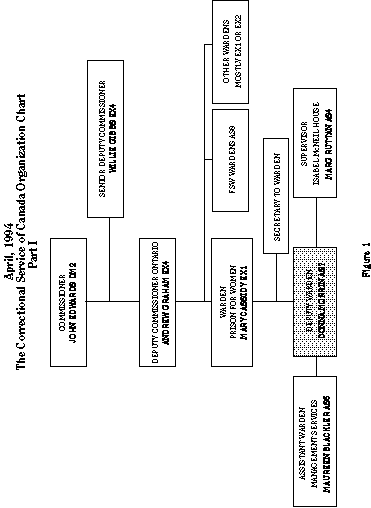
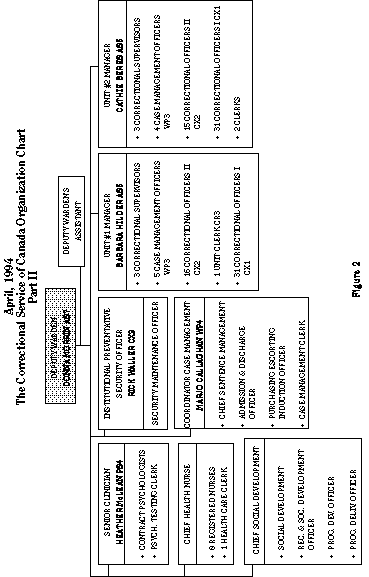
An organizational chart of the positions within the Correctional Service which are relevant to the issues examined is found at Figures 1 and 2.
Pursuant to the CCRA, the Commissioner of the Correctional Service is responsible for the regulation and management of the CSC. Throughout the period material to the events examined by this Commission, the Commissioner was John Edwards. The Commissioner reports to the Solicitor General.
The Commissioner is assisted in the discharge of his responsibilities by a Senior Deputy Commissioner who reports to and works directly with him at National Headquarters in Ottawa. In April of 1994, the Senior Deputy Commissioner was Willie Gibbs, and in September of 1994, Andrew Graham assumed this position.
The Correctional Service is subdivided into five regions (Atlantic, Quebec, Ontario, Prairies and Pacific). A Deputy Commissioner is assigned to each region and is responsible for administration and institutions within that region. In April of 1994, Andrew Graham was the Deputy Commissioner of the Ontario Region. In September of 1994, that position was assumed by Irving Kulik. The Warden of the Prison for Women reports directly to the Deputy Commissioner for the Ontario Region.
1.2 The Organization of the Prison for Women
The organizational chart at Figure 2 outlines the staff positions within the Prison for Women. A brief description of the positions which are relevant for the purposes of the matters examined by this Commission is provided below.
The Warden (Figure 1) of an institution is in charge of all aspects of the prison's operations. In April of 1994, the Warden at the Prison for Women was Mary Cassidy. She had occupied that position since 1987. In mid-September of 1994, Warden Cassidy left this position and it was filled, on an acting basis, by then Deputy Warden Barrie Friel. In November, 1994, ThJrPse Leblanc assumed the position of Warden of the Prison for Women.
The next most senior position is that of Deputy Warden (Figure 2), to whom those with most of the significant inmate responsibilities (including health,
1
2
security and case management, which involves the management of prisoners' personal, institutional, correctional and program needs) report. In April, 1994, the Deputy Warden at the Prison for Women was Donna Morrin. In August of 1994, that position was assumed by Barrie Friel.
The Prison for Women's administration is organized along a model now prevalent in the Correctional Service known as unit management (set forth in CD 005). Unit management contemplates that a group of inmates will live together in a living unit, and that all aspects of management associated with that group of inmates will be centred on that living unit. The physical structure of the Prison for Women, unlike comparable male institutions, precludes the existence of separate living units. Nonetheless, the management model attempts to approximate unit management. In the result, two Unit Managers report to the Deputy Warden. One is in charge of the Segregation Unit and the Wing living area, and the other is in charge of the A and B Ranges. For the periods material to the events examined by this Commission, Barbara Hilder was the Unit Manager in charge of the Segregation Unit and Wing living area (except for some periods of authorized absence in the summer), and Cathy Beres was in charge of the Ranges. Each Unit Manager has a roster of correctional supervisors, case management officers and correctional officers reporting to her. However, due to the lack of truly separate living units within the Prison for Women, correctional staff do not report exclusively to the Unit Manager directly supervising the living area in which they are working. The primary responsibilities of a Unit Manager include the management of a diversity of supervisory and line staff roles in the planing, evaluation and control of human, financial and physical resources for each unit and the responsibility for achieving correctional objectives in each unit.
The positions which report to the Unit Manager include Correctional Officers (CX1, CX2), Correctional Supervisors (CX3), and the Institutional Preventative Security Officer (IPSO). The Correctional Officer 1 (CX1) position is the usual entry level position in the Prison for Women. CX1's are the front line staff who supervise and control inmate movement and activities throughout the prison from a security perspective. CX2's perform a similar role with added case management and supervisory responsibilities. Both groups report to the Correctional Supervisor or CX3 who supervises the operations of the correctional officers and, in the absence of members of senior management (typically in the evening and midnight shifts and on weekends), is in charge of the prison.
The prison's Institutional Preventative Security Officer is in charge of such things as the gathering of information and intelligence affecting the security of the institution, maintaining contact with police departments and criminal court officials, conducting investigations and the preparation of reports on security incidents. In April 1994, Rick Waller was the Acting Institutional Preventative Security Officer. The position was filled on a full-time basis in September of 1994 by Carmine Tedesco.
In addition to the positions described above, the prison has a large complement of health staff and psychologists, as well as individuals with principal responsibility for case management, social development, program delivery, and matters relating to the administration of inmate sentences, all as set out in the organizational chart at Figures 1 and 2. Some of these are full or part-time contractual workers.
1.3 The Physical Layout of the Prison for Women
The prison is an old fashioned, dysfunctional labyrinth of claustrophobic and inadequate spaces holding 142 prisoners of all security levels, minimum through maximum. It has been described as ``unfit for bears''. It is inadequate for living, working, eating, programming, recreation, and administration. Spaces are insufficient, poorly ventilated and noisy. They are not well connected, and frequently can only be reached through narrow corridors, steep stairwells (there are no elevators), and innumerable locked barriers. Some efforts have been made to allow lower security women greater privileges and more freedom of movement. However, the prison grounds are surrounded by an enormous wall, which in the male system, is used by maximum security institutions only, and in many other aspects the building has the characteristics of a maximum security institution.
The only true minimum security unit is actually outside the walls of the prison, although it operates under the authority of the Warden. It was opened in 1990 and is called the Isabel McNeill House. It provides a residence for 11 women who are within two years of their day-parole eligibility and who have a minimum security classification.
All other minimum security women have to serve their sentence inside the multi-level Prison for Women. There are essentially four living units inside the prison which do not strictly correspond to the formal security classification of their occupants.
The most freedom is available in a section known as the ``Wing'', which is entirely separate from the area where the incidents of April 22, 1994 occurred. It contains approximately 50 unbarred small rooms occupied by one, and in some cases, two inmates.
The living accommodation for the remainder of the inmates is contained in a series of barred cells known as A Range, B Range, and the Segregation Unit. A floor plan showing the size and configuration of these cells is found at Figures 3 and 4. A Range is a long two-tier bank of over 50 cells, each 9 feet 2 inches by 6 feet 2 inches in size. B Range is a similar two-tier bank of cells, half as long as A Range, and running parallel to it. The other half is occupied by the area which in 1994 was designated as the Segregation Unit (and which is so described for the balance of this report). It also consists of two-tiered cells, but it is separated into a protective custody area, and a dissociation side (Plate 1). Women housed in A and B Ranges for long periods of time, in some cases years, use personal effects to make their cells more home-like.
The cells in A and B Ranges and the Segregation Unit are thinly divided from each other and connected by a series of ducts. Sound travels easily, and the entire cell area is usually very noisy, made as it is of bare cement and metal.
The Segregation Unit houses inmates who are either in disciplinary or in administrative segregation. (The differences will be described below.) Women who are on suicide watches or in a state of personal crisis are also housed in the Segregation Unit, as are women who request some ``time out'' from the general prison population. These inmates are placed either in the larger dissociation side of segregation, or in the protective custody side, which is occupied by the very small number of inmates whose safety would be at risk in the general population. The two sides of segregation are connected by a door which is often left open.
The Segregation Unit consists exclusively of cells (approximately 20), a small shower area, a small office and a storage space. There is no place in which an inmate can have a private interview with a lawyer. This also precludes private interviews with a psychologist, school teacher, or anyone else. Nor is there any space for programming or recreational activities. Until late 1994, primitive wiring in the area precluded the use of televisions, radios or any other electrical appliances in any of the cells. This made it particularly unsuitable for long-term placement of inmates who were essentially confined to their cells with nothing to do. This was notwithstanding recommendations dating from 1993 that compliance with the CCRA required the installation of the necessary electrical capability, estimated to cost $2,000.00. The plumbing is also old and unreliable, and the difficult events in the Segregation Unit in April of 1994 were compounded by plumbing breakdowns, which at times prevented the toilets from being flushed.
The second tier of the dissociation side of the Segregation Unit can only be reached by a staircase at one end of the unit, which leads to a narrow corridor running just outside the cells in a balcony-like fashion (Plate 2).
In the dissociation side, a cell contains a metal bed which is attached to the wall, a sink, a toilet and in some cases, a pull down writing surface (Plate 3). The view from the cell is through the bars into the corridor beyond (Plate 4). From July, 1994 onwards, this view was obstructed by the addition of a heavy metal treadplate (Plates 5 and 6). At the same time, two cameras were installed in each cell in order to provide constant monitoring of the actions of the cell occupant.
The Segregation Unit of 1994 was perceived as so inappropriate that, following the incidents examined by this Commission, and despite the planned closure of the Prison for Women, half a million dollars were spent building a seven-cell new Segregation Unit in the basement of the prison.
1.4 Daily Life in the Prison for Women
It is generally accepted in the international community that a set of minimum standards should apply to imprisonment. These standards are designed to ensure that the inmates are humanely treated, that their responsibility and dignity is maintained, and that they are prepared as much as reasonably possible for reintegration in their community at the end of their term of imprisonment. The standards which the international community has generally accepted are contained in the United Nations Standard Minimum Rules for the Treatment of Prisoners, which were first adopted in 1955. While Canada, and the Correctional Service in particular, are not obliged to conform to the specific terms of the UN Rules in the management of prisons, those rules are accepted as international norms and minimum standards, and departures from them generally only occur where there is a reasoned justification.
The UN Rules indicate a broad acceptance within the international community of many aspects of Canadian law and stated CSC policy: living accommodation which is appropriately lit, ventilated and cleaned; nutritional food well prepared and served; appropriate bedding and clothing regularly laundered; regular exercise and sports; regular access to medical services; educational, vocational training, and work opportunities as part of daily life; access to religious representatives; access to books and other educational and recreational opportunities (in Canada radio and television); social case work and other counselling to assist the inmate towards a law abiding and self supporting life after release; and an ongoing opportunity to remain in contact with friends and family.
In practice, these principles are reflected in the general organization of daily life at the Prison for Women which may be summarized as follows.
Daily life at the Prison for Women is organized around three shifts, the morning or dayshift from 7:00 a.m. to 3:00 p.m., the evening shift from 3:00 p.m. to 11 p.m., and the night shift from 11:00 p.m. to 7:00 a.m. At regular intervals throughout the day, formal inmate counts are taken by the correctional staff. On those occasions, inmates are locked in their cells and remain there until the formal count is complete and all inmates are accounted for.
Following the 7:00 a.m. count, those inmates not in segregation eat breakfast in a small, centrally located eating area, in three shifts, between 7:30 and 8:30.
From 8:30 until 11:00, they leave their cell units to engage in work programs, educational or related programs, or remain in their cells, or in a small associated activity area. There are limited work programs: they consist mostly of the performance of tasks associated with the running of the institution (kitchen work, laundry, cleaning, clerical, beauty parlour, etc.). Other programs consist of a limited number of educational and vocational programs, and therapeutic services.
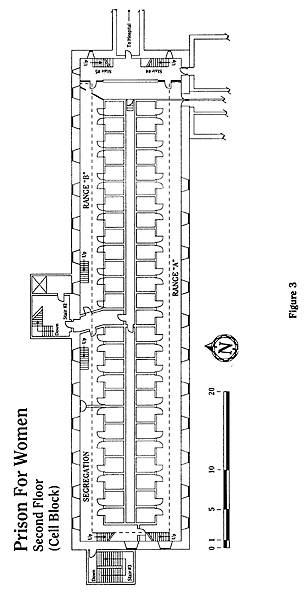 Figure 3
3
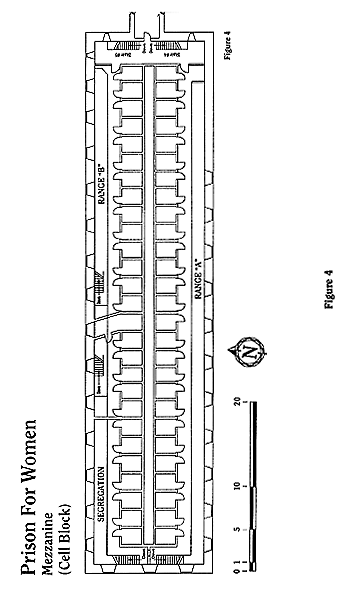
Figure 4
4
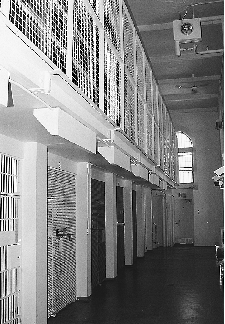
Plate 1
Segregation Unit upper and lower tier of Dissociation side
(From the files of the Ontario Provincial Police)
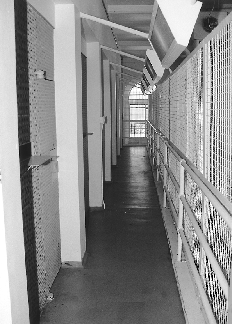
Plate 2
Upper tier Dissociation side
(From the files of the Ontario Provincial Police)
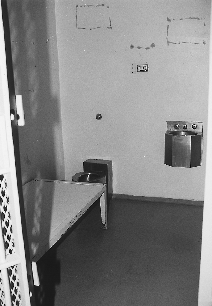
Plate 3
Interior view of a cell
(From the files of the Ontario Provincial Police)
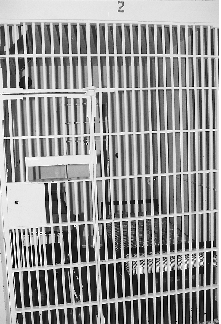
Plate 4
Exterior view of a cell
(From the files of the Ontario Provincial Police)
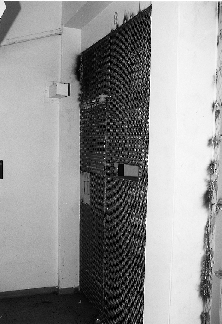
Plate 5
Cell with heavy metal treadplate
(From the files of the Ontario Provincial Police)
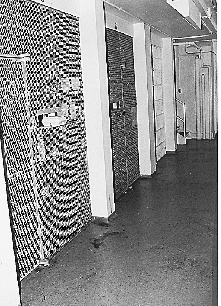
Plate 6
Cell with heavy metal treadplate
(From the files of the Ontario Provincial Police)
Inmates are expected to work, or to participate in a program, and a small pay is allocated for both activities. The pay is used for the purchase of canteen items such as cigarettes, pop, hair care products, etc. Those who remain in their living units have the option of staying in their cells, which are unlocked, or going to a small activity area associated with their living unit which contains laundry facilities, a television set, and a seating area. B Range inmates who are not at work or in programs, remain locked in their cells, but are given the opportunity, once an hour, either to go to the B Range activity room or to remain in their cells. At 11:00 a.m., there is another count, followed by lunch. From 1:00 p.m. until 4:00 p.m. there is a further period for work, programming, or cell activities. At 4:00 p.m. there is another formal count, followed by the evening meal between 4:15 and 6:00 p.m. At 6:00 p.m., the yard opens and weather permitting, inmates rotate through the yard. They may also engage in other small group activities. There is a further count at 9:00 p.m., followed by a final count and lockup at 11:00 p.m.
Those inmates who are in segregation remain locked in their cells throughout the day, except for the one hour in which they are supposed to be provided with daily exercise.
This schedule varies slightly on weekends: there is little, if any, time allocated to work assignments or other programming, and breakfast and lunch are collapsed into one meal.
1.5 The Correctional Investigator
The CCRA establishes the office of the Correctional Investigator as an ombudsperson, independent of the Correctional Service of Canada, who reports directly to the Solicitor General. The relevant provisions of the CCRA governing the activities of the Correctional Investigator are found at section 2.10 below.
The Correctional Investigator and those he hires to assist him, conduct investigations into problems of offenders relating to acts or omissions by the Commissioner of the Correctional Service or anyone under his control and management (unless the action concerns matters relating to the National Parole Board, the Provincial Parole Board, a provincial correctional facility or provincial officer). Such investigations may be initiated by an inmate complaint, a ministerial request, or by the Correctional Investigator on his own initiative. The Correctional Investigator is given broad powers to compel the production of documents and information, including but not limited to any in the possession or control of the Correctional Service, to enter and inspect premises under the control and management of the Commissioner, and to require the giving of evidence under oath. Where the investigation indicates a problem, the Correctional Investigator is required to inform the Commissioner and may make any recommendations, which are not binding, that he considers appropriate. If the problem is not adequately responded to within a reasonable time, the Correctional Investigator is required to inform the Solicitor General. The CCRA broadly protects the Correctional Investigator, and those acting under his authority, from criminal or civil proceedings or review, and creates offences for failing to comply with lawful requirements of the Correctional Investigator.
The Correctional Investigator reports annually to the Solicitor General and between annual reports, may make special reports to the Solicitor General on matters which are of sufficient urgency or importance that they should not be deferred until the annual report. Where an annual or special report will or might reflect adversely on anyone, the person or organization must be given a reasonable opportunity to make representations with respect to the matter and a summary of those representations are to be included in the report.
There are also strict confidentiality and non-disclosure provisions imposed upon the Correctional Investigator which were of significance to his participation in this inquiry. The Act requires that neither the Correctional Investigator nor anyone acting on his behalf may disclose any information gained in the exercise of their duties. Notwithstanding this obligation of confidentiality, s.183 of the Act authorizes the Correctional Investigator to disclose information on certain limited bases. These include circumstances where he considers it necessary in connection with an investigation, or where he wishes to establish the grounds for findings or recommendations made in a report by him. However, s.189 provides that neither the Correctional Investigator nor anyone working under his direction is a competent or compellable witness with respect to any information gained in connection with the discharge of the duties of the office of the Correctional Investigator.
As described more fully below, one of the precipitating events in the appointment of this Commission of Inquiry was a special report of the Correctional Investigator dealing with the incidents which are the subject of this inquiry. At an early stage of the Commission's proceedings, the Correctional Investigator indicated his intention to cooperate fully with the Commission, and to provide as much assistance and information as he could, consistent with the statutory requirements under which he operated.
In the result, the Correctional Investigator determined that extensive documentation compiled by his office should be produced to the Commission because this release was necessary either to carry out an investigation or to establish the grounds for findings and recommendations made by him pursuant to the provisions of s.183 of the CCRA. The documentation received from the Correctional Investigator was disclosed to the parties with standing. However, the Correctional Investigator expressed the view that neither he nor his employees could testify in the inquiry's proceedings by virtue of s.189. The Correctional Investigator and the Commission agreed on a procedure in which questions from any parties with standing were directed to the Correctional Investigator through the office of Commission Counsel, and written answers were provided.
In the result, notwithstanding the statutory constraints, the Commission had substantial access to the records and information compiled by the Correctional Investigator in the course of his investigation of these events.
1.6.1 The Canadian Association of Elizabeth Fry Societies
The Canadian Association of Elizabeth Fry Societies (``CAEFS'') is a federation of autonomous societies which works with, and on behalf of, women in conflict with the law. CAEFS was originally conceived in 1969 and was incorporated as a voluntary non-profit organization in 1978. There are 21 member societies across Canada, including one in Kingston, Ontario where the Prison for Women is located.
Elizabeth Fry societies are community-based agencies dedicated to offering services and programs to women who are, or have been in conflict with the law, advocating legislative and administrative reform, and offering a forum to educate the public on aspects of the justice system which affect women.
1.6.2 The Citizens' Advisory Committee
The Regulations authorize the Warden to set up a Citizens' Advisory Committee (``CAC'') consisting of members of the community to promote and facilitate the involvement of members of the community in the operation of the Service. The CAC may advise the Warden on matters within her jurisdiction, and is expected to make itself available for discussion and consultation with the public, inmates, correctional staff and management. The Regulations require the Warden to ensure that members of the CAC have access to every part of the prison, every staff member, and every inmate for the purpose of carrying out the Committee's functions.
While the Regulations give the Warden the discretion to establish a CAC, the relevant Commissioner's Directive (CD 23) requires that each prison establish one. The Directive also specifies that a member of the Citizens' Advisory Committee may only be replaced prior to the expiry of the membership term if he or she does not want to continue, or acts contrary to the Committee's mandate.
The Prison for Women had a four member Citizens' Advisory Committee, chaired by Dr. Robert Bater. Dr. Bater is a doctor of theology and former principal of Queen's Theological College and head of the Department of Religion at Queen's University. The evidence indicated that the Committee regularly visited the prison and was usually notified of exceptional events at the prison and invited for immediate visits in connection with those events.
1.6.3 Other organizations
There are other organizations who may be referred to in this report, whose functions are evident from their titles: the Union of Solicitor General Employees, the Inmate Committee, and the Native Sisterhood.
1.7 The Correctional Context: Creating Choices
The events that occurred at the Prison for Women in April of 1994, and in the subsequent months, must be understood in the climate that prevailed at the time, within the Correctional Service and in the broader interested community, with respect to the treatment of women offenders. After years of administrative neglect, public apathy, vacillating policies and inadequate resources, there was a major turning point in the early 1990's with the release of Creating Choices B Report of the Task Force on Federally Sentenced Women. The Task Force itself was unlike any previous government body on prison reform in Canada and elsewhere. The Steering Committee of the Task Force was co-chaired by the Executive Director of the Canadian Association of Elizabeth Fry Societies (CAEFS) and a Deputy Commissioner of the Correctional Service of Canada. The majority of the Task Force members were women, and many of the participants were Aboriginal women. The members came from a variety of backgrounds: some had served federal sentences; some were community advocates; and others were public servants and researchers. The Task Force reiterated the findings of previous governmental and non-governmental reports on the Prison for Women: that it was over-secure; erroneously based on a male model of corrections; that women prisoners were geographically dislocated and isolated from their families; that the programs did not meet the needs of prisoners serving a life sentence, or Francophone, or Aboriginal women; and that there were few community or institutional links.
The report concluded that the Prison for Women should be closed, and in its place, five smaller, regional prisons, including a Healing Lodge, should be built across the country. It also urged that a new, women-centred correctional philosophy should govern the operation of these prisons. The reforms recommended in Creating Choices were accepted by the federal government and so were the principles upon which the proposals for reform rested. These principles called for empowerment, meaningful and responsible choices, respect and dignity, a supportive environment, and shared responsibilities.
The federal government's endorsement of the Task Force's principles has been very influential and has led to some provincial reform initiatives, such as Blueprint for Change B Report of the Nova Scotia Solicitor General's Special Committee on Provincially Incarcerated Women, and Women's Voices Women's Choices B Report of the Ontario Women's Issues Task Force.
At the federal level, a National Implementation Committee was struck, whose primary role was the development of plans for the construction of the new prisons, their staffing and operations. The implementation process did not include all the Task Force partners, and generated some criticism. By the summer of 1993, the Wardens for the new prisons had been hired. The Federally Sentenced Women Program Committee, the new internal government implementation process, was put in place, and through it, the spirit of the five main principles of Creating Choices appears to have been retained. By the spring of 1994, the development of the five new regional prisons was at various stages of progress in: Edmonton, Alberta; Kitchener, Ontario; Joliette, Quebec; Truro, Nova Scotia; and Maple Creek, Saskatchewan, which was the site for the Healing Lodge.
As of the writing of this report in February of 1996, Edmonton had already received 17 women, Truro had 7 women, and the Healing Lodge had 10 women in residence. Kitchener and Joliette are still under construction, but their staffing is nearly completed. The closing of the Prison for Women is contingent on the completion of these two facilities, which are scheduled to open in the summer of 1996.
To ensure that its new prisons are appropriate to women's experience, the Correctional Service of Canada has made a financial and philosophical commitment to a program design and a delivery strategy which focuses on the particular needs of women. It has revised its selection and training programs for correctional officers, now called Primary Workers, and developed a new security management system, as well as a new model of classification.
As exhilarating as this initiative which originated with the Task Force has been for women prisoners and prisoners' advocates, the inevitably slow pace of the closure of the Prison for Women and the transition to the new facilities has created considerable tensions within the prison. In anticipation of the closure, many experienced staff members at the Prison for Women sought and obtained transfers to other federal institutions in and around Kingston, when the opportunity presented itself. By the spring of 1994, the prison had an unusually high number of inexperienced staff members.
The uncertainties of change also created anxiety and tension among the inmates, many of whom faced the possibility of a placement that would separate them from their friends. For all manner of reasons, some which are not easily explicable, the prospect of change, even of a change that could be seen objectively as positive, was not welcome by everyone at the prison.
In broader terms, the response of the Correctional Service to the incidents which took place at the Prison for Women on April 22, 1994, and the many months that followed, is difficult to reconcile with the spirit of Creating Choices which was concurrently animating its entire strategy for dealing with women offenders. Nearly every step that was taken in response to this incident was at odds with the intent of the new initiatives.
This will become more apparent in my detailed description and analysis of these events.
2 . FACTUAL FINDINGS AND CONCLUSIONS WITH RESPECT TO THE INCIDENTS UNDER INVESTIGATION
On the evening of Friday, April 22, 1994, a brief but violent physical confrontation took place between six inmates at the Prison for Women and a number of the correctional staff. The six inmates were immediately placed in the Segregation Unit at the Prison for Women. Criminal charges were laid against them; and five of the six inmates ultimately pleaded guilty to offences connected to the incident.
Tension was very high at the prison B particularly in the Segregation Unit. In the subsequent days, behaviour in that unit was very agitated. On Sunday, April 24th, three inmates who had not been involved in the April 22nd incident, but who were already in segregation when the six were brought in, variously slashed, took a hostage, and attempted suicide.
On Tuesday, April 26, 1994, correctional staff demonstrated outside the Prison for Women demanding the transfer of the inmates that had been involved in the April 22nd incident.
On the evening of April 26, 1994, the Warden of the Prison for Women called in a male Institutional Emergency Response Team (``IERT'') from Kingston Penitentiary to conduct a cell extraction and strip search of eight women in segregation: the six who had been involved in the April 22nd incident, and two others. As is customary when the IERT is deployed, the cell extractions and strip searches were videotaped. At the end of the lengthy procedure, which finished early in the morning of April 27th, the eight inmates were left in empty cells in the Segregation Unit wearing paper gowns, and in restraints and leg irons.
On the evening of Wednesday, April 27th, seven of the eight inmates were subjected to body cavity searches.
On Friday, May 6, 1994, five inmates, four of whom had been involved in the April 22nd incident, were transferred to a wing of the Regional Treatment Centre, a male psychiatric treatment facility within Kingston Penitentiary. Two of these women subsequently launched habeas corpus applications, and on July 12, 1994, they were ordered returned to the Prison for Women. Four inmates were returned to the Prison for Women between July 14th and 18th, 1994, while another was transferred to the Regional Prairies Centre.
The six women who had been involved in the April 22nd incident remained in segregation for many months. On December 1, 1994, the women's agreement to plead guilty to related criminal charges was publicly announced. They appeared in court and pleaded guilty to the agreed charges on December 22, 1994.
The women were released from segregation between December 7, 1994 and January 19, 1995. (One inmate was released from the prison during the period of her segregation. She was subsequently returned to the prison and was admitted directly to the Segregation Unit.)
On January 20, 1995, the Correctional Service released the report of a Board of Investigation which had been appointed by the Commissioner of the Correctional Service to look into the incident of April 22nd, subsequent events in the Segregation Unit and certain associated matters. The report was critical of certain aspects of the management of the Prison for Women generally. It gave little attention to the IERT attendance, and in fact mis-described the nature of the IERT's procedure. It did not deal extensively, and sometimes not at all, with many aspects of the response of the Correctional Service to the April 22nd incident and its aftermath.
On February 14, 1995, the Correctional Investigator made a special report to the Solicitor General which was severely critical of the Board of Investigation Report, the IERT attendance, and the conditions and duration of the segregation of the inmates involved.
On February 21, 1995, the Solicitor General tabled the Correctional Investigator's Special Report in the House of Commons and announced his intention to call for an independent inquiry into the matters described above. The same day, substantial extracts of the video of the IERT attendance were shown on the CBC program, Fifth Estate.
On April 10, 1995, the Governor General in Council appointed this Commission of Inquiry pursuant to Part II of the Inquiries Act.
Of all the factual matters under scrutiny by this inquiry, this is probably the most difficult to determine with any degree of precision. This is so for many reasons. First, more than on any other factual issue, the parties take dramatically different positions. The Union argues that the events under investigation began with a planned and deliberate, large-scale attempted escape by some six prisoners, and that it involved nothing short of an attempted murder. The inmates, at least the two who testified before this inquiry, reneged on the guilty pleas they had entered as a result of the criminal charges laid in relation to these incidents, and essentially exonerated themselves and their fellow inmates from almost anything culpable. CAEFS and the Correctional Investigator take the position that it is nearly impossible for this Commission to determine what happened B largely due to the inadequacies of the investigations carried out by the Correctional Service immediately after the incidents.
I indicated to all parties at the outset that a precise and definitive determination of what happened on the evening of April 22nd was not essential to the discharge of my mandate, and would be a futile, time-consuming and expensive exercise. Dozens of witnesses would have to be called to recount their recollection of an incident that lasted a few minutes and about which sufficient reliable information already exists. For the purpose of determining the adequacy of the response taken by the Correctional Service in the days, weeks and months that followed the incident, it is only important to appreciate its significant elements.
Criminal charges were laid against the inmates involved on April 22nd, and in December of 1994, guilty pleas were entered in open court, in a proceeding in which the inmates were represented by counsel who agreed, on their behalf, to a recital of significant facts presented by the prosecution.
On all the evidence before me, I am satisfied that the guilty pleas, and the facts tendered in support of these pleas, present a reliable summary of the significant elements of the events on April 22nd. These facts are as follows.
The incident took place shortly before 6:00 p.m. on April 22nd. The B range inmates were attending the hospital area, as is routine, to receive prescribed medication. Inmates Young and Shea approached the hospital barrier and inmate Young began to demand her medication in a loud and aggressive voice. The two inmates were quickly joined by inmates Twins, Morrison, Emsley and Bettencourt. Most of the inmates wore street clothes.
There were six inmates in an area controlled by four correctional officers B Vance, Boston, Metivier and Fabio. Officer Vance questioned the group at which point the inmates jumped the officers on what appeared to be a signal from Ms. Twins. Ms. Morrison attacked Officer Vance, striking her a number of times in the upper abdomen, left arm and left thigh area with an instrument, which was never recovered, capable of making of puncture marks. Ms. Young also jumped Officer Vance and during the course of the assault, the officer recalls hearing the words ``kill you'' spoken by one of the inmates.
Inmate Young turned to inmate Twins and said: ``Where is the scissors? Give me the scissors so I can stick her.'' Inmate Twins reached for a pair of hobbycraft-sized scissors and tried to pass them to inmate Young, but they were knocked clear and taken by Officer Boston.
Officer Metivier attempted to telephone for help and the phone was disconnected by Ms. Twins who told Officer Metivier ``stay back, this doesn't concern you''.
Officer Boston pulled Ms. Morrison from Officer Vance and Ms. Morrison turned on Officer Boston delivering a number of kicks to her upper body area. At some point Ms. Morrison grabbed a telephone and attempted to use it to strike Officer Boston, but no blows were received.
Ms. Twins grabbed Officer Fabio, who had gone to assist Officer Vance, around the neck and said to her: ``You're my fucking hostage. We're going out through the front door.'' Officer Fabio was able to break free and was attacked by Ms. Young, Ms. Bettencourt and Ms. Morrison, who grabbed her and struck her. Inmate Young said: ``Grab the telephone cord. We'll string the bitch up, right here.'' Inmates Young and Bettencourt tried to pull Officer Fabio onto B range and were heard yelling: ``We've got her. She's coming with us. Let's get her.'' Inmate Young pulled Officer Fabio by the hair and clumps of hair similar in colour to that of Officer Fabio were later found on the floor.
Correctional Supervisor Gillis arrived, armed with mace, and ordered the inmates to release Officer Fabio. They wouldn't, and Correctional Supervisor Gillis maced both inmates, thereby freeing Officer Fabio who remembers thinking that she was going to be killed.
Officer Boston had attempted to go to Officer Fabio's aid and was grabbed around the throat by Ms. Twins who said: ``Give me your keys. We're going out the front door. Don't push me, Boston. I've got a shiv, and I'll stick you.'' Ms. Twins then attempted to get Officer Boston's key from her pocket. Correctional Supervisor Gillis attempted to control the situation and Ms. Twins kicked him in the groin area, whereupon he maced her.
After the immediate situation was controlled, the inmates were removed from the area to the Segregation Unit. Three of the inmates initially escaped to the range area, but were located and returned. During the course of the removal to the segregation area, Ms. Bettencourt became violent, biting, kicking and spitting at the escort officers. She kicked Officer Smith in the left knee. Officer Smith had previously had medical problems with the knee. The doctor later diagnosed a torn cartilage, and placed Officer Smith in a hip to ankle cast. She was subsequently rushed to hospital as a result of blood clotting.
The incident was very brief, lasting a minute and a half to two or three minutes at most.
The following guilty pleas were entered to the charges laid as a result of the incident:
! Brenda Morrison pleaded guilty to attempt prison breach, assault upon Correctional Officer Fabio, assault upon Correctional Officer Vance with a weapon, and assault upon Correctional Officer Boston.
! Joey Twins pleaded guilty to attempt prison breach, possession of a weapon for a purpose dangerous to the public peace, to wit a pair of scissors, assault upon Correctional Officer Fabio, assault upon Correctional Officer Boston, and assault upon Correctional Supervisor Gillis.
! Ellen Young pleaded guilty to attempt prison breach, to forcibly seizing Correctional Officer Fabio, to assaulting Correctional Officer Vance, to uttering threatening to cause serious bodily harm to Correctional Officer Vance, and to a threat to cause serious bodily harm to Correctional Officer Fabio.
! Paula Bettencourt pleaded guilty to forcibly seizing Correctional Officer Fabio and committing an assault causing bodily harm upon Correctional Officer Smith.
! Patricia Emsley pleaded guilty to assault upon Correctional Officer Fabio.
! Dianne Shea was found not guilty of any of the charges laid against her in connection with the April 22nd incident, but she did plead guilty to threatening to cause bodily harm in an exchange which took place in the Segregation Unit two days later.
There are only two significant factual questions that are left unanswered by the facts offered in support of the guilty pleas. The first one is whether or not the event was part of a planned escape attempt, and if so, how extensive and sophisticated the plan was. The second issue of significance is whether or not the weapon used in the assault to which Brenda Morrison pleaded guilty was in fact a syringe, indeed, whether it was possibly an HIV-infected syringe.
2.2.2 Whether there was a planned escape attempt
Although the evidence suggests that the events of April 22nd were not entirely spontaneous, it does not support the conclusion that there was much planning, except possibly for a short caucusing between inmates a few minutes before they came to blows with the Correctional Officers. The facts tendered at the hearing in support of a contention that the attempted escape was planned do not, in my opinion, support that conclusion. These facts include the alleged unusual behaviour of some of the inmates on the evening of April 21st in not attending dinner. I cannot conclude that any such unusual occurrences are sufficiently probative of a plan to escape or otherwise, for me to draw any such inference. The most probative evidence of planning is said to be that inmates involved were wearing outdoor clothing such as short bomber jackets, and that there would have been no reason for them to be dressed in that fashion on the evening of April 22nd. No efforts were made at the time to seize and preserve the clothing as evidence to support a plan to escape. In the absence of such evidence, and in light of the somewhat vague and in some cases contradictory descriptions given on that point by the witnesses, I am unable to conclude that the inmates were in fact clothed in such a way as to indicate their intention to escape. I do not think that the other evidence offered to support a conclusion of long-term planning leads to that inference and I think that some of the evidence given, for example, that one inmate the night before had requested that hot dogs be individual wrapped, is entirely incapable of supporting that conclusion.
However, I accept the evidence which suggests that the assaults were not entirely spontaneous, but rather the result of some collaboration on the part of at least some of the inmates shortly before the incident began.
2.2.3 The existence of a syringe
I believe that Officer Vance is firmly convinced that she was stabbed with a syringe. I believe her evidence that she formed that opinion at the time of the event, and to this day, she is still persuaded that this was the case. I believe that she gave her evidence honestly, and I do not find it far-fetched or unreasonable for her to be of that opinion. However, on the evidence before me, and again largely because of the insufficiency of the search that was conducted at the time, and possibly also as a result of the insufficiency of the observation reports that were recorded by the correctional officers who had been involved in the incident or its aftermath, it is impossible to conclude with a sufficient level of confidence that a syringe was in fact the weapon with which Officer Vance was stabbed.
In light of these conclusions, I cannot give effect to the submissions by the Union that in all the circumstances, a finding could be made that any of the assaults perpetrated by the inmates on the staff revealed an intentional attempt to kill. I add that no one was ever charged with attempted murder.
2.2.4 The significance of the incident
It is apparent from all the evidence that the single most important feature of what took place on April 22nd, which explains in part the behaviour of many of the parties involved in the immediate aftermath of these events, was the profound breach of trust that this unpredictable violent group attack on staff would create. Fear and distrust were two dominant emotions that were introduced in an environment in which fatigue, exasperation, even resentment and anger are not unknown.
The incident had profound and long-term effects on the correctional staff who were most directly involved. Officer Metivier was off work for a year and no longer works at the Prison for Women. Officer Boston took three months leave and no longer works at the Prison for Women. Officer Fabio immediately returned to work at the Prison for Women, but had difficulty putting the events behind her. She ultimately transferred to another institution. Officer Vance remained off work for seven months. She attempted to return to work, but was unable to do so. She no longer works at the Prison for Women, and indeed, has left the Correctional Service of Canada. Officer Vance had come to the Correctional Service with a B.A. in Women's Studies and Criminology, a background in correctional work, and had joined the Correctional Service of Canada for the specific purpose of working at the Prison for Women.
When examined from this distance, and without by any means trivializing it, the brief incident of April 22nd looks objectively less serious than it was perceived to be by the correctional authorities at the Prison for Women, and by the staff members who were assaulted and their colleagues. On the other hand, the sentiments and the emotions that it triggered were equally real and the challenge that it posed to the prison management was to deal with these two levels of reality.
2.2.5 Departures from Correctional Service policy
Mace was used to subdue three of the inmates involved in the April 22nd incident. Although Correctional Service policy contains elaborate provisions with respect to decontamination following the use of mace, in this case, decontamination was limited to pouring some glasses of water over the inmates' eyes. The inmates were taken to the Segregation Unit where they were locked in individual cells. The Post Orders at the Prison for Women and the usual practice, dictate that upon admission to segregation, an inmate is strip searched in order that any weapons, drugs, or incriminating evidence may be seized. Such strip searches were not done on the inmates admitted to segregation on the evening of April 22nd. Nor were they searched during the following four days.
Consistent with Correctional Service policy, the correctional staff involved in the April 22nd incident all completed written observation reports. In a number of cases, the reports were not completed, as is the usual practice, prior to the departure of the Correctional Officers from the prison. A number of reports were prepared over the period April 23rd to 25th, and in almost every case they were prepared after consultations, formal and informal, among the Correctional Officers involved.
Following the incident, the IPSO contacted the Kingston Police to report on the event, but advised that they not attend to conduct an investigation that night on the basis that the correctional officers were preparing statements, that they did not wish to be interviewed that night, and that there was no crime scene requiring preservation. The police accepted that advice and did not attend at the institution until Monday. No systematic search of the area was conducted by prison authorities, nor was there a concerted effort to identify, seize and retain evidence.
The detailed Use of Force Report, which Correctional Service policy requires be completed after an incident such as this, was completed in part over the following days. Contrary to Correctional Service policy, it did not describe the complete range of the use of force employed in connection with the incident, nor did it contain any mention of a second macing of one of the inmates. There was no report from a health care officer, no proper reporting with respect to the use of mace, and no record of the inmates being advised that they could provide their version of the extent of the use of force to the Warden.
I will comment on these several departures from policy in turn.
2.2.5.1 Failure to follow decontamination procedures
(a) Correctional Service policy
CD605 B USE OF FORCE (1993-09-29)
28. Staff members who may be required to use firearms, CN or CS gas or authorized spray irritants in the course of their duties, shall qualify with requalification to follow:
(a) every three years in the use of CN and CS gas and authorized spray irritants
29. Following incidents where force has been used, or restraint equipment applied to control an unruly inmate, all affected persons shall be examined as soon as possible by health care personnel and provided with treatment as required. Any follow-up medical attendance shall be provided as deemed appropriate by health care staff. The results of the examination and any follow-up shall be recorded and a report forwarded to the institutional head.
1
SECURITY MANUAL B USE OF FORCE CHAPTER
21. As soon as possible, persons exposed to gas or spray irritants shall be:
(a) moved from the immediate area;
(b) allowed to shower, wash and bathe their eyes;
(c) provided with a change of clothing; and
(d) examined by a health care officer and, if required, by the institutional physician.
2
The inmates who had been maced were not decontaminated in accordance with policy. This raises a preliminary question of the use of mace. Although there have been suggestions that it is over-used, or was over-used at the Prison for Women, there was no serious contention before me that alternatives were preferable and that therefore the use of mace should be banned. Throughout the timeframe in which these events unfolded, mace was used on several occasions. On balance, on the basis of these occurrences, I think it has been, in some instances, a preferable alternative to other methods of intervention.
However, the decontamination procedures contained in CD 605, and in the Security Manual, are important for two reasons, and should be very strictly enforced. I do not accept the position of the Correctional Service that the decontamination in this case was adequate because it was supervised by a qualified medical practitioner. This, in my view, addresses only one of the reasons for extensive decontamination procedures. I accept the evidence of Dr. Pearson that the inmates that she did decontaminate by pouring water into their eyes were sufficiently decontaminated to alleviate any medical concern. Some form of decontamination is essential to protect the wellbeing of persons subjected to mace, and failure to provide any decontamination, as was the case when Ms. Paquachon was maced on April 24, 1994, is a very serious deficiency.
However, the comprehensive use of spray irritant and decontamination procedures contained in CSC policy serve also another important purpose. Only staff members specifically authorized to do so may use mace in the course of their duties. These staff must receive periodic training. Further, the Security Manual provides that as soon as possible, persons exposed to gas or a spray irritant shall be (a) moved from the immediate area; (b) allowed to shower, wash and bathe their eyes; (c) provided with a change of clothing; and (d) examined by health care officers, and, if required, by the institutional physician. Finally, the Use of Force Reports require that the mace can be weighed after each use, and that the weight be recorded, so that the amount of mace used can be properly ascertained. These records were inadequately kept in this case.
The purpose of these procedures is not solely to ensure the physical wellbeing of people exposed to mace. It brings home to those authorized to apply it that it is not a routine procedure, and that every usage entails a set of operational and reporting consequences. The existence of elaborate procedural requirements often operates to discourage potential abuse. I believe that this should be the case when spray irritants are used, and for further control, I would recommend that additional supplies of spray irritants to an institution should only be issued upon a review of the Use of Force Reports in which the use of the spray is accounted for. In short, the policy with respect to the use of mace was appropriate, and if anything, should be reinforced. It was not complied with in part because it was not known, or, in any event, only the general medical concern for decontamination appears to have been known. It is apparent that the undesirabilitty of using more force than is necessary has to be brought home to those authorized to use force; and these events demonstrate that the constraints attached to the use of mace by the elaborate decontamination procedures were totally ineffective in achieving the dissuasive effect they should have had.
2.2.5.2 Compliance with policy concerning Use of Force Reports
This represents the beginning of a long series of deficiencies in reporting at the Prison for Women. This deficiency appears to have been tolerated by the Correctional Service, both at the Regional and the National level, and is not inconsistent with some of its practices with respect to the adequate completion of required documents.
With respect to the April 22nd incident, the serious deficiencies in the only Use of Force Report prepared constituted a violation of what had to be a known policy, since the key policy requirements are apparent from the form used. Once again, this is part of a general and obviously accepted pattern of incomplete reporting.
The failure to account adequately for incidents where force was used is a significant departure from policy which, as illustrated by this case, does not serve CSC well. Apart from communicating internally the nature of the incidents in which force was used, the completion of the report brings home to the person involved the seriousness of any interference with the physical integrity of another person. The leadership for adequate compliance with this policy requirement should come strongly at the institutional level. In its final submissions, CSC suggested that inadequate reporting on use of force should be remedied by the adoption of an elaborate system of public annual reporting on Use of Force Reports at the National level. This submission would require the setting up of a bureaucratic effort that would not need to be undertaken if the requirement were properly understood at the institutional level. In any event, I see no reason why the addition of this elaborate bureaucratic system of reporting would improve compliance at the institutional level.
Particularly in the case of a serious and unusual incident such as this one, the proper and thorough completion of the required report is essential for the safeguarding of all parties' interests in subsequent proceedings, including CSC investigations, as well as internal and external charges.
2.2.5.3 Compliance with policy regarding searches upon admission to segregation
Although the Correctional Service in its written submissions argues that the strip searching of inmates upon admission into segregation is merely permissive, and not required by either the law or the applicable Commissioner's Directive, it concedes that strip searching of inmates in such circumstances is a standard practice in the Service. The factual reason advanced for not having conducted all the strip searches in this case is, that there were too many inmates, insufficient staff, and that conditions in segregation were basically just too hectic.
In light of the events in which they had been implicated, it is absolutely clear that these inmates should have been searched as soon as possible upon their admission into the Segregation Unit, if for no other reason than to attempt to preserve any evidence in relation to the incidents. The evidence indicates that their placement in individual cells was relatively uneventful, and it is difficult to accept that it would have been impossible to perform a strip search of each inmate upon admission. Even assuming that it was not possible to do it immediately, inmates placed in segregation cells should have been searched in the course of the rest of the evening and night of the 22nd. It is apparent from subsequent events that the failure to search at the earliest opportunity proved extremely unwise.
2.2.5.4 Investigation of the incidents
The failure to turn over immediately the investigation of the April 22nd incident to the police was in breach of Correctional Service policy as expressed in Commissioner's Directive 581. The policy was known, since the police were contacted. Officers involved should have been made available to the police for interviews, or, at the very least, their observation reports should have been fully completed prior to their departure from the institution, and therefore prior to any opportunity for their individual recollection to be tainted by their inevitable subsequent discussions. Moreover, police intervention at the earliest stage might have assisted in preserving the evidence and directing the conduct of systematic searches, in particular given the allegation respecting the syringe. This failure to follow sound investigative policies had serious consequences in preserving the basis upon which to ascertain what happened on that night. The decision not to involve the police was ill thought out and reflective of a general laxness with respect to the enforcement of CSC policies.
2.3 The Segregation Unit at the Prison for Women, April 22-26, 1994
The April 22nd incident was seen as an unprecedented assault on staff. It produced tremendous hostility, resentment and fear among members of the staff at the Prison for Women. The staff response was itself unprecedented, and included an unwillingness to act upon the Warden's order to unlock the ranges, and the holding of a demonstration demanding the transfer of the women involved in the incident out of the Prison for Women and into a special handling unit. (Special handling units house inmates seen as extremely serious security risks in conditions of security, isolation and with special programming. There are only two special handling units in Canada B both male.) While some steps were taken to try to reduce the level of trauma B debriefings, further meetings with staff, sick leave for those most affected B it is clear that those reactions persisted among staff in the days and weeks that followed. Prison management, and those in the Regional Headquarters and National Headquarters were aware of the ongoing staff reaction.
It is also evident that for the inmates involved, there were not the comparable opportunities to reduce the emotional stress of the events which were available to the staff who had debriefings, informal social gatherings, and the opportunity to leave the institution to go home. On the contrary, the inmates were placed in constant contact with the other inmates involved in the incidents (together with a small number of other inmates already in the unit by reason of individual personal crises), thereby making it impossible to distance themselves from the events, and producing an inevitable solidarity among them.
From the evening of April 22nd to the evening of April 26th, there were extraordinary levels of unrest in the Segregation Unit. There were also periods, sometimes whole shifts, that were quiet or normal.
Previous experience at the prison indicated that significant verbal abuse and ``acting out'' by inmates, particularly if placed in segregation, was not unusual; nor was the throwing of liquids, including bodily fluids such as urine.
From the beginning of these events, there were periods in which the inmates were acting out, and engaging in verbal abuse ranging from demands (for amenities or rights to which they thought they were entitled and which were being denied), through insults, and threats. Sometimes the noise level was so high that the entire unit seemed to vibrate.
Commencing in the afternoon of April 24th, the acting out included the throwing of food trays, juice, water, and then urine.
Late on April 24th, one of the inmates who had not been involved in the April 22nd event, Florence Desjarlais, slashed herself. She was extremely upset and demanded to speak to another inmate who was also in segregation and who had not been involved in the assaults, Sandra Paquachon. The correctional staff decided to let Florence Desjarlais speak to Sandra Paquachon from the outside of the latter's cell. While she was there, Sandra Paquachon put a sheet around Florence Desjarlais' neck and held a nail to her head saying that she had a hostage. In response, the correctional staff maced Sandra Paquachon and freed inmate Desjarlais. Following the macing, Sandra Paquachon was not decontaminated by anyone from health care; nor was she given a shower.
Later that evening, another inmate in the Segregation Unit who had not been involved in the April 22nd incident attempted to hang herself. Correctional staff removed her from her cell, stripped her of her clothing and moved her to a cell, still in the dissociation side of the Segregation Unit, where it was thought she could more easily be observed.
Commencing on April 25th, the periods of acting out in the Segregation Unit included, on occasion, the setting of small fires.
On the afternoon of April 26th, Dr. Robert Bater, the Chair of the Citizens' Advisory Committee, visited in the Segregation Unit and talked to a number of the inmates. He testified that he did not feel threatened and was made to feel welcome by the inmates.
Later, on the afternoon of April 26th, Officer Ostrom, while patrolling the unit alone, was confined at the end of the upper range by threats, apparently accompanied by the swinging of items thought to be weapons. She was escorted from the range by Correctional Supervisor Warnell, who was armed with a mace can.
2.3.1 Issues raised with respect to the operation of segregation
2.3.1.1 The scale of the disruption
One question raised by the evidence is whether or not the collective behaviour of the inmates was of a scale so unprecedented as to be unmanageable, and in my opinion the answer to that question is no. Each inmate was lodged individually in a segregation cell, and although at times their collective behaviour was highly disruptive and, in some cases, assaultive to persons who approached their cells, it is inconceivable to suggest that between the evening of April 22nd up until the evening of April 26th, when the IERT was called in to intervene, nothing could have been done to bring the situation in that unit under control.
Inmates placed in segregation must be advised of their right to legal counsel and given a reasonable opportunity to speak to a lawyer without delay.
This simple and straightforward proposition, however, must be extracted from the statutory, regulatory and policy scheme set out below.
CHARTER
s.10 Everyone has the right on arrest or detention
(b) to retain and instruct counsel without delay and to be informed of that right
CCRA: STATUTE
96. The Governor in Council may make regulations
(w) providing for inmates' access to
(i) legal counsel and legal reading materials,
CCRA: REGULATIONS
97(2) The Service shall ensure that every inmate is given a reasonable opportunity to retain and instruct legal counsel without delay and that every inmate is informed of the inmate's right to legal counsel where the inmate
(a) is placed in administrative segregation; or
(b) is the subject of a proposed involuntary transfer pursuant to section 12 or has been the subject of an emergency transfer pursuant to section 13.
3
(3) The Service shall ensure that every inmate has reasonable access to
(a) legal counsel and legal reading materials;
COMMISSIONER'S DIRECTIVES
CD084 B ACCESS TO AND REPRESENTATION BY LEGAL COUNSEL
4. In accordance with subsection 97 (2) of the Regulations, an inmate shall be permitted to communicate with legal counsel by telephone as soon as practicable, and in any case within not more than 24 hours:
a. following placement in administrative segregation;
b. following notification of a proposed involuntary transfer;
c. following completion of an emergency transfer.
CD085 B CORRESPONDENCE AND TELEPHONE COMMUNICATION
17. Inmates shall be given the opportunity to retain legal counsel in accordance with Commissioner's Directive 084, entitled ``Offender's Access to Legal Assistance''.
COMMUNICATIONS WITH PRIVILEGED CORRESPONDENTS
18. Telephone calls to those identified in Annex ``A'' [which refers to legal counsel] as authorized privileged correspondents, shall normally be granted. Such calls shall be provided, subject to operational constraints, during normal business hours. Inmates are required to provide reasonable notice, of no less than 24 hours, of their wish to communicate by telephone with privileged correspondents. However, the institutional head may decide, depending on the circumstances, that the reasonable notice is not required.
19. Calls between inmates and privileged correspondents are normally confidential. They may however be subject to monitoring if the conditions stipulated in Commissioner's Directive 575 are met.
20. Should the institutional head or delegate determine the need to restrict access to telephone communication with privileged correspondents, he/she shall communicate the rationale for the decision in writing to the inmate and to the person concerned. Copies shall be forwarded to Regional and National Headquarters.
CD540 B TRANSFERS
13. When an involuntary transfer is proposed, or once an emergency transfer takes place, an inmate shall be advised of his or her right to retain and instruct counsel without delay, and afforded a reasonable opportunity to do so.
4
CD 590 B ADMINISTRATIVE SEGREGATION
13. Upon involuntary placement in administrative segregation, an inmate shall be informed of his or her right to retain and instruct legal counsel without delay, and afforded a reasonable opportunity to do so.
PRISON FOR WOMEN STANDING ORDERS
STANDING ORDER 86
9. Administrative Segregation Inmates shall be afforded three (3) telephone calls per week to their lawyers. Lawyer calls are normally to be completed during working hours unless time differences necessitate an evening call. Calls to lawyers after working hours shall be approved by the Correctional Supervisor. Normally, the inmate's lawyer's telephone number shall be verified with the Case Management Officer when the inmate enters Segregation. In cases where this is not possible, the COII shall place the phone call in an effort to verify that the call is to the inmate's lawyer.
13. All segregation telephone calls are regulated by inmate behaviour and staff availability. Telephone calls shall be recorded in the log and limited to . . . twenty (20) minutes for daytime lawyers' calls . . . If the lawyer cannot be reached on the first call, additional reasonable attempts will be made.
14. Telephone calls may be facilitated from the inmate's cell for problematic inmates.
15. Documented contravention of rules and regulations may result in suspension of telephone privileges until reviewed by the Visits and Correspondence Board and the Warden.
STANDING ORDER 590
28. Where an inmate is segregated as a result of an investigation of a criminal offence, she shall be immediately advised of her rights, normally by the IPSO, and allowed immediate telephone access to her lawyer.
PRISON FOR WOMEN POST ORDER 430
ANNEX ``B''
2. Lawyers' calls may be made in the daytime.
5
4. Calls to lawyers are limited to three (3) per week. These calls are to be accommodated during working hours. Calls to lawyers after hours must be approved by the Correctional Supervisor. The offender's lawyer's telephone number shall be listed when the offender enters dissociation with the Case Management Officer who will again verify and notify Segregation. The telephone numbers will be dialled by the officer in the unit.
5. An offender who misuses this procedure will forfeit her telephone privileges for one week.
9. All telephone calls are regulated by offender behaviour and staff availability. The calls are to be recorded in a log and limited in time, i.e. evening social calls B 30 minutes, daytime lawyers' calls B 20 minutes, and free calls B 15 minutes.
10. If a lawyer cannot be reached it is reasonable to try one more time. An offender is allowed reasonable access to telephones to call her lawyer(s), and considering the extensive duties in the unit, three calls per week to lawyers is considered to be reasonable access.
65. A request for legal services from an offender in the Segregation/ Dissociation Unit shall be referred promptly to the offender's case management officer.
6
Throughout the period April 22nd to April 26th, inmates were neither advised of their right to counsel, nor given access to counsel. Inmates' specific and repeated requests for lawyers were denied. Indeed, this denial continued until April 29th.
Beginning on the morning of April 29th, inmates were allowed to make 10 minute calls to lawyers. The memo directed to correctional staff accordingly indicated that such calls were to be ``... depending upon individual behaviour''.
On May 2, 1994, the minutes of the senior managers' daily meeting known as the Operational Security Meeting record ``phone calls for lawyers B reasonable access B no time limit''. There is some conflict in the evidence as to whether the time limits on lawyers' calls were actually removed. The Post Orders and Standing Orders continued through the period to impose restrictions beyond those suggested in these minutes.
On June 24, 1994, the prison issued a set of revised Segregation Procedures which specifically referred to the requirement of the Regulations and the directive noted above, and further elaborated that lawyers' calls could not be restricted to working hours, or to three attempts to reach the lawyer in the course of a week.
The applicable Standing and Post Orders at the prison do not reflect the legal obligation to advise of, and facilitate immediate access to counsel. The evidence of the Warden and Deputy Warden indicated that the general approach to this issue within the prison was that inmates were not advised of their rights, were not granted access to counsel on the weekends, and that telephone calls were based on behaviour.
The evident lack of knowledge of the applicable legal principles was repeated in a briefing note prepared for the Commissioner shortly before he testified in these proceedings. That note proceeds largely on the basis of a discussion as to whether or not the Standing Order was complied with, without regard to the important fact that compliance with the Standing Order does not constitute compliance with the law. This is clearly a case where administrative directives obscure the simple legal requirement, rather than facilitate its enforcement.
2.3.2.3 Denial of legal obligation drawn to the attention of the Correctional Service
It is has been noted that inmates made specific requests for counsel which were denied. They repeated their concerns in the complaints and grievances filed on this matter which are described below. Other people also brought the failure to meet the legal obligations to the attention of the Correctional Service.
The Executive Director of CAEFS raised concerns with the Warden and Deputy Warden in late April of 1994. She also testified that she believed she advised the Commissioner during a meeting with him in early May that access to counsel had not been provided.
The denial of the right to counsel was also raised as a complaint in the course of the habeas corpus applications launched in June following the transfer of a number of the inmates to the Regional Treatment Centre.
During the course of this inquiry, the Correctional Service ultimately acknowledged that the legal obligations concerning inmates' rights to counsel were not met in this case. The Commissioner specifically acknowledged that he had been aware since the release of the Correctional Investigator's report that the obligation had been breached.
2.3.2.4 Response of the Correctional Service
The Service does not appear to have taken any steps at any stage to respond to the early indications and subsequent confirmation that this important legal obligation was not met.
On the contrary, in the case of the habeas corpus application, the response of the Service was to deny any breach of the obligation. The sworn evidence filed with the court on behalf of the Service was misleading and inaccurate. The evidence stated:
Access to legal counsel has been provided constantly. However, it was limited when security staff was engaged with putting out fires, avoiding objects being thrown at them, and generally trying to restore calm to the unit. To the best of my knowledge, counsel was able to visit the applicant and other inmates on April 29, 1994.
Obviously none of that is pertinent to the Service's obligation to inform inmates of their right to counsel, an obligation that police officers discharge routinely in much more adverse and dangerous circumstances.
Moreover, the evidence is that whatever the relevance of security concerns, there were many times from April 22nd on when there was no activity of the sort described above and during which access to counsel could safely and easily have been provided. Not only was there no communication with counsel until April 29, 1994, counsel did not visit any of the inmates until May 3, 1994.
It is clear that the right to counsel was largely unknown. It is equally clear to me that even when the existence of that important legal right was brought to the attention of several witnesses while they testified, many indicated a lack of appreciation of the importance, or purpose of such legal entitlement, and of the need to comply with it. One can fairly predict that unless some sanction is attached to the lack of compliance, the entitlement to legal assistance upon placement in segregation will remain largely illusory. This is an instance where, although the law is clear, it was largely unknown to those responsible for administering it; it also does not seem that the law is perceived within CSC as particularly appropriate. This assessment is entirely at odds with the importance attached to this right in all other elements of the criminal justice system. The suggestions advanced in the evidence that the right to counsel could not be complied with because of the behaviour of the inmates is entirely unacceptable, first, because it is not supported by the evidence, and secondly, because even taking the events at their most disruptive level, it could not provide for an excuse for failure to comply with the law. This is particularly so when one considers the legal obligation to at least inform the inmates of their right. Nothing in their behaviour could dispense the Correctional Service from discharging that modest obligation.
I will address in Part II of this report the appropriate sanctions that should be developed to ensure compliance with that and other important legal requirements.
I will return later to the issue of the inaccurate and misleading evidence given the court on this issue.
The law requires that the Service take all reasonable steps to ensure that each inmate has one hour of exercise a day outside if the weather permits, and inside if it does not.
This emerges from the provisions found below.
UN STANDARD MINIMUM RULES FOR THE TREATMENT OF PRISONERS
RULE 21
Every prisoner who is not employed in outdoor work shall have at least one hour of suitable exercise in the open air daily if the weather permits.
CCRA: REGULATIONS
83(2) The Service shall take all reasonable steps to ensure the safety of every inmate and that every inmate is
(d) given the opportunity to exercise for at least one hour every day outdoors, weather permitting, or indoors where the weather does not permit exercising outdoors.
COMMISSIONER'S DIRECTIVE 590 B ADMINISTRATIVE SEGREGATION
CONDITIONS OF CONFINEMENT
23. Inmates in administrative segregation shall be accorded the same rights, privileges and conditions of confinement as those inmates in the general inmate population except for those that:
a. can only be enjoyed in association with other inmates; or
b. cannot reasonably be given owing to limitations specific to the administrative segregation area, or security requirements.
7
24. Irrespective of the limitations referred to above, inmates in administrative segregation shall be provided with:
c. recreational activities;
CD760 B LEISURE ACTIVITIES
EXERCISE
5. Unless there are reasonable grounds that the security of the institution or the safety of any person would be jeopardized, every inmate shall be given the opportunity to exercise outdoors for at least one hour every day, or indoors when weather does not permit outdoor exercise.
PRISON FOR WOMEN POST ORDERS
26. Offenders who are housed in the Segregation/Dissociation Unit shall be allowed a period of exercise daily of not less than one (1) hour per day.
27. Whenever weather permits, the outside Segregation/Dissociation exercise yard shall be used for the exercise period of one (1) hour. In inclement weather, the corridor area outside of the dissociation cells shall be used to exercise offenders housed in the dissociation area and Segregation Unit or offenders shall be escorted to the gymnasium for one (1) hour of exercise.
8
Inmates in administrative segregation at the Prison for Women, including those not involved in the April 22nd incident, were denied daily exercise for over a month, from April 22 until May 24, 1994.
It appears that the resumption of exercise on May 24th resulted from a representative of the Correctional Investigator raising concerns with the Warden. Even after daily exercise was resumed, it continued to be subject to constraints which are not in accordance with the legal obligation. In at least one instance, there is a record of inmates being advised that their exercise privilege would depend upon their daily cleaning of their cells. On another occasion, the applicable instructions indicate that inmates on the dissociation side of segregation were to receive only one half hour of exercise. In another case, management minutes indicate that exercise will only be offered ``when possible'' and state that an inmate refusal to exercise may result in future reductions in the amount of time available for exercise.
Inmates who were transferred to the Regional Treatment Centre had their right to daily exercise restored on May 13, 1994.
The principal reason advanced for the denial of exercise was a general concern about safety and security. It does not appear that anyone within the Correctional Service seriously focused on the extent to which the denial of exercise was an infringement of the rights of the inmates and a violation of the law.
The prolonged deprivation of daily exercise to inmates in segregation was in serious contravention of the Regulations and, I would have thought, was a serious departure from Correctional Service policy. I hesitate in the latter conclusion because of the suggestion, in the evidence of many Correctional Service witnesses, that the operational policy of the Service is that daily exercise is always subject to security concerns, and that the security concerns perceived to exist in this case justified the denial of exercise. Indeed, in written submissions, the Correctional Service puts forward the following proposition:
An interpretation of ``recreational activities'' that requires exercise to be given irrespective of security requirements is absurd and would exceed the ``all reasonable steps'' requirement of the Regulations.
In response to that position, I can only say that I do not think it is absurd to suggest that a person should not be kept locked up in a small cell 24 hours a day, and that if there were security concerns, they should be dealt with otherwise than by simply denying an inmate an opportunity to step out of her cell. Moreover, if security considerations were to prevent the removal of a segregated inmate from his or her cell for one hour on a given day, I see no basis for that ever to be more than occasional. In any event, I find nothing in this case to suggest that there were ever security concerns of such magnitude that exercise should have been denied on any single day, to all segregated inmates.
If one reflects on the cause for this departure from policy, it would appear that if not the law, the operational policy of providing exercise was well known; ``yard'', as it is called, is routinely provided. It is therefore not comparable to the denial of right to counsel upon admission to segregation. However, once again it seems that even if the law is known, there is a general perception that it can always be departed from for a valid reasons, and that, in any event compliance with prisoners' rights is not a priority. At best, denial of exercise can be attributed here to inadequate staffing. More realistically, it was part of a general punitive attitude which required inmates to earn entitlements to everything perceived as a privilege, rather than a right.
2.3.4 Other rights, privileges, and conditions of confinement for those in segregation
Inmates in segregation are to be treated exactly the same as other inmates unless that is impossible because of the nature of limitations inherent to segregation, or which result from security requirements.
This general proposition emerges from the provisions set out below.
CCRA: STATUTE
37. An inmate in administrative segregation shall be given the same rights, privileges and conditions of confinement as the general inmate population, except for those rights, privileges and conditions that
(a) can only be enjoyed in association with other inmates; or
(b) cannot reasonably be given owing to
(i) limitations specific to the administrative segregation area, or
(ii) security requirements.
CCRA: REGULATIONS
83(2) The Service shall take all reasonable steps to ensure the safety of every inmate and that every inmate is
(a) adequately clothed and fed;
(b) provided with adequate bedding;
(c) provided with toilet articles and all other articles necessary for personal health and cleanliness...
CD 590 B ADMINISTRATIVE SEGREGATION
23. Inmates in administrative segregation shall be accorded the same rights, privileges and conditions of confinement as those inmates in the general inmate population except for those that:
9
a. can only be enjoyed in association with other inmates; or
b. cannot reasonably be given owing to limitations specific to the administrative segregation area, or security requirements.
24. Irrespective of the limitations referred to above, inmates in administrative segregation shall be provided with:
a. case management services;
b. access to spiritual support;
c. recreational activities;
d. psychological counselling; and
e. administrative, educational and health care services.
PRISON FOR WOMEN POST ORDER 430
19. The officer in charge of the Segregation/Dissociation Unit on the day shift shall be responsible for ensuring that an adequate supply of clean clothing and bedding is available in the unit to cover a 24 hour period, or if the working day is a Friday or the day preceding a statutory holiday, that an adequate supply of clean clothing and bedding is in place to cover the unit for the weekend or holiday period.
21. Offenders admitted to the Segregation Unit shall be permitted their own clothing and bedding in the unit and shall be permitted laundry privileges on a regularly scheduled basis as per the unit routine.
31. Offenders in the Dissociation Unit shall be permitted bathing (including hair care) privileges not less than three (3) times per week.
35. Offenders housed in the Dissociation Unit shall be issued a clean supply of bedding, towels, and outer garments (if necessary) when released for bathing.
41. All garbage and unused foodstuffs shall be picked up promptly at the conclusion of each meal and placed in the garbage container provided. At no time shall garbage be allowed to accumulate within the unit.
55. Offenders housed in the Segregation/Dissociation Unit under administrative segregation shall be allowed their canteen issue.
56. Offenders housed in the Segregation Unit shall normally be allowed full canteen privileges.
10
57. All offenders in the Segregation/Dissociation Unit shall be allowed access to the reading materials provided by the institutional library. Segregation offenders shall be permitted to visit the library and make their own reading selections at pre-arranged times. Dissociation offenders shall discuss their reading preferences with the librarian, who shall ensure that materials are made available to these offenders. A selection of reading materials shall be available within the institution at all times.
58. Offenders housed in the Segregation/Dissociation Unit may request in writing specific reading materials from the institutional library. These written requests shall be referred promptly to the librarian.
59. A collection of legal materials including CSC policy manuals is held in the institutional library and shall be brought to the Segregation/Dissociation Unit upon written request.
60. Officers on duty in the Segregation/Dissociation Unit shall issue bibles to offenders housed in the area upon request.
62. Offenders housed in the Segregation/Dissociation Unit under administrative segregation may be allowed to participate in the hobbycraft program if approval is received from the Segregation Review Board.
63. A case management officer shall be assigned to all offenders housed in Segregation/Dissociation and shall make regular visits to the unit to address their needs.
64. Offenders housed in the Segregation/Dissociation Unit shall be permitted access to personal and institutional legal material. Personal legal documents may be kept in an individual offender's cell.
67. The officers on duty in the Segregation/Dissociation Unit shall ensure that the general level of cleanliness and sanitation of the unit is maintained and that no garbage is allowed to accumulate within the unit.
68. It should be the responsibility of each officer posted in the Segregation/Dissociation Unit to ensure that the offenders in her care are treated at all times in a polite and respectful manner, and that the privacy of each individual offender is ensured. An officer shall not discuss an offender or anything pertaining to an offender in the hearing of another offender. An officer shall ensure that her actions do not show preference or prejudice toward any offender based on race, religion, nationality, sexual orientation, category of offence or political belief.
11
ANNEX ``B''
1. An offender, who is, for the most part serving her sentence in segregation, telephone privileges must be as close to that of the general population as possible. Access to the telephones from 1800 to 2100 hours is limited only by the number of staff in the unit.
12
2.3.4.2 Usual practices at the Prison for Women
Prior to these events, and subject to the significant omissions noted above, according to the evidence of CSC witnesses the Segregation Unit was generally operated in a manner consistent with these legal requirements. For example, with respect to personal belongings, the policy was that inmates who were admitted for less than five days would be provided with toiletries, a change of clothing, writing material, reading material and tobacco.
The Post Order required inmates to be provided with bathing (showers) not less than three times a week (in practice, Monday, Wednesday and Friday). It required officers on duty to ensure that the general level of cleanliness and sanitation in the unit was maintained and garbage was not allowed to accumulate. It required that inmates' telephone privileges should be as close to those of the general population as possible, thereby requiring regular provision of telephone calls.
In practice, bedding (sheets, blankets and pillowcases) and clothes were laundered regularly, approximately once a week, and the unit was cleaned as required, usually daily.
Because the inmates were confined to their cells in segregation, items to which they were normally entitled were brought to them by the officers, either during their half hour rounds, or in response to a request called out to the officer between rounds (for example, for telephone calls, soft drinks from their canteen, etc.). Many of their possessions (canteen, crafts, books, etc.) were kept in a foot locker outside their cells and were provided to them on request. (I should note that at all times, the only way for an inmate in segregation to contact a Correctional Officer between rounds was by shouting, since the size and height of the unit and the background noise permit no other form of communication.)
The Segregation Unit could not comply with the letter or intent of the law in one significant way. As noted earlier, for most of the period in which the inmates in question were segregated, the Segregation Unit was not wired in a fashion which would enable the provision of electrical appliances, including television or radio. Until that was corrected, shortly before the inmates' release, one of the significant ways in which the inmates in segregation might have received external stimulation was denied, contrary to the CCRA. In addition, and as already noted, there were no facilities in which adequate programming within the Segregation Unit could be provided. In cases of long-term segregation, these shortcomings have disastrous consequences.
In this case, the governing direction from the Warden in place from early April 23rd was that nothing was to be given to the inmates. The interpretation of this instruction varied somewhat depending upon who was on duty. In general, though, the regime was one of denial. Virtually none of the rights, privileges and conditions of confinement available in the general prison population or ordinarily available in segregation were provided.
Inmates were given bedding and meals, and from time to time some toothpaste, but not necessarily a toothbrush, toilet paper and, in some cases, soap, a towel, facecloth and pyjamas.
In addition to being denied their legal entitlements with respect to access to lawyers and exercise, they were denied telephone calls to others, including to the Correctional Investigator, books and activities, showers, cleaning, and the removal of garbage accumulation. As well, the segregation logs record frequent refusals of their requests for socks, clothing, ice, lights, pop and toilet paper.
They were denied visits from the Inmate Committee members, from members of the Peer Support Team (a group of specially trained inmates who support each other in times of crisis), and spiritual support.
On the evening of Sunday, April 24th, officers were directed not to speak to the inmates, and two days later they were directed not to do rounds.
That same evening, the water was shut off and remained off until Monday afternoon, when it was turned on and the inmates were advised that if there were any problems, it would be turned off again. The evidence indicated that the only reason for turning off water would be flooding, although there was no indication that flooding had occurred. Indeed, turning off the water appears to have aggravated the behaviour of the inmates and increased the throwing of urine.
In general terms, the reasons advanced for the denial of these rights and privileges were linked to the behaviour of the inmates. Not all these restrictions can be rationally attributed to security or safety concerns. They were more an attempt to reward good behaviour and punish bad. Even at that, much seems to have been governed by the discretion of individual staff members, and there was often no appropriate link between behaviour and denial. For example, after a period of disruption on the 24th, the inmates were reported to have quietened down. Thereafter, Correctional Supervisor Gillis ordered that five of the inmates were to get nothing and no one was to speak to them. The ostensible causal link between an improvement in behaviour and a further denial of rights and privileges was not one which Correctional Supervisor Gillis could explain. Nor is it clear that turning off the water following an episode of urine throwing should be expected to diminish, rather than increase, the potential for further throwing of urine, particularly since the toilets inside the cells could be centrally flushed from the outside.
It is particularly striking that the question of whether the denial of rights and privileges would escalate an already disruptive situation was never addressed. Indeed, during the course of this inquiry when this proposition was suggested to senior Correctional Service representatives, some appeared to express surprise and interest in the novelty of the suggestion.
2.3.4.4 Overworked and overstressed correctional staff
As has been noted, there was evident resentment, hostility, frustration and fear among the staff at the Prison for Women following the April 22nd incident. Indeed, the evidence indicates some staff members were breaking down on their posts.
In these circumstances, the Warden recognized that it would not be appropriate to have any correctional officer who had been directly involved in the April 22nd incident on duty in the Segregation Unit. Nonetheless, at least one officer was in the unit on a number of occasions, not on permanent assignment, but for tasks associated with putting out fires, conducting escorts and otherwise.
It is also clear that the April 22nd incident had a significant impact on most of the officers at the Prison for Women, including those not directly involved in the incident. For those officers who were assigned to the Segregation Unit, the evident stress was substantially compounded by the difficult conditions in the unit. Despite those conditions, a number of the small group of officers that worked in the Segregation Unit from April 22nd to 26th received repeated, and in some cases lengthy assignments in the Segregation Unit.
The most notable example was Officer Power who worked a total of 64 hours, most of them in segregation, from April 22nd to April 26th. Despite the inordinately stressful effect of these lengthy assignments, she was selected as one of two female officers to assist the Institutional Emergency Response Team, though she had to step down because when she put on the necessary equipment, she began to hyperventilate.
Although Officer Power's situation was the most extreme example, other officers worked extended periods in segregation, sometimes in combination with shifts elsewhere in the prison.
Officer Ostrom did not work multiple shifts in segregation during the period in question. However, the incident in which she was involved on the upper range in segregation was extremely upsetting and stressful to her. It was seen as a precipitating event in the decision to call in the IERT. Nonetheless, immediately following this event, the Warden considered her an appropriate candidate to assist the IERT in the strip searches of the inmates. Although ultimately she did not assist, this was not as a result of any assessment that, given her experiences earlier in the day, such an assignment would not be appropriate.
There were 67 CX1's and CX2's employed at the Prison for Women during the April 22nd and 26th period. Even allowing for the number that could be expected to be on rest days during that period, well over 40 remained. There seems to have been no serious attempt to make use of this broader range of staff, or to call in staff from other institutions, in order to provide a rotation of officers in the Segregation Unit who were not overburdened by repeated and overly lengthy assignments.
I have no doubt that the Warden of the institution was sensitive to and concerned about the emotional reaction of her staff and about their wellbeing. However, rather than responding through an appropriate use of fresh and uninvolved staff from the Prison for Women or from other institutions, the prison administration yielded to the view shared by staff that these inmates should be placed in a special handling unit, by imposing a regime of punitive conditions in segregation.
The evidence raises the issue of the extent to which there were instances of punitive behaviour by correctional staff towards inmates. The evident and often understandable frustration and stress felt by officers is clear, both from the oral evidence, and from some of the entries in the segregation log. The fact that this frustration and impatience with inmates finds its way into the segregation log reinforces the impression given by the direct evidence of the inmates who testified, and by the written complaints of others, that many of the responses to events in the Segregation Unit from April 22nd to 26th were the product of frustration, stress and overwork, among staff assigned to a dysfunctional unit without the guidance of a rational correctional strategy.
The evidence indicates that fresher and less emotionally involved staff members might have been able to assist in the dissipation of the crisis atmosphere in the Segregation Unit. For example, Correctional Supervisor Gillis, who was not regularly in attendance in the unit and therefore not subject to its pressures, appears to have had some success in reducing tension during his attendance in the unit to assist in cleaning it up. On this occasion, his apparent attempts to break the ice resulted in the inmates laughing, quietening down, and trying to negotiate with him. This interaction with the inmates was in contrast to the apparent general lack of such interaction from senior members of the prison staff. Unfortunately, Correctional Supervisor Gillis' initiative was neither capitalized upon nor repeated.
The denial of rights and privileges in the Segregation Unit between April 22nd and April 26th was in contravention of the applicable law and policy. This was clearly based on a managerial strategy for handling the situation in the unit. It was an ill advised strategy which, in my opinion, contributed to an escalation of the situation. Rather than assisting the authorities in controlling the unit, it forced them to abandon any hope, at least in their own minds, of ever doing so. It was apparent early on that this was not effective. The fact that the policy of ``they get nothing'' was never changed, even after the intervention of the IERT, raises serious questions as to whether it was indeed merely a managerial strategy to control the unit, or whether it was, in part, the manifestation of a punitive attitude which would be a more serious contravention, not only of the policies, but of the law.
(b) Overworked and overstressed correctional staff
In light of the unavailability of an immediate emergency transfer of the inmates involved, it should have been apparent that the only way to diffuse the inevitable tension was to ensure that staff members who had been directly or indirectly involved in these incidents not be assigned to the Segregation Unit. Further, it was also clear that the unit was a demanding post, and it was highly inadvisable to assign overworked staff members to that unit. Also problematic is the lack of involvement of senior managers in the unit. Although they attended the Segregation Unit at various points, except for Correctional Supervisor Gillis, virtually no one attempted any form of direct interaction with the inmates. More direct interaction between senior managers and the inmates in segregation might have assisted in resolving of the tension. Even if not, I believe that it would have contributed to a better awareness by management of the undesirability of maintaining a highly confrontational approach to managing the unit.
(c) The potential for mediation or assistance from others
From April 22nd on, the prison virtually closed in upon itself. Whatever can be said now about the likelihood that any outside intervention would have produced desirable results, it is not healthy for victims and aggressors to be locked in with each other, without intervention from anyone from the outside, particularly when the victims are the custodians of the aggressors. At that time more than at any other, it is imperative that openness prevail, and that every effort be made to involve persons or groups who, at more peaceful times, interact so effectively with both inmates and staff at the prison.
(d) Assessment of the management of the Segregation Unit between April 22nd and 26th
The physical layout of the Segregation Unit at the Prison for Women presented a real challenge for management in a case such as this where a large number of inmates who had been involved together in an incident were placed in segregation. The two-tier, open-bar cell layout is conducive to further interaction between inmates and poses difficulties for staff in relating to segregated inmates on a one-to-one private basis.
Furthermore, the conduct of the inmates during these four days was also, by all accounts, at times highly disruptive and, no doubt, threatening, particularly for staff members who were still traumatized from the earlier assaults. To what extent, if any, this conduct was attributable to the inmates being intoxicated, cannot now be ascertained. Dr. Pearson thought they were. Little corroborative evidence was obtained.
Finally, the unusual pressures brought upon management by the staff going public with their demands for relief, in the form of the demonstration that took place outside the prison walls calling for the transfer of the segregated inmates to a Special Handling Unit, added to the tense and adversarial conditions in which the Segregation Unit had to be operated. The fact that the inmates knew of the demonstration worsened that tension.
Having said that, in my opinion, the unit was poorly managed during these four days, and most importantly, was not operated in accordance with explicit legal or policy requirements. The failure to provide the inmates with what they were entitled to while in segregation, if not intentionally punitive, could only be perceived as such by the inmates. This produced an escalation of anger and confrontation, and any hope that this unlawful ``tough line'' would wear out the agitation demonstrated by the inmates was ill-conceived and proven wrong.
The most troubling issue from my point of view, is the attitude of CSC, throughout this inquiry, vis B vis these issues. It is only when virtually all the evidence had been thoroughly scrutinized at the hearings that CSC conceded that access to counsel during the period of April 25th to 29th was improperly denied. Even then, counsel for CSC urged the Commission not to conclude that the denial of right to counsel was reflective of the usual standards met by the Correctional Service staff with regard to observance of legal and policy requirements. It was not within the ambit of this inquiry to scrutinize the level of legal compliance throughout the Service and I therefore have little basis upon which to conclude that the shortcomings at the Prison for Women were an aberration. We made some modest attempts to establish a comparative base by requesting from CSC some sample documents B such as Use of Force Reports, record of daily visits and segregation reviews B from other institutions. On the basis of that material, Mr. Graham acknowledged that the record of daily visits was unreliable, and could not establish if that important obligation was discharged. Certainly with respect to right to counsel, access to daily exercise, daily visits to segregation by institutional heads, and so on, the evidence indicates that these legal requirements were largely unknown, virtually at all levels, at the Prison for Women. In addition, the Commission heard evidence of a widespread concern that as recently as 1993, institutions in the Ontario Region were not appropriately cognizant or respectful of their legal obligations with respect to ensuring the right to counsel upon admission to segregation, delivering appropriate programs to segregation inmates, and ensuring that daily visits to segregation took place. Interestingly, the Prison for Women was not included in the efforts by the Ontario Region to assess and address these concerns. Although the Correctional Service assigns to the Regional Deputy Commissioner a ``unique responsibility'' to ensure that the Charter of Rights and Freedoms is observed, Mr. Graham testified that he did nothing specific in respect of that responsibility. If the Correctional Service wished to assert that the usual standards of legal compliance in the Service were considerably different from the ones I observed at the Prison for Women, it should have offered some evidentiary basis to support that proposition.
Not only was nothing of the sort done, but significantly in my view, when the departures from legal requirements in this case became known through this inquiry's process, their importance was downplayed and the overriding public security concern was always relied upon when lack of compliance had to be admitted. This was true to the higher ranks of the Correctional Service management, which leads me to believe that the lack of observance of individual rights is not an isolated factor applicable only to the Prison for Women, but is probably very much part of CSC's corporate culture.
(e) The alleged racial slur by a staff member
The last issue that must be addressed with respect to the events between April 22nd and 26th is the alleged utterance of a racial slur by Officer Anne Power.
Only two inmates were called to testify. In their evidence, they alleged that Officer Anne Power addressed one or more Native inmates with the following statement: ``Why don't you go hang yourself like the other Native girls''. The Correctional Investigator's records show that these allegations were first made to the Correctional Investigator by at least three inmates in May of 1994. In her testimony, Officer Power denied having made that statement and she was not cross-examined on her denial. It was not the purpose of the inquiry to determine whether Officer Power made that statement, and therefore not all potentially available evidence on that issue was called. On the evidence before me, I am not satisfied that Officer Power did make the statement attributed to her. I do not find incredible the proposition that a statement of that nature might have been made by someone during the period of time under investigation. However, in light of the serious discrepancies in the evidence of the inmates as to the circumstances under which this statement was alleged to have been made, and in view of my rejection of their evidence with respect to the April 22nd incident, I find no basis in the evidence upon which to reject Officer Power's sworn denial of this allegation.
2.4 The Strip Search of April 26-27, 1994
Men may not strip search women. The only exception is where the delay in locating women to conduct the search would be dangerous to human life or safety, or might result in the loss of evidence.
No one can apply restraints to an inmate as punishment, or participate in any cruel, inhumane or degrading treatment or punishment of an inmate.
These simple, clear propositions emerge from the provisions set out below.
CCRA: STATUTE
46. In sections 47 to 67
``strip search'' means
(a) a visual inspection of the naked body, in the prescribed manner, and
(b) a search, in accordance with any applicable regulations made under paragraph 96(l), of all clothing, things in the clothing, and other personal possessions that the person may be carrying;
13
49(3) Where a staff member
(a) believes on reasonable grounds that an inmate is carrying contraband or carrying evidence relating to a disciplinary or criminal offence, and that a strip search is necessary to find the contraband or evidence, and
(b) satisfies the institutional head that there are reasonable grounds to so believe,
a staff member of the same sex as the inmate may conduct a strip search of the inmate.
(4) Where a staff member
(a) satisfies the requirements of paragraph (3)(a), and
(b) believes on reasonable grounds that the delay that would be necessary in order to comply with paragraph (3)(b) or with the gender requirement of subsection (3) would result in danger to human life or safety or in loss or destruction of the evidence,
the staff member may conduct the strip search without complying with paragraph (3)(b) or the gender requirement of subsection (3).
67. Reports in respect of searches conducted pursuant to sections 47 to 66, and in respect of the seizure of items in the course of those searches, must be filed where required by regulations made under paragraph 96(o) and in accordance with those regulations.
68. No person shall apply an instrument of restraint to an offender as punishment.
69. No person shall administer, instigate, consent to or acquiesce in any cruel, inhumane or degrading treatment or punishment of an offender.
70. The Service shall take all reasonable steps to ensure that penitentiaries, the penitentiary environment, the living and working conditions of inmates and the working conditions of staff members are safe, healthful and free of practices that undermine a person's sense of personal dignity.
CCRA: REGULATIONS
45. A strip search shall consist of a visual inspection of the person by a staff member, in the course of which inspection the person being searched shall undress completely in front of the staff member and may be required to open the person's mouth, display the soles of their feet, run their fingers through their hair, present open hands and arms, bend over or otherwise enable the staff member to perform the visual inspection.
14
46. A strip search and a body cavity search shall be carried out in a private area that is out of sight of every other person except for one staff member of the same sex as the person being searched, which staff member is required to be present as a witness unless, in the case of a strip search, the search is an emergency as described in subsection 49(4) of the Act.
52(1) Subject to subsection (3), where a staff member believes on reasonable grounds that contraband or evidence of an offence is located in an inmate's cell, the staff member may, with the prior authorization of a supervisor, search the cell and its contents.
(2) Subject to subsection (3), where a staff member searches an inmate's cell and its contents pursuant to subsection (1), another staff member shall be present at all times during the search.
(3) A staff member is not required to obtain an authorization or conduct a search in the presence of another staff member in accordance with subsections (1) and (2), respectively, where the staff member believes on reasonable grounds that delaying a search in order to comply with those subsections would result in danger to the life or safety of any person or the loss or destruction of contraband or evidence.
53. Where an emergency occurs and the institutional head believes on reasonable grounds that contraband or evidence that relates to the emergency is located in the cells, the institutional head may authorize a search of cells and their contents by a staff member.
58(1) A person who conducts a search pursuant to any of sections 47 to 64 of the Act shall prepare and submit to the institutional head or a staff member designated by the institutional head, as soon as practicable and in accordance with subsection (4), a post-search report respecting the search where
(a) the search is a non-routine strip search conducted pursuant to any of subsections 49(3) and (4) and 60(2) and (3) and paragraph 64(1)(b) of the Act;
(b) the search is a search conducted pursuant to section 51 or 52 of the Act;
(c) the search is a routine strip search in which force was used;
(d) the search is an emergency search of an inmate, a vehicle or a cell; or
(e) the staff member or other authorized person seizes an item in the course of the search.
15
(4) A post-search report shall be in writing and shall contain
(a) the date, time and place of the search;
(b) a description of every item seized;
(c) the name of the person searched, the number of the room or cell that was searched or the licence number of the vehicle searched, as applicable;
(d) the name of every person conducting the search and, where applicable, the name of every person present during the search;
(e) the reasons for the search;
(f) the manner in which the search was conducted;
(5) Every person to whom a search relates, or from whom any item is seized in the course of a search referred to in subsection (1) or (2), shall have access, on request, to the post-search report respecting the search or seizure.
(6) Every post-search report shall be retained for a period of at least two years after the date of the search to which it relates.
CRIMINAL CODE, R.S.C. 1985, c.C-46
25(1) Every one who is required or authorized by law to do anything in the administration or enforcement of the law
(a) as a private person,
(b) as a peace officer or public officer,
(c) in aid of a peace officer or public officer, or
(d) by virtue of his office, is, if he acts on reasonable grounds, justified in doing what he is required or authorized to do and in using as much force as is necessary for that purpose.
26. Every one who is authorized by law to use force is criminally responsible for any excess thereof according to the nature and quality of the act that constitutes the excess.
27. Every one is justified in using as much force as is reasonably necessary
(a) to prevent the commission of an offence
(i) for which, if it were committed, the person who committed it might be arrested without warrant, and
(ii) that would be likely to cause immediate and serious injury to the person or property of anyone; or
(b) to prevent anything being done that, on reasonable grounds, he believes would, if it were done, be an offence mentioned in paragraph (a).
16
COMMISSIONER'S DIRECTIVES
CD-571 B SEARCHES AND SEIZURE
4. Searches shall always be conducted with due regard for privacy and for the dignity of the individual being searched.
5. Where the presence of a witness is required, the witness shall be a member of the Service or an employee of an agency under contract with the Service. When searching a staff member, the witness shall normally be a staff member having a higher position than the staff member being searched.
6. The following types of searches may be performed:
c. A strip search is a visual search of a completely unclothed person and requires the individual to open the mouth, display the soles of the feet, present open hands and arms, run his/her fingers through the hair and bend over to allow a visual inspection of cavity areas. It shall be conducted in a private area, out of sight of others, by a staff member of the same sex and in the presence of a witness. This witness shall also be of the same sex, unless it is an emergency strip search. Furthermore, all clothing and possessions are to be searched.
ROUTINE STRIP SEARCHES
10. Routine strip searches may be conducted on any inmate by a staff member of the same sex:
d. when the inmate is entering or leaving a segregation area; or
NON ROUTINE STRIP SEARCHES
11. The institutional head may authorize a strip search, of any inmate, by a staff member of the same sex, where he or she is satisfied that:
a. there are reasonable grounds to believe that an inmate is,
(1) carrying contraband; or
(2) carrying evidence relating to a disciplinary or criminal offence; and
b. a strip search is necessary to find the contraband or evidence.
EMERGENCY STRIP SEARCHES
13. A staff member of either sex may conduct the strip search without authorization as cited in paragraphs 11 and 12 of this directive only in instances where:
a. a staff member believes on reasonable grounds that an inmate:
(1) is carrying contraband, or
(2) is carrying evidence relating to a disciplinary or criminal offence;
17
b. a strip search is necessary to find the contraband or evidence; and
c. the delay in obtaining the authorization would result in danger to human life or safety or in loss or destruction of the contraband or evidence.
POST-SEARCH REPORTS
53. A post-search report shall be completed, as soon as practicable, and submitted to the institutional head or delegate after a search in which a member:
a. seizes anything in the course of a search;
b. conducts a non routine strip search of a person pursuant to section 49(3), 49(4), 60(2), 60(3) or paragraph 64(1)(b) of the Act;
c. conducts a search pursuant to section 51 or 52 of the Act;
d. conducts a routine strip search in which force is used; or
e. conducts an emergency search of an inmate, vehicle or cell.
55. Where the institutional head authorizes an exceptional search of all inmates pursuant to section 53 of the Act, he or she shall submit, as soon as possible, a report to the head of the region containing the information required in paragraph 56 of this directive, as well as all relevant facts leading to his or her belief that there existed a clear and substantial danger to human life or safety, or the security of the institution, and whether the danger has been averted.
56. A post-search report shall contain:
a. the date, time and place of the search;
b. a description of anything seized;
c. the name of the person searched, the number of the offender's room or cell or licence number of vehicle that was searched;
d. the name of the person or persons conducting the search and the name of all witnesses, if any;
e. the reasons for the search; and
f. the manner in which the search was conducted.
CD605 B USE OF FORCE (1993-09-29)
2. Staff members who are peace officers have authority to use force in accordance with sections 25 to 27, 34, 35, 37, 494 and 495 of the Criminal Code. However, a verbal warning or command as a level of force option shall be used, if required and time permits, before the use of a higher level of force.
18
3. The use of force consists of the physical constraint of inmates by means of physical handling, restraint equipment, chemical agents, authorized spray irritants, batons, water hoses, patrol dogs and firearms.
4. In no circumstances shall a staff member use or apply an instrument of restraint to an inmate as a means of punishment.
5. No person shall ever consent to or take part in any action that is cruel, inhumane or degrading treatment or punishment of an inmate.
6. While staff members who possess the authority to use force have a certain protection under the law, they shall nevertheless be accountable for their actions. These members shall use only as much force as is believed, in good faith and on reasonable grounds, to be necessary to carry out their legal duties.
7. When time permits, institutional medical authorities shall be consulted before gas is used, in regard to the possible contra-indications which may impact on the decision to use gas.
RESPONSIBILITIES AND LIABILITIES
8. Where lesser measures are ineffective, force shall be used as necessary to prevent or suppress an offence by an inmate.
ACTIONS TO BE TAKEN FOLLOWING THE USE OF FORCE
29. Following incidents where force has been used, or restraint equipment applied to control an unruly inmate, all affected persons shall be examined as soon as possible by health care personnel and provided with treatment as required. Any follow-up medical attendance shall be provided as deemed appropriate by health care staff. The results of the examination and any follow-up shall be recorded and a report forwarded to the institutional head.
30. For all situations involving the use of force against an inmate, as defined in paragraph 3, a record shall be kept which, at a minimum, will contain the times at which the use of force began and when it ceased and the time(s) at which the inmate was examined by health care personnel.
REPORTING
32. Every incident where force is used by a Service member, including the discharge of a firearm for any reason other than training, shall be reported to the institutional head.
19
33. The report to the institutional head shall specify the type and degree of the force used and qualify the force used such as the number of staff members involved in the application of force, the weight of tear gas used, the caliber of firearms used, and the number of shots fired in those instances where firearms are utilized.
34. Following an incident where force has been used, an investigation shall be ordered by the Institutional Head or other designated authority.
PRISON FOR WOMEN STANDING ORDERS
STANDING ORDER 571
9. An inmate will be asked to remove her clothing to enable a visual search of her body; all clothing is searched and returned to the inmate. Only female staff members may search a female inmate in this manner.
STANDING ORDER 605
2. . . . In keeping with Commissioner's Directives concerning Searching of Inmates, male officers will not be used in situations where female offenders are unclothed or where removal of clothing may become necessary.
20
2.4.2 What occurred
2.4.2.1 The decision to call the IERT
Following the incident involving Officer Ostrom in the afternoon of April 26th, Correctional Supervisor Warnell prepared a memorandum recommending the calling of an IERT. His recommendation read:
``Given the fragile psyche of the Officers at the institution at this time, I strongly recommend that an IERT cell extraction team be brought in and all inmates in the dissociation side be taken from their cells, strip searched and placed in stripped cells. I do not feel that our Officers should have to continue to suffer this type of abuse when we have the means to put a stop to it. Otherwise, I fear that we will have more staff requesting stress leaves and a diminished credibility toward management.''
Upon her return to the institution, the Warden discussed the situation with Mr. Warnell and decided to call in the IERT. She testified that she decided to call in the team because she believed the Segregation Unit had to be brought under control and order restored and that this was the only safe way to do it. It is apparent that the decision was taken quickly, and without detailed consideration of alternatives.
The day before, the Warden had considered and rejected a proposal by Correctional Supervisor Gillis that he and other members of the prison staff extract the inmates from their cells. The Warden concluded that this proposal was too risky, given the staff's emotional reaction to the April 22nd incident, the lack of adequate protective equipment, and concerns about a mass protest involving self-injurious behaviour.
Ordinarily, an IERT team is not called in until all negotiations and alternative means of dealing with inmates on a safe basis have been exhausted. The IERT members who testified said that they assumed, before embarking on their mission, that all lesser measures had been exhausted.
In this case, the Warden did not consider negotiating with inmates. The inmates were not told prior to the IERT's actual intervention that the team would be put into action if they did not cease and desist from their disruptive activities. The Warden testified that she did not contemplate the possibility of placing the IERT on standby and having her staff conduct the strip search, as had been done on previous occasions. Nor was any consideration given to attempting to obtain inmate cooperation in a strip search (as was done when the inmates were transferred to the Regional Treatment Centre).
There is no specific record of the decision and of its reasons, other than one created at the Regional Headquarters based on the Deputy Warden's report. That record reads:
Due to the poor mood of the institution, which was set by the incidents of the weekend past, and which was aggravated by the picket this afternoon, administration decided to call in the Emergency Response B Cell Extraction Team from KP to remove each inmate, strip her cell and leave her with a security blanket for the night.
Although both the Warden and Deputy Warden testified that they did not consider the picket relevant to the decision to call in the IERT, it is clear from the Warden's testimony that she did think that the emotional state of staff was highly relevant to her decision. She did not consider that the staff were safe to do patrols, or in an emotional state which would make them the appropriate people to deal with the response to inmates.
2.4.2.2 Institutional Emergency Response Team
The Institutional Emergency Response Team is made up of a group of volunteer Correctional Service staff members who are specially trained to execute a set of well defined techniques in the event of an emergency.
Members of an IERT have a standard and invariable dress, and a standard set of weapons, all of which are designed to protect the team members, ensure their anonymity, and intimidate inmates. Intimidation is an important IERT technique, used in the hope that it will be a factor in persuading an inmate to surrender to the team's commands without the use of physical force. Anonymity is considered important in the interests of protecting Correctional Service staff from inmate reprisals as a result of IERT activity. The dress and equipment of the IERT eminently meet the objective of intimidating. The dress consists of a black combat suit and associated protective gear B shin pads, safety boots, slashproof vest, elbow pads, protective gloves, gas mask with an eye shield, and a protective helmet. The weapons carried by IERT members include batons, mace cans, and at least one plastic shield per team.
One of the standard IERT techniques is a cell extraction. The purpose of the cell extraction is to remove and strip search an unwilling inmate, and then to place the inmate in segregation if the inmate is in the prison's general population, or to return him or her to a stripped cell if the inmate is already in segregation.
A standard IERT cell extraction proceeds as follows. A team (in this case eight men, plus one coordinator) marches into the area in formation (as part of the intimidation technique) and approaches the cell of the inmate who is to be extracted. The plastic shield is banged against the cell, producing a very loud and frightening noise. The inmate is told to lie face down on the floor and warned that if the order is not obeyed, mace will be used. If the inmate complies, the cell door is opened and members of the team enter the cell and assume an ``on guard'' stance with batons and mace around the inmate. Restraint equipment B usually handcuffs and leg irons B is applied to the inmate. The inmate's clothing is cut off, and the inmate's body is visually inspected. In some cases, the strip search occurs in the original cell; in some cases, in the new location to which the inmate is being moved. If the cell is to be stripped, the inmate is taken from the cell and made to walk backwards B which is thought to be safer, both for the IERT and the inmate. The cell is then stripped. The naked inmate is then returned to the cell.
The only IERT member who speaks during this procedure is the team leader, who issues any necessary instructions. Other IERT team members do not speak, and do not answer questions from inmates. If need be, they communicate with each other by hand signals. This is considered effective, both in terms of reinforcing intimidation, and in avoiding confusion or unnecessary distraction that could result if team members spoke.
The IERT's activities are videotaped. The primary purpose of the videotaping is to constitute a record from which to respond to any allegations of impropriety by the IERT. It is also used as a training tool.
The IERT is male. It is generally deployed in male institutions. It came into existence in large measure in response to incidents in male institutions. There is no variation in the techniques that it uses when it is deployed, as it occasionally has been, at the Prison for Women. Members of the team are uncomfortable with being deployed in a female institution, but they do respond when called. Their training dictates that there be no variation from the standard techniques when the inmates against whom those techniques are deployed are female.
Before they were summoned to the Prison for Women in April of 1994, the IERT members had never been asked to strip search a female.
2.4.2.3 The mandate given to the IERT
Warden Cassidy was not familiar with the details of the standard cell extraction procedure, but her instructions to the IERT were to conduct a cell extraction. She wanted the women restrained, stripped, gowned, the cells stripped and the women returned to their cells. She did not, however, give detailed thought as to how that would take place.
In addition to the IERT members, a number of Prison for Women staff participated in different aspects of the briefing of the IERT which preceded the strip searches. Among them there were different recollections of what was discussed concerning certain important aspects of the strip search B including who would be present, who would conduct the strip search, whether and what covering would be used for the women after they were stripped, where the strip searches would take place, and what restraint equipment would be used. There was a general understanding that one or maybe two female correctional staff from the prison would assist in the strip search, but there does not appear to have been any clear understanding, especially in the Warden's mind, as to what the role of these women would be. The recollection of the IERT Coordinator was that the role of the female correctional officers would be limited to assisting the men by stripping the women after the team had subdued and restrained them. His understanding was that the correctional staff were sufficiently distraught and at their wits end that it would not be safe for them to come in contact with inmates, as they might not remain calm. There was no other discussion as to whether there was a way in which only female staff could conduct and witness the strip search B for example, by calling in female correctional staff from other institutions. The standard practice would have been for the prison to supply heavy cloth (non-flammable, non-rippable) security gowns to cover the inmates after the strip search. It is unclear how and when it became apparent that only small paper gowns were available.
It was clear to many of those who participated in the discussions, and it would have to be clear to anyone familiar with the standard IERT cell extraction, that in the absence of specific directions to depart from that procedure:
! each woman would be stripped after having been restrained by the IERT, in the presence of the team, which would be in an armed stance surrounding the woman to compel her compliance;
! the stripping would be done by cutting off the clothes with a 911 cutting tool; this usually requires assistance from someone in addition to the person using the tool, because the clothes need to be stretched with two hands for the 911 tool to operate effectively. Therefore, even if a woman were using the 911 tool, a member of the IERT might well be assisting her; and
! in any event, the IERT would provide whatever assistance in clothing removal or otherwise, that seemed necessary at the time.
Among those who testified that they realized that men would be present and if necessary, would assist while the women were being stripped, were the Deputy Warden, the Institutional Preventative Security Officer (IPSO), the IERT team leader, and the female correctional officer who assisted in the stripping. Although the Warden was not specific in her instructions or her understanding as to the participation of the men, she testified that she understood that if it became necessary, a male IERT member would assist in the stripping and she was aware that maintenance men would be in the segregation area during the procedure.
It is clear that there was no specific discussion of whether the planned strip search was or was not in compliance with the law. Nor was there any specific consideration of the prison's Standing Order which flatly prohibits cross-gender strip searching.
In their testimony before the Commission, some of those involved in the strip searches adopted the view that a cross-gender strip search is permitted in an emergency and that this was an emergency; some expressed the view that if the clothes were cut off by a woman, it was not a cross-gender strip search; others adopted some combination of these positions.
To some extent, the assertion that the strip search was legal is grounded in the view, expressed by a number of Correctional Service representatives who testified, that in a serious emergency those in charge may properly decide that the law and the Commissioner's Directives need not be followed, even when the law is directed specifically to emergency conditions.
Notwithstanding the significance of the issue of the legality of these strip searches, by mid-December of 1995 when he testified, the Commissioner still had not determined whether or not they were in compliance with the law.
(a) Records of the strip searches
The only useful institutional record of the strip searches is the video taken by one of the IERT members. Though it does not show all of the strip searches, it reveals much more than any other record. Although required by the applicable law and policy, neither a Use of Force Report nor a Search Report of the events was prepared. Because it is the most accurate, and indeed the most compelling record of what occurred, and because of the importance that it played in the events which led to this inquiry, the video is an appendix to the original copy of this report. The video is the one shown at the public hearings of the Commission, on which the faces of the inmates who so requested was blanked out, thereby eliminating any privacy concerns.
The description of the strip search which follows is taken largely from the video, to some extent supplemented by the oral evidence before the Commission.
(b) The conduct of the strip searches
The video commences when the IERT is already in the cell of the first inmate subjected to a strip search, Joey Twins. The video is on during the balance of Joey Twins' strip search, and for most of the remaining searches. There is an unexplained four minute gap in the middle of one of the searches. As well, the tape is turned off at regular intervals, during which time, the Commission was advised, the IERT took breaks from the procedure. When the video is on, it is not always focused on the strip search, and when it is, because of the lighting and the uneven camera movement, it is not always possible to see what is happening. Nonetheless, some very detailed and accurate observations about the strip searches can be made.
Prior to the video being turned on, the IERT marched into the Segregation Unit in standard formation, approached Joey Twins' cell and banged on the bars of her cell with the shield. She immediately did as she was ordered, and when the video begins she is lying face down in her cell surrounded by IERT members who are holding her down. An officer now identified as a female member of the Prison for Women staff, cuts off Ms. Twins' clothing with the 911 tool, while IERT members hold her down. The extent to which they are assisting the female officer in the actual cutting and removal of the clothes is difficult to tell from the tape. Ms. Twins' hands are cuffed behind her back and her legs shackled. She is marched backwards out of her cell naked, and led to the corner of the range. There she is held against the wall with the clear plastic shield, with her back against the wall. Some IERT members stand around her while the IPSO, Mr. Waller, and maintenance men from the prison enter the Segregation Unit to begin stripping Ms. Twins' cell. The corner where Ms. Twins is standing is visible to anyone in the unit or standing in the doorway separating the dissociation side from the protective custody side of the Segregation Unit. Those who attended in those areas over the course of the evening included members of the prison's correctional staff, the institutional physician, Dr. Mary Pearson, the Case Management Coordinator, Marjo Callaghan, who was keeping a chronological record of events, Correctional Supervisor Warnell, as well as the IPSO and the maintenance men to which reference has already been made. The Warden and Deputy Warden were not in the dissociation side during the strip searches.
While she is still being held in the corner, a paper gown is brought to Ms. Twins and tied around her neck. The effect is something like that of a bib. The paper gown neither covers her, nor provides warmth.
Upon her return to the cell, an IERT member begins the extremely lengthy process of attempting to apply a body belt in substitution of her handcuffs, during which procedure her gown comes off. A body belt is a form of restraint equipment which, as its name implies, consists of a locked chain around the inmate's waist to which are attached locked cuffs attaching the wrists to the locked belt, more or less at the side of the body. The choice of this restraint equipment was explained on the basis of the Warden's instructions that the women would remain in restraint equipment overnight, and the conclusion that this equipment, though somewhat more cumbersome to apply, would be more comfortable. It was not put on Ms. Twins initially because the body belts had not been brought to the Segregation Unit before the procedure began. The man assigned to apply the equipment in the case of Ms. Twins seemed unfamiliar with the task, with the result that it took a very long time to effect.
Finally, this lengthy procedure is completed and she is left lying on the floor of her cell in restraints B body belt and leg irons B and with a small paper gown.
Throughout this procedure, she is evidently distressed and frequently requests medication for her heart condition. Dr. Pearson, who was present and monitoring her behaviour, testified that she was not in need and would not have been assisted by the kind of heart medication prescribed for her. Dr. Pearson interpreted these requests as, in effect, a call for help. It also evident, and was conceded by all witnesses, that Ms. Twins did not at any stage resist the instructions she was given. Rather, she was compliant, and indeed called out to the other inmates to do as they were told to do.
The video and the evidence reveal that the cell extraction and strip search of the remaining inmates was substantially similar to those of Ms. Twins, with certain exceptions.
1. Most of the remaining women were given the option to take their own clothes off prior to the application of the restraint equipment by the IERT. In some cases, inmates undressed before the IERT arrived. In some cases, they undressed in front of the IERT at their direction. In some cases they were given gowns. In some cases they remained naked during the application of the restraint equipment. Two women who were having their menstrual periods were allowed to keep their underpants on and these were inspected by a female correctional officer. The video shows the last inmate who was strip searched, Brenda Morrison, with her clothes on when the IERT enter the cell. In response to their order for her to kneel and remove her clothing, she asks questions about what will happen if she does not remove them. The questions are not answered. Rather, restraint equipment is applied over her clothing, at which point she offers to take her clothes off. They direct her to lie face down. She does not immediately do so and they force her to the ground. Three IERT members hold her down and rip and then cut her shirt open at the back while the female correctional officer cuts her pants off.
2. Although body belts are applied to the remaining inmates, the task of applying the equipment was taken over by someone more knowledgeable and does not take quite as long for the remaining inmates as it did for Ms. Twins.
3. The remaining inmates are given paper gowns just before or as they emerge from their cells. The gowns do not cover the inmates entirely, but provide some covering of the upper front portions of their bodies.
4. The inmates are then marched backwards to the shower area at the end of each corridor of cells, made to stand face first against the wall in that area while held by one IERT member and guarded by one or more others.
5. The video shows the gown of one inmate, Ellen Young, being lifted by the IERT member who is holding her against the shower wall. Because of the anonymity of the members, no one could identify which team member lifted the gown, and therefore no specific explanation was provided, though the IERT members who testified hypothesized that there might have been a need to check if she had managed to free her small wrists from the cuffs.
6. In response to Ms. Young's question about the camera which was videotaping the events, a male voice responds to the effect that the videos were ``sent home''.
The graphic depiction of these events in the video was supplemented by Ms. Morrison's testimony:
A: I was pacing back and forth in my cell, and I was trying to decide if I should take my clothes off or just leave them on. I came to the conclusion that I won't take my clothes off for men because B I'm sorry I tried my best to B
Q: Take your time.
A: Because I know it is in any law that you are not supposed to take your clothes off for any man if you don't want to, especially when fought for. I really dislike the system today. Its degrading to the institution to allow that to happen.
Q: How did you know that the members of the Emergency Response Team were men if you couldn't see them?
A: By their voices.
Q: By their voices.
A: And because of how they are structured.
Q. so you told us that you had resolved not to take your clothes off in front of men.
A: That is right.
Q: Can you tell us what happened?
A: The men ordered me in the middle of the floor in my cell. I did. And I did offer to take my clothes off, but I also asked them if there was any women or a woman present. So a lot of things were racing through my mind, like, ``What I am doing? Should I take my clothes off?'' or ``This is not right''.
It kind of happened fast. The men applied the body belt and the handcuffs. That is when I offered to take my shirt off, or something. But they kept putting the chains on. Then they pushed me down on the cement and ripped my clothes off.
The men and I were still struggling because I was resisting. They got my clothes off, so I was now naked. The only clothes I had on were a pair of cuffs and shackles in front of these men. They pulled me up. When I was on the ground, on the cement, I did look on the side and I seen Rick Waller and two construction workers standing in front. So the men that were in there, and three outside, were watching me.
Q: Were what?
A: Were watching me get my clothes ripped off.
She was given a paper gown that did not cover her body and taken to the shower. Her testimony continued:
A: My head was forced towards the wall with one of the men that had my head like that (indicating). One guy was on the side with a stick, and if I made a little move, he (indicating) would do that, for what reason, I don't know.
Q: So at some point -
A: Because I was naked.
Q: Sorry?
A: I was already naked.
Q: But I take it that at some point you were moving your head and someone banged the wall with his baton?
A: That's right.
Q: How many times did that happen, Ms. Morrison?
A: I recall that maybe he did only twice, and they were saying: ``Don't move'', and I was angry. I felt very degraded and pissed off. I don't know B I don't know how anybody can do that to somebody and live with themselves. How they can walk in there, rip my clothes and say ``Its okay, I was doing my job; it was professional''. May be if the tables were turned they wouldn't think so, but the tables aren't. I don't know how any man can do that to any woman and say it was their job. As far as I know, its a crime. A crime was committed there. And if something like that happened down the street, that's a crime. If you go in an apartment and rip girls' clothes off, that's a crime. That's sexual assault.
Q: Is that how you viewed it that night?
A: Yes. If somebody can stand here and tell me, look me in the eyes and tell me that's right, I ask myself: where is justice? What about justice inside the institution? Is there any for us inside? We must not, because we are criminals.
Throughout the strip searches, there is a fairly constant level of talking and calling in the Segregation Unit. Inmates are heard to call out their requests that the windows be closed. These had been opened prior to the IERT attendance to clear out the remaining smoke from the earlier fires. Although the smoke had already cleared when the operation began at 11:40 p.m., the windows were left open until after 2 in the morning, notwithstanding the fact that the temperature was between 11 and 12 degrees. Other requests, for tampax, medication, eye glasses, are called out, as are comments which were interpreted by some who were present in the unit to be flirtatious, joking or defiant in nature. Some called out that they were being raped. In addition, questions about what was happening and about whether the IERT were all male were directed to IERT members. Some expressed their fear at the memory of previous sexual assaults. Consistent with IERT training, questions and requests were not answered.
The institutional physician, Dr. Pearson, was in attendance for the first portion of the IERT intervention in case any medical concern arose. She testified that she was devastated when she realized that the women were to be naked in front of the men. She suggested that she take the clothes from the women and provide them with a gown on a voluntary basis, and it appears that that was the reason for the change in the strip procedure noted above. Midway through her distribution of gowns to inmates, she was directed to leave the Segregation Unit on the Warden's order, triggered by concerns of the IERT Coordinator that it would be better that she not interfere with team procedures. At no time while she was present during the intervention did she have the impression that any staff was at risk of physical injury. When she was escorted from the unit, she went to the Warden's office and described her concerns with respect to the humiliation to which the inmates were being subjected. She repeated those concerns in a letter to the Warden, and in comments to the Board of Investigation.
There was no security reason not to give the women more appropriate gowns for covering themselves immediately after the strip search. Nor was there a security or any other reason offered for leaving the windows open for almost three hours after the smoke in the unit had cleared.
At the end of the procedure, pursuant to the Warden's instructions, the women were left on the cement floor of their cells in body belts, leg irons, paper gowns, and with nothing else. The bolted beds had been removed from the cells and there was nothing left but a sink and a toilet. They remained in that condition until the early afternoon of the following day when each was given one security blanket. While there was some attempt to suggest that this state of affairs was due to security concerns, no plausible explanation was offered for keeping the women in leg irons and depriving them of any means of keeping warm.
2.4.2.5 The significance of the video and the conduct of the Correctional Service with respect to it
The participation of the IERT in strip searches of female inmates was an unprecedented event. I heard no evidence from anyone that would suggest that it was viewed as other than unprecedented.
The fact that the IERT attended at the Prison for Women and participated in cell extractions (and thus by implication, in strip searches), was reported to the Regional Headquarters of the Correctional Service as it was occurring, and at National Headquarters the following day.
Notwithstanding the evident significance of this event and the questions which should have been raised about the extent and propriety of male involvement in these events, neither the Warden nor the Deputy Warden reviewed the video at any time prior to this Commission's proceedings. Apart from the Board of Investigation (dealt with below), no one from the Correctional Service, except members of the IERT and their instructors, viewed the video until late January, 1995, shortly before its release on the Fifth Estate program.
In addition to the self-evident significance of the events, there were a number of other indications to the Correctional Service of the potential significance of the strip searches.
There were numerous complaints by the inmates, to the Board of Investigation, in grievances, and otherwise B which are detailed below. Concerns about the procedure were expressed by Dr. Pearson to the Warden and reiterated in a letter to the Warden, and to the Board of Investigation. From May 17th onwards, CAEFS expressed to the Commissioner an ongoing desire to view the video and an anxiety to determine whether the Commissioner had seen it.
In May, two of the inmates launched habeas corpus applications against the Correctional Service with respect to their transfer to the Regional Treatment Centre. The material delivered to CSC in support of those applications included affidavit material from someone who had viewed the video, and who outlined concerns about the nakedness of the women, the lack of privacy and the serious effect on the women. As well, the video was considered to have sufficiently significant contents that it was ultimately produced to the court for viewing.
Concerns were expressed directly to the Commissioner in early June of 1994 from someone whom he knew to be active in correctional issues, who had talked to the inmates and was concerned about what she had been told had occurred. The Commissioner referred her to the Warden, and did nothing further to look into her concerns.
The Commissioner testified that from May onwards, he thought that whatever had happened in the presence of the IERT included things that would cause public concern and raise serious privacy issues with respect to the inmates should the video be released.
In June of 1994, the Correctional Investigator requested a copy of the video. That request was repeated frequently, orally and in writing, in the following months.
In November 15, 1994, a lawyer whom the Correctional Service knew had seen the video, described on national radio exactly what was on it.
The next day, a member of the Board of Investigation, the only group within the Correctional Service thought to have viewed the video other than for training purposes, said on national radio that she had not seen the video.
In November of 1994, another lawyer whom the Correctional Service knew had seen the video, delivered a statement of claim in which he described exactly what was on the video.
Notwithstanding the obvious indications of the significance of the video and the importance of a review of it, the Correctional Service delivered its only copy of the video to the court in June of 1994, in the course of resisting the habeas corpus application. While CSC, and in particular the Commissioner, continued to make statements in the summer of 1994 indicating that the release of the video to the Correctional Investigator and CAEFS was being arranged to occur imminently, the Correctional Service appealed the granting of the habeas corpus application in July of 1994. The evident result was that in the absence of steps being taken by the Service to obtain a copy of the video, the only copy would remain in court for a matter, probably, of years. The Service took no steps to obtain the video for copying or viewing until the middle of December 1994.
Without having looked at the video, the consistent response of senior representatives of the Correctional Service, to the numerous questions raised about the involvement of men in the strip searching of women on April 26th and 27th, was that the men did not strip search the women.
Shortly after the Correctional Service initiated steps to obtain a copy of the video from the Court of Appeal, a copy was indeed obtained. The Commissioner and certain of his colleagues viewed the video on January 26, 1995. His reaction was described by his counsel as one of ``detestation'' of what he saw. During the course of his evidence, the Commissioner made clear that he thought what the video revealed was very wrong. He was of the view that men should not be involved in the stripping of women, and that it was important that never happen again. He did not then, and has never subsequently, sought a determination of whether or not what happened was in accordance with the law.
However, the focus of the Correctional Service after the viewing of the video by senior officials, including the Commissioner, can be ascertained from the briefing which the Commissioner gave the Minister on February 13, 1995, the Communication Plans which were developed, and the steps taken to initiate court proceedings to preclude the release of the video. That focus was to stop the video being released to the public.
When he briefed the Solicitor General, the Commissioner assured him that the decision to use the IERT was justifiable, the exercise was in accordance with CSC rules and procedure, and the outcome was successful. He went on to discuss the negative impression that would be created in the minds of the public if the video were viewed out of context and described CSC's intention to seek an injunction against the video being shown. The minutes of the meeting do not record that the Commissioner said anything about his view that what had happened on the video was very wrong and that policies should immediately be changed B which he later described in his testimony as his ``first and overwhelming concern''. The Commissioner acknowledged that if he had made these points, they would have been recorded in the minutes.
The Communications Plan dated February 14, 1995 notes that the purpose of the videotape is to safeguard against the potential for any allegations of excessive force or inappropriate treatment and that Ms. Twins' was seeking to have the tapes made available to the public so they could assess for themselves the validity of the complaints she made about her treatment by the IERT, because her complaint to this effect had been rejected by the CSC. Nonetheless, the plan goes on to note that the Correctional Service has instructed counsel to seek ways and means of prohibiting Ms. Twins' counsel from making the tape public. The Commissioner agreed that he could not think of a good reason to suggest that the Correctional Service would have a legitimate interest in preventing Ms. Twins from releasing the portion of the video which deals with her cell extraction, in order to substantiate her allegations of excessive force or inappropriate treatment. He acknowledged that he had simply never thought about the issue before.
In other words, though at the very senior levels the viewing of the video produced the conclusion that what occurred was very wrong, the actions of the Correctional Service, and in particular in briefing the Solicitor General and in communicating with the public, the immediate focus was entirely on preventing the showing of the video and damage control, and not at all on the acknowledgement and correction of what was identified as an egregious error.
2.4.2.6 Dr. Bater's comments on the tape
The chairman of the Citizens' Advisory Committee (CAC), Dr. Robert Bater, was shown the video by those preparing the Fifth Estate program, and his reactions were recorded. Dr. Bater testified that he hesitated before agreeing to participate in the program. It is evident that to be called upon publicly to comment and possibly criticize the actions of the Correctional Service was an approach different from the one he had adopted in his almost 12 years as a volunteer member of the CAC. During that time, he had avoided any public criticism of people within the Correctional Service, for whom he had a high regard. However, he agreed to participate in the program because of his frustration at what he described as the negative attitude of staff at the Prison for Women concerning these events, their unwillingness to enter into a serious discussion with the CAC about the Committee's views, the keen disappointment felt by the CAC with the Board of Investigation Report, and, finally, a growing sense that he was being misled about the involvement of the male IERT in the strip searching of women. Dr. Bater was appalled by what he saw on the video. Included in the observations recorded by the Fifth Estate was his statement:
Heaven knows what kind of sadistic satisfaction in taking a woman's clothes off, or forcing her to take her own clothes off B its a little like shoving a gun down the mouth of a woman B I mean its a very phallic act.
These comments touched off a storm of protest among members of IERT teams and members of the Union of Solicitor General Employees. Dr. Bater subsequently provided a statement of clarification, which was widely circulated among those who objected to his comments, in which he explained the context of his reaction, expressed regret about his choice of words, and his apology that his statements had caused hurt and stress for the wives and families of Correctional Service officers. However, the protest did not abate. The Union declined to continue to attend consultation meetings with management in the region for so long as Dr. Bater continued as chair of the Citizens' Advisory Committee. Ultimately, Dr. Bater was invited to a meeting organized by the Regional Deputy Commissioner on June 2, 1995. The meeting was attended by a small number of Citizens' Advisory Committee members, 22 IERT members, and other representatives of the Correctional Service. By the end of the meeting, Dr. Bater concluded that he had no realistic alternative but to resign his position as chair of the Citizens' Advisory Committee. He advised the meeting that he would resign effective in the fall of 1995 and undertook not to visit the Prison for Women during the balance of his term.
In its final submissions to the Commission, the Correctional Service acknowledged that insufficient attention was paid during the preliminary briefing of the IERT to matters concerning the privacy of the inmates; that arrangements for removal of inmates' clothing out of view of any males should have been made but were not; and that arrangements to provide the inmates with more effective covering should have been made but were not.
In its written submissions, the Correctional Service advances the proposition that the IERT did not proceed contrary to the law. More specifically, the Service does acknowledge that this is not a case where a strip search by a person of the opposite sex would be permitted under s.49(4)(b) of the CCRA because a delay in obtaining the assistance of a person of the same sex as the inmate would result in danger to human life or safety, or loss or destruction of the evidence. It is common ground that it is only in such circumstances that a strip search by a person of the opposite sex is permissible under the law, and the evidence does not suggest that the IERT intervention could not have been delayed.
Rather, the Correctional Service takes the position that since a strip search as defined in s.46 of the CCRA requires a ``visual inspection of the naked body'', there was no strip search conducted by the male IERT officers who did not conduct a ``visual inspection'' of the inmates, and were merely present during the search for security reasons. CSC concedes that the procedure followed by the IERT contravenes s.46 of the Regulations which requires a strip search to be conducted in a private area, out of sight of every other person except for one staff member of the same sex as the person being searched. The argument advanced is, therefore, that the male IERT members were at most witnesses to the inspection, in contravention of the Regulation, but not performing the strip search, which would put them in contravention of the Act.
Whatever the proper legal characterization of what took place, upon viewing the videotape which records these events, no reasonable person could come to the conclusion that the male IERT members were merely witnessing the visual inspection of the naked inmates by a female staff member. Women were forced to take their clothes off, at the command of men and in their presence. They either took their clothes off themselves, had their clothes removed by a female officer with the assistance of a male officer, or, in one case, one inmate had her clothes cut and ripped off her by a male officer. In all these circumstances, either a strip search was conducted, and men participated in it, or, if what was done was not ``a strip search'', then the men had no legal authority to compel the removal of the women's clothes in their presence. The least plausible option, in my opinion, is the suggestion that a strip search was performed by female officers, and that it was merely witnessed by men. Should this be the case, it would still be in contravention of the Regulations, and of CSC policy, and wrong.
In any event, what is particularly disturbing in watching the video is not only the men ``witnessing'' the naked inmates, it is the combination of the inevitable brutality of this type of intervention, combined with the necessary physical handling of individual women by several male IERT members, while each woman is completely naked for a period of time, and then very improperly covered by a paper gown or bib. When properly understood in its full context, these events raise a legal and moral question much more basic than merely whether it technically constituted a ``strip search''. It raises the question of whether the treatment of the inmates was cruel, inhumane, and degrading. I think that it was.
This seems to be once again a case where the law was not known by those who were asked to implement it. The assumption was, again, that an emergency, which this was perceived to be, overrides any other applicable legal requirement. Despite the evidence of many witnesses that they never turned their minds to it, it is clear to me that they knew, or should have known, that in all the circumstances of which they were aware, the IERT intervention would take place exactly as it did, and as it is depicted on the video. As for the IERT members themselves, it is more plausible that, since they had not been given instructions otherwise, they did not actually question their entitlement to perform a cell extraction at the Prison for Women in exactly the same manner as they perform it at Kingston Penitentiary. However, considering the extreme force that they are authorized and trained to apply, they should be particularly sensitive to the limits of their legal authority, and this should form part of their ongoing sophisticated training. I understand that it is not expected that a male IERT team will ever be required to intervene again in a prison for women. Any protocol or memorandum of understanding with local police forces, the RCMP, or any other security organization, should ensure that the persons required to apply force to women, particularly to search their person in any fashion, are apprised specifically of the limit of their authority.
(b) The decision to call in the IERT
The next issue to be addressed concerning the events of April 26th and 27th is whether it was necessary or appropriate to call in the IERT. If events had been differently managed from the evening of April 22nd, it may very well not have been necessary to have recourse to that procedure. Taking the situation as it existed by Tuesday afternoon, the question becomes whether at that stage, as the situation then existed, it was necessary and appropriate to call in the IERT. Considering the extent to which the situation had been left to deteriorate, it was probably inevitable that a procedure of that nature had to be resorted to. However, the record does not indicate that a great deal of thought was applied to the existence of alternatives, or that the senior management of the prison considered in any detail the mandate that was to be given to the team.
(c) The mandate given to the IERT and the procedures employed
In the end, the briefing between the Warden, assisted by other prison personnel, and the IERT Coordinator and Team Leader, was deficient in many important respects. The most notorious one is the fact that in light of the clear legal prohibition against males stripping females, there was no detailed, adequate plan put in place, to ensure that the law was respected. The involvement of one or more Prison for Women female correctional officers to assist the team was ill-defined and proved totally ineffectual in ensuring observance of the law.
Again, particularly in light of the anticipated strip search, no care was taken by anyone to ensure that the stripping would take place in an appropriately private area, and that adequate covering, in the form of security gowns or otherwise, was immediately available to the inmates.
The Warden ordered that body belts be used instead of handcuffs to restrain the inmates, so that they could be kept in restraint overnight inside their empty cell, at the completion of the procedure. Although it is clear that body belts are a preferable form of restraint if the equipment is to be left on for an extended period of time, it is difficult to understand why inmates had to be kept in leg irons and arm restraints in their empty cells after the extraction.
After the first cell extraction was performed, it was immediately apparent that no adequate provisions had been made for privacy of inmates who ended up naked, or barely covered for extended periods of time. A re-assessment of the method of operation should have been undertaken at that point. Although the evidence of the IERT Coordinator and of the Team Leader was that no departure from the standard procedure is permitted once an operation is put into action, it is also clear that the Warden had the authority to call the operation to a stop and re-assess the situation at all times. Except for the fact that the inmates were fully cooperative, even though they were loud and verbally abusive, this was hardly a model operation. Inevitably, the procedure took a very long time. Necessary equipment (such as security gowns and restraint equipment) was not in place. The shower area which was to be used as a holding area was locked and remained inaccessible through Joey Twins' lengthy strip search. Many people were present, in addition to the IERT members, including maintenance staff and several prison staff members who were gathered at the door of the unit. It is abundantly clear that the procedure was allowed entirely to override any concern for the privacy of the inmates involved, to no apparent security advantage.
The IERT Coordinator testified that there were several departures from standard IERT procedures, all of which, in his opinion, had been dictated by the team members' reluctance to apply to women the level of force that they were normally required to apply to men, and which resulted in less force being used than IERT procedure dictates. In his opinion, these departures, to varying degrees of seriousness, were inappropriate in that they risked endangering the team members or the inmates. This merely confirms, in my view, the total inappropriateness of using the extreme force and terror, which is standard male IERT procedure, to interact with women.
Some departures from standard IERT procedures are of a different nature, and more objectionable. Even on the basis of the limited plan that had been agreed upon with the Warden, it was entirely inappropriate for members of the IERT to assist in ripping and cutting the clothing of Brenda Morrison. As for the remark by a team member that they sent such videos home, assuming that this was merely meant to be humorous, upon reviewing the video, one is hard-pressed to find any basis for humour in the circumstances. To the extent that it had an obvious sexual overtone, the comment was particularly objectionable. It is also apparent from the video that a team member lifted the gown of an inmate in the shower area by using his baton. There is some evidence to suggest that this might have been done for the purpose of checking whether the restraints were still in place, since women had managed before to free their hands from the cuffs. Even assuming that this was the case, in the absence of any verbal explanation for the gesture at the time, it would not have been perceived as such by the inmate, and it therefore exacerbated her vulnerability.
I accept the evidence of Dr. Pearson with respect to her attempts to assist the inmates in removing their own clothing and covering themselves with paper gowns prior to the team members entering their cells. Inmates were calling for her on numerous occasions and, since there was no indication that her intervention was disruptive or dangerous, she should have been allowed to assist to a greater extent in a manner that she had initiated.
It is very difficult to come to a full appreciation of the nature and effect of the IERT intervention at the Prison for Women on April 26, 1994. Upon viewing images taken from that videotape, including some of the footage that has been broadcast on national television, members of the public have expressed reactions ranging from shock and disbelief, to horror and sorrow. The images are indeed very powerful, and have sometimes provoked spontaneous responses, such as that of Dr. Bater, which were seen by others as equally shocking and objectionable.
For the purpose of this inquiry, we have transcribed all audible portions of the tape and we have viewed it in its entirety on several occasions. Some parts have been viewed repeatedly in order to appreciate some particular incidents. A mere review of the tape (even repeated reviews) leaves many questions unanswered. The comments of the inmates during the several hours that this operation lasted, their tone of voice, and the quality of their laughter, often seemed at odds with the events that were unfolding.
The IERT members who testified expressed the opinion that the inmates were not intimidated by their intervention, that they were joking and laughing and making rude comments, and, in at least one instance, that one was openly flirting with them. In contrast, the two inmates who testified expressed emotions that I accept as very real and genuine when they spoke of their fear, humiliation, and the painful reliving of earlier memories of abuse. However, many of the statements made at the time, for example the claim by some inmates that they were being raped, cannot be taken literally.
It is the testimony of Dr. Pearson that provided me with a coherent explanation for the surreal quality of the videotape, and I accept her interpretation of the events that are depicted on the video. In her opinion, the numerous requests which were shouted by the inmates for medication or tampax, and which seemed so inappropriate in the circumstances, were in fact often a desperate cry for help and comfort. As for the incidents that the team members perceived as an episode of flirting by one of the inmates, Dr. Pearson, who has known this woman for some time, testified that in her view, the inmate was in fact in a dissociative state, speaking in a girlish voice, possibly reliving a childhood episode of sexual abuse. Dr. Pearson said that this very emotionally fragile inmate was exhibiting signs of having lost contact with reality. This explanation is very plausible to me. The bravado that the words display betrays the humiliation, defeat and terror that these women were experiencing when confronted and subjected to this unimaginable display of force, in the middle of the night, behind prison walls. The many references to menstrual periods, tampax and rape is consistent with the fact that they were experiencing the events as having a significant sexual aspect.
Dr. Pearson was, in my opinion, a credible and reliable witness. She knew well many of the persons involved in all these incidents. Several of the inmates and the correctional officers were in fact her patients. She gave a frank opinion that she supported the decision to call in the IERT, and still now believes that an intervention of that sort was necessary. However, she objected both at the time, and immediately thereafter, to the methods that were being used.
The Commissioner of Corrections has testified that he himself was shocked when he first viewed that video. He then said that the video was unfair in that it only depicted these traumatizing events, and not the circumstances immediately preceding it. I do not believe that there is any suggestion in that comment that anything that the inmates had done previously would justify them being treated in a degrading or humiliating manner. Rather, I understand his comment to suggest that the shock upon viewing this amount of brutality would be greatly diminished if one were equally apprised of the ongoing level of disruption, vulgarity and verbal violence which had taken place in the larger timeframe preceding the IERT intervention. I disagree. Although anyone would concede the dramatic effect of a video and audio recording of events, through this inquiry's process we have been apprised in minute detail of the circumstances preceding the events recorded on video. I believe that even if all that had been captured on film, it would not have detracted from the shocking effect and the indignation generated by seeing men handling naked women in that fashion.
I must add that I have also viewed videotapes of cell extractions performed by the IERT in male institutions. I concede that it is also distressing to see the obvious humiliation suffered by a man having all his clothes forcibly removed and being paraded naked and in chains in front of other men. I believe that the degrading aspect of what took place in this case is of a different nature and magnitude, and that is also why it is prohibited by law.
In addition to the two inmates who testified, others have provided the Commission with impact statements asserting the trauma and humiliation that they experienced as a result of that intervention. These statements are consistent with the complaints and grievances that some of them filed in the summer of 1994 with respect to these incidents. The process was intended to terrorize, and therefore subdue. There is no doubt that it had this intended effect in this case. It also, unfortunately, had the effect of re-victimizing women who had had traumatic experiences in their past at the hands of men. Although this consequence was not intended, it should have been foreseen.
I find that the conditions in which the inmates were left in their cell at the completion of the IERT intervention were, frankly, appalling and I see nothing in the evidence to indicate that these conditions were genuinely dictated by a serious security concern. These women were left barely covered by a paper gown, on a cement floor in an empty, small cell, with absolutely nothing to sit or sleep on B not a mattress, not a blanket or a towel, while the windows were left open for a considerable period of time. They were left in body belts, shackles and leg irons, and they were kept in that condition until mid-afternoon on the 27th when they were each given a security blanket.
(e) The significance and history of the videotape
The videotape of the IERT cell extraction procedure figured prominently throughout this inquiry. Considering the role that the video taping of IERT interventions is supposed to play in accurately attesting to the events, and in providing a basis for training and critique, this videotape contains some serious deficiencies. In addition to the periods of time where no recording took place while the IERT members withdrew from the scene to rest, and to breathe unassisted by their masks, there was an unexplained gap in the video. There were also occasions when the camera was not directed at the strip searches. There is no suggestion in the evidence that anything sinister took place that was not recorded. However, the time gaps seriously undermine the reliability of the videotape as an historical record. The written records are very inadequate considering the policy requirements with respect to accounting for use of force. It may very well be that when procedures are entirely recorded on videotape, that additional, detailed written observation reports may be unnecessary. At the time of these events, there was no such dispensation from the requirements of reporting and writing. In the future, the necessity for detailed written accounts may be reconsidered, at least in cases where there is an immediate monitoring of the quality of the video recording, and of its completeness. Otherwise, it would be particularly important, in light of the seriousness of the events that are recorded on video, that an adequate set of observation reports and/or use of force reports also be prepared.
(f) The history of the review and release of videotape
With the benefit of hindsight, it is extremely difficult to understand why the Warden, the Deputy Warden, and senior Correctional Service employees at the Regional and National Headquarters showed so little interest in reviewing the videotape of the IERT attendance until some nine months after the events, and after controversy was being vented publicly about what exactly took place. Even without the benefit of hindsight, in light of the allegations that were made almost immediately concerning the IERT members having participated in the strip search of the inmates, and in light of the inherent plausibility of these allegations, it is if not inconceivable, at least inexcusable for the Correctional Service to have failed for so long to apprise itself and the public of the true state of affairs.
Both at the prison, and at the Regional and National levels, the Correctional Service took a position that was inaccurate. It had many indications that this was so, and took none of the easy steps that were available to it, and to no one else, to ascertain the truth by obtaining a copy of the video after it had been filed in court. The Correctional Service was particularly delinquent in its obligation to provide the videotape to the Correctional Investigator, who is entitled by law to have access to it. I do not accept the contention that the videotape was not in possession or under the control of the Correctional Service after having been filed as a court exhibit. For one thing, it is apparent that when CSC took the steps necessary to have a copy made, it did so with no difficulty.
The allegations that were being made that female prisoners had been strip searched by males were very serious allegations. The failure of the Correctional Service to take steps to verify these allegations by reviewing the videotape throughout the many months over which these allegations were growing, amounts to either a disregard of its motto of integrity and accountability, or to a misguided wishful thinking that the issue would disappear from further scrutiny. I believe that it was a combination of both. The significance of the failure to release the video in a timely fashion is exacerbated by the grossly inaccurate depiction of what happened which emerged from the final draft of the Board of Investigation Report.
2.5 The Body Cavity Search on April 27, 1994
A body cavity search may only occur where the Warden is satisfied there are reasonable grounds to believe the inmate is carrying weapons, drugs, or other illegal objects in a body cavity, where a medical practitioner agrees to conduct the search, and then only if the inmate consents.
This emerges from the provisions set out below. The associated reporting obligations are set out above at section 2.4.
CCRA: STATUTE
46.In sections 47 to 67
``body cavity search'' means the physical probing of a body cavity, in the prescribed manner;
52. Where the institutional head is satisfied that there are reasonable grounds to believe that an inmate is carrying contraband in a body cavity and that a body cavity search is necessary in order to find or seize the contraband, the institutional head may authorize in writing a body cavity search to be conducted by a qualified medical practitioner, if the inmate's consent is obtained.
CCRA: REGULATIONS
46. A strip search and a body cavity search shall be carried out in a private area that is out of sight of every other person except for one staff member of the same sex as the person being searched, which staff member is required to be present as a witness unless, in the case of a strip search, the search is an emergency as described in subsection 49(4) of the Act.
COMMISSIONER'S DIRECTIVES
CD-571 B SEARCHES AND SEIZURE
d.A body cavity search is a strip search which includes a physical probing of the rectum or vagina. It shall be conducted by a qualified physician in the presence of a witness of the same sex as the individual being searched. These searches require the written consent of the individual and the approval of the institutional head in writing.
BODY CAVITY SEARCH
16. In instances where a staff member believes on reasonable grounds that an inmate has ingested or is carrying contraband in a body cavity, the institutional head shall be notified immediately.
17. When the institutional head is satisfied that there are reasonable grounds to believe an inmate has ingested or is carrying contraband in a body cavity, he/she may authorize in writing:
c.a body cavity search when it is necessary to find the contraband within.
20. Body cavity searches shall only be conducted by a qualified medical practitioner and with the written consent of the inmate.
21
As pointed out earlier following the April 26/27 IERT intervention, all eight inmates searched were left in their cells in body belts and leg irons. The following evening, a review team headed by the Deputy Warden conducted a ``case by case review'', to determine if the restraint equipment should be removed. In every single case the recommendation to remove the restraint equipment was subject to the pre-condition of a body cavity search. That recommendation was approved by the Warden ``subject to the success of each one'', which she testified meant so long as there were no safety or security concerns such as threats to Dr. Pearson or her staff. The basis of the recommendation for the body cavity search was said to be a concern about weapons and drugs --although only weapons are referred to in the written request submitted to Dr. Pearson.
Dr. Pearson testified that she was prepared to do the body cavity search because she was concerned that the inmates would ingest drugs or have weapons that they could use against themselves. She believes she documented those concerns, although this cannot be found in the record.
According to the segregation log, those inmates who consented to a body cavity search received showers, a security gown, and had their restraints removed. The segregation log does not record that Ms. Desjarlais, who did not consent, received a shower or security gown, or had her restraints removed. In addition, the evidence is that those inmates who did consent to the procedure received cigarettes.
According to her handwritten note, the interpretation of the Citizens' Advisory Committee member who attended was that the women who signed the consent did so in exchange for showers and that they were also given cigarettes. Ms. Twins testified that the arrangement was that in return for a search, the inmates would get a cigarette and shower. Ms. Morrison testified that the arrangement was that if the inmates consented, they would get a cigarette. Officer Bertrim testified that her understanding was that the inmates would get cigarettes after the searches and only if they behaved. Deputy Warden Morrin testified that there was a discussion about the inmates receiving cigarettes as an incentive to the entire procedure going well. Dr. Pearson testified that she was advised of a schedule of events which indicated the search would be followed by a cigarette and shower and that the inmates confirmed this understanding, but she did not understand this to be a barter arrangement.
When Dr. Pearson arrived, she was told by the nurse that the inmates had indicated a willingness to undergo the search, but she did not inquire about what the inmates had been told or the basis of their willingness. Dr. Pearson described the procedure to each inmate and then obtained the written consent of each. Although Dr. Pearson testified that she believed the consent was voluntary, she was sufficiently concerned about her safety to insist that the restraints be kept on during the search, and to request two female officers to stand by the cell door, in addition to the two nurses assisting. She also noted that one inmate was in a dissociative state at times on April 27th, though Dr. Pearson believed that by the time of the internal examination she was competent to give her consent.
Dr. Pearson performed each search in the inmate's cell, in the presence of two nurses, while two, three or according to some, more correctional officers were present in the area, and, in at least one case, some might have been in the cell. Some indicated the women lay on the bare floor, others, including Dr. Pearson, testified that there was a blanket or security gown under them. Dr. Pearson added that a nurse held up a sheet for privacy.
Other people, including the Assistant Warden, the IPSO, Correctional Supervisor Warnell, and the Unit Manager were also present in the unit while the searches occurred, though they were not in or beside the cells in which they took place. The inmates were taken to the showers and afterwards, returned naked (except for one inmate who was covered by a towel) to their cells.
Nothing was found in the body cavity searches.
No search report was prepared.
The following day, Ms. Desjarlais' restraint equipment was removed without conducting a body cavity search.
The absence of a culture respectful of individual rights is perhaps nowhere more disturbing than on this issue. A body cavity search is the most intrusive form of searching a person, short of surgical intervention. As a result, the law requires that it be performed only pursuant to a request in writing of the Warden, that it be performed by a qualified medical practitioner, and the consent of the person subjected to the search must be obtained. The concept of informed, free and voluntary consent is well established in law, particularly in criminal law. Threats or inducement held out by a person in authority would clearly vitiate the voluntariness requirement that is implicit in the notion of consent. Yet in this case, many CSC witnesses who testified on this issue expressed the opinion that an offer of cigarettes, shower, or the removal of restraints to follow the body cavity search did not affect the validity of the consent that was given. In some cases, it was felt that since the law provided the Correctional Service with the option of placing the inmate in a ``dry cell'', that is a cell without plumbing fixtures, in order to retrieve contraband which may have been secreted in a body cavity, and since the placement in a dry cell was not contingent on the consent of the inmate, any inducement to the body cavity search was acceptable as providing a better and quicker alternative.
This approach was further justified on the basis that the law was written essentially for male prisoners. The argument was that dry-celling is effective for men, but not for women. The implication was that since the law does not provide for an effective non-consensual method for the recovery of secreted weapons or drugs from women, inducement of consent is morally justified as a preferable alternative to lengthy dry-celling.
There can be and should be no ambiguity as to what the legal requirements of a valid consent are. In light of all the evidence presented in this case, I find it inconceivable that such a profound deficiency in the understanding of Correctional Service officials as to basic legal requirements could be remedied simply by the issuance of a more detailed directive from the Commissioner, even if coupled with some training session. It seems to me that the imparting of the required legal culture can only come from the devising of a series of sanctions that bring home to officials the consequences of disregarding, even inadvertently, the basic mandates of the law. I will return to this issue in Part II of this report.
This is therefore a case where the legal requirements were known, but very improperly understood and appreciated. Once again, this is an instance where the law is viewed as easily superseded by the ``moral judgement'' that an alternative is preferable, particularly if this is seen to be consistent with security concerns.
Had free and voluntary consents been given to the body cavity searches, I would be less inclined to examine whether the searches were actually necessary, although the Act requires both reasonable grounds and consent. In all of the circumstances, it is not apparent to me that the suspicion that drugs or weapons were hidden in body cavities, was a real and substantial concern in the case of each individual inmate.
Even accepting the evidence of Dr. Pearson that the searches were actually performed on a blanket and not on the bare floors of the cell, to an outside observer, the circumstances under which these intrusive procedures were performed are appalling. Having said that, nothing in the record indicates to me that Dr. Pearson was acting in anything but the good faith belief that the procedures were, in a medical sense, in the best interests of her patients. I have considerable difficulty with that conclusion. On her own evidence, Dr. Pearson has never found any weapons or contraband as a result of a consensual body cavity search. She testified that she always gave inmates the opportunity to dispose of any contraband that might have been secreted in a body cavity prior to performing the search. In these circumstances, it is not clear to me that a medical foundation for the intervention can be maintained. Furthermore, even though the induced consents may in fact have been genuine in this case, it is difficult to overcome the inherent contradiction of insisting that a patient be in full restraints prior to engaging in what one believes to be a consensual procedure.
This is an area where the law does operate differently for men and women. Body cavity searches are virtually never performed on men as, apparently, doctors usually refuse to perform them. Dry celling is effective for men, and can be done without their consent. The dry cell technique is said to be ineffective and lengthy in the case of women. The taking of X-rays, which can only be done by a qualified X-ray technician, and with the consent of the inmate, carries, in Dr. Pearson's opinion, more risk to the health of the women than a body cavity search.
Since the consent of the inmate is required to a body cavity search, it follows that it cannot be performed on a ``emergency'' basis. Therefore, there should be no objection to providing the inmate with the right to seek legal advice prior to consenting to the search, and to require that, since the search is to be treated as a medical procedure, it be performed in suitable non-emergency medical surroundings. I see no need to recommend that it be performed in a hospital, however, it should be performed in an environment in which a doctor would feel comfortable performing consensual, non-emergency examination or intervention. A cement cell floor would not qualify.
2.6 Transfers to the Regional Treatment Centre
The Correctional Service may transfer an inmate from one institution to another. When it does so, it must comply with detailed notification procedures unless the security of the institution or the safety of people necessitates an immediate transfer. Any transfer must comply with the statutory obligation to put an inmate in the least restrictive environment, having regard to safety and security and the availability of programs and services for the inmate.
This emerges from the provisions set out below.
CCRA: STATUTE
28.Where a person is, or is to be, confined in a penitentiary, the Service shall take all reasonable steps to ensure that the penitentiary in which the person is confined is one that provides the least restrictive environment for that person, taking into account
(a)the degree and kind of custody and control necessary for
(i)the safety of the public,
(ii)the safety of that person and other persons in the penitentiary, and
(iii)the security of the penitentiary;
(b)accessibility to
(i)the person's home community and family,
(ii)a compatible cultural environment, and
(iii)a compatible linguistic environment; and
(c)the availability of appropriate programs and services and the person's willingness to participate in those programs.
29.The Commissioner may transfer an inmate
(a)from one penitentiary to another penitentiary in accordance with the regulations made under paragraph 96(d), subject to section 28; or
(b)from a penitentiary to a provincial correctional facility or hospital in accordance with an agreement made under paragraph 16(1)(a) and any applicable regulations.
87.The Service shall take into consideration an offender's state of health and health care needs
(a)in all decisions affecting the offender, including decisions relating to placement, transfer, administrative segregation and disciplinary matters; and
(b)in the preparation of the offender for release and the supervision of the offender.
CCRA: REGULATIONS
11.An institutional head shall ensure that an inmate is informed in writing of the reasons for the placement of the inmate in a particular penitentiary and that the inmate is given an opportunity to make representations with respect thereto,
(a)where the penitentiary placement process takes place in a provincial correctional facility, within two weeks after the initial placement of the inmate in a penitentiary; or
22
(b)where the penitentiary placement process takes place in a penitentiary, before the transfer of the inmate to the assigned penitentiary but after the initial reception process.
12. Before the transfer of an inmate pursuant to section 29 of the Act, other than a transfer at the request of the inmate, an institutional head or a staff member designated by the institutional head shall
(a)give the inmate written notice of the proposed transfer, including the reasons for the proposed transfer and the proposed destination;
(b)after giving the inmate a reasonable opportunity to prepare representations with respect to the proposed transfer, meet with the inmate to explain the reasons for the proposed transfer and give the inmate an opportunity to make representations with respect to the proposed transfer in person or, if the inmate prefers, in writing;
(c)forward the inmate's representations to the Commissioner or to a staff member designated in accordance with paragraph 5(1)(b); and
(d)give the inmate written notice of the final decision respecting the transfer, and the reasons for the decision,
(i)at least two days before the transfer if the final decision is to transfer the inmate, unless the inmate consents to a shorter period; and
(ii)within five working days after the decision if the final decision is not to transfer the inmate.
13(1)Section 12 does not apply where the Commissioner or a staff member designated in accordance with paragraph 5(1)(b) determines that it is necessary to immediately transfer an inmate for the security of the penitentiary or the safety of the inmate or any other person.
(2)Where the Commissioner or a staff member designated in accordance with paragraph 5(1)(b) determines that it is necessary to immediately transfer an inmate for the reasons set out in subsection (1), the institutional head of the penitentiary to which the inmate is transferred or a staff member designated by that institutional head shall
(a)meet with the inmate not more than two working days after the transfer to explain the reasons for the transfer and give the inmate an opportunity to make representations with respect to the transfer in person or, if the inmate prefers, in writing;
(b)forward the inmate's representations to the Commissioner or to a staff member designated in accordance with paragraph 5(1)(b); and
23
(c)give the inmate, within five working days after the final decision, written notice of the final decision respecting the transfer and the reasons for the decision.
97(2)The Service shall ensure that every inmate is given a reasonable opportunity to retain and instruct legal counsel without delay and that every inmate is informed of the inmate's right to legal counsel where the inmate
(b)is the subject of a proposed involuntary transfer pursuant to section 12 or has been the subject of an emergency transfer pursuant to section 13.
COMMISSIONER'S DIRECTIVE
CD084 B INMATES' ACCESS TO LEGAL ASSISTANCE
4.In accordance with subsection 97 (2) of the Regulations, an inmate shall be permitted to communicate with legal counsel by telephone as soon as practicable, and in any case within not more than 24 hours:
b.following notification of a proposed involuntary transfer;
c.following completion of an emergency transfer.
CD540 B TRANSFER OF INMATES
AUTHORIZATION
3.The Regional Deputy Commissioner, the Assistant Deputy Commissioner or the Regional Administrator Community and Institutional Operations is authorized to approve the following types of transfer:
b.involuntary intra-regional transfers;
c.inter-regional transfers, upon consent of the receiving region;
8.In emergency situations, the institutional head may effect a transfer to another institution in the region, by issuing a warrant under his or her signature, following consultation with the Regional Deputy Commissioner, the Assistant Deputy Commissioner or the Regional Administrator Community and Institutional Operations, or the institutional head of the Regional Reception Centre (Quebec). In those cases where it is not possible to reach the regional authorities for consultation, the institutional head may issue the warrant under his or her own authority and shall refer the case to Regional Headquarters for review at the first opportunity.
24
REASONS FOR TRANSFER
11. In conjunction with the behavioural norms and security requirements outlined in Commissioner's Directive 006, ``Classification of Institutions'', and the requirements for the security classification of inmates in Commissioner's Directive 505, ``Security Classification of Inmates'', the transfer of an inmate will take place for one or more of the following reasons:
a.to respond to reassessed security requirements;
d.to provide a safe environment;
ACCESS TO LEGAL COUNSEL
13. When an involuntary transfer is proposed, or once an emergency transfer takes place, an inmate shall be advised of his or her right to retain and instruct counsel without delay, and afforded a reasonable opportunity to do so.
INVOLUNTARY TRANSFERS
14.Before involuntary transfers can be effected, the procedures outlined below shall be carried out.
NON-EMERGENCY INVOLUNTARY TRANSFERS
15. The institutional head or a staff member designated by the institutional head shall:
a.advise the inmate, in writing, of the reasons and destination of the proposed transfer;
b.give the inmate 48 hours to prepare a response to the proposed transfer;
c.meet with the inmate to explain the reasons for and give him or her an opportunity to respond to the proposed transfer, in person or, if the inmate prefers, in writing;
d.forward the inmate's response to the regional transfer authority as specified in paragraph 3 for decision;
e.give the inmate written notice of the final decision and the reasons therefor upon receipt, and
1)at least two (2) days before effecting the transfer, unless the inmate consents to a shorter period; and
2)within five (5) working days of the decision being made, where the decision is not to transfer.
25
EMERGENCY INVOLUNTARY TRANSFERS
16. Where, in an emergency situation, an involuntary transfer takes place without prior notification to the inmate, the institutional head of the receiving institution or a staff member designated by the institutional head shall:
a.meet with the inmate within two (2) working days of his or her placement in the receiving institution to explain the reasons for the transfer;
b.give the inmate 48 hours to respond to the transfer, in person or, if the inmate prefers, in writing;
c.forward the inmate's response to the institutional head of the sending institution;
d.give the inmate written notice of the final decision and the reasons therefore upon receipt and within five (5) working days of the decision being made.
REDRESS
19. Inmates have the right to seek redress regarding transfer decisions using the inmate grievance procedure. Inmates grieving inter-regional transfer decisions shall have their grievances referred directly to the National Headquarters level, except in those cases where the institutional head has denied a request for a voluntary transfer. In these cases, the grievance shall be forwarded to the Regional Headquarters level. Inmates grieving intra-regional transfer decisions shall have their grievances referred directly to the Regional Headquarters level except in those cases where the original decision was made by the Regional Deputy Commissioner. In such instances, the grievances shall be referred directly to the National Headquarters level. Inmates shall be advised of the applicable grievance procedure available, in writing, in the case of an unfavourable transfer decision, along with the reasons for the decision as described in paragraph 18.
26
It is common practice after a major incident in a prison to move the instigators of the incident to a new institution. The removal of those seen to be instigators from those who see themselves as victims of the incident enables an early diffusion of the trauma associated with that incident. While the practice is common in male institutions, it is virtually unheard of at the Prison for Women because of the lack of female institutions to which such transfers may occur.
In this case, however, on the morning of April 25th, the Warden and Regional Deputy Commissioner discussed the Warden's desire that the six inmates directly involved in the April 22nd incident be transferred from the prison. Shortly thereafter, the Regional Deputy Commissioner took up the issue with the Commissioner. Very quickly a decision was taken that there would be a transfer; and the only real issue was where. Initially, there was not much focus on the question of whether the transfers would proceed on an emergency, or a non-emergency basis.
Although there was some initial discussion about transferring the inmates to facilities in the Prairies or in British Columbia, the need to return the inmates for regular court attendances in Kingston quickly eliminated those alternatives. The Service examined transferring the inmates to Millhaven or to the Regional Treatment Centre of Kingston Penitentiary. Regional Headquarters analyzed the advantages and disadvantages of both options and concluded that the preferable alternative was Millhaven B for reasons which included the benefits associated with its immediate availability, and the opportunity to avoid injunctive process. As well, it was seen as avoiding the dislocation of 17 male offenders who would have to be dislodged if the women were transferred to the Regional Treatment Centre. There were also concerns that the transfer to the Regional Treatment Centre would be seen as a reward because of its previous popular use for therapeutic programming. However, the Commissioner was of the view that the women ought not to be transferred to Millhaven, largely because of the public perception of that institution as a maximum security male environment. As a result, it was decided to send the inmates to the Regional Treatment Centre.
2.6.2.3Notification to the inmates
The inmates were provided with documentation indicating an intention to transfer them to Millhaven on May 2nd. On the May 4th, they were advised that the destination had been changed to the Regional Treatment Centre. Late in the afternoon of May 6th, after a lengthy meeting at the Regional Headquarters to work out the logistics of the transfer, the formal transfer proposal documentation, including the lengthy objections from the inmates' counsel, was provided to the Regional Administrator of Community and Institutional Operations, the decision-making authority. Not surprisingly in light of all that had gone before, he decided that all of the inmates should be transferred to the Regional Treatment Centre.
2.6.2.4Emergency versus non-emergency transfer
The inmates were then advised of the decision to transfer them to the Regional Treatment Centre, and the transfer occurred without delay the same evening. Since the inmates were not given two days notice of the decision to transfer them, this procedure would only be legally authorized if the circumstances warranted an emergency transfer.
Although the issue of transfer had been under consideration since April 25th, the decision to effect the transfer on an immediate basis on May 6th, which was a Friday, was effectively made by the Regional Deputy Commissioner. He received advice from the President of the USGE that if the women were not transferred before the weekend, ``the place might blow'' and that the prison was extremely volatile. He spoke with someone at the Prison for Women (he cannot recall whom) who essentially confirmed that assessment. He concluded that it was a legitimate basis upon which to effect an emergency transfer because the spirit of notification contained in the legislation had been followed.
The transfer took place on Friday evening, May 6th. The IERT was on site, on standby throughout. Its active involvement was limited to serving as an escort. The procedure was videotaped. In contrast to the strip search procedures employed on April 26/27, the women removed their security gowns in their cells and were visually inspected by female prison staff. Plastic handcuffs were applied through the food slot before Correctional Officers entered their cells to apply the leg irons.
2.6.2.6Conditions of the Regional Treatment Centre
Those inmates who were transferred to the Regional Treatment Centre remained there until they were returned to the Prison for Women pursuant to a court order in the middle of July. In a number of respects, they were provided with more rights and amenities than the inmates who remained at the Prison for Women. Some witnesses expressed the view that it was easier to approach the treatment of the inmates at the Regional Treatment Centre on a basis that was, depending on the perspective, either less punitive, or less security conscious than at the Prison for Women. This was said to be because of the freedom from the constraints imposed at the Prison for Women as a result of having to deal with staff and inmates who were still experiencing the effects of the April 22nd incident.
2.6.2.7Habeas Corpus applications
On May 11, 1994, counsel for Ms. Twins and Ms. Young served notice of applications for habeas corpus requiring their return to the Prison for Women on the basis that their detention at the Regional Treatment Centre was illegal. As has already been noted, those applications raised issues not only associated with the transfer per se, but also with the treatment of the women during their period of segregation and on the occasion of the April 26/27th strip searches. The applications were the subject of ongoing reports within the Correctional Service, particularly to National Headquarters.
On the morning of July 12, 1994, the court issued reasons dated July 11, 1994. The court found that the original transfer, on a temporary basis, did not contravene the applicants' rights, but that continued incarceration against their will in a male penitentiary was not justified. The court held that to allow the situation to continue would result in the adoption in Canada of co-corrections, which should only be implemented by legislation. The court further held that to continue to incarcerate the women in facilities where there was no clear legislative method of dealing with release from segregation was unlawful. The court's orders granted the applications and directed the release of the applicants from Kingston Penitentiary and their return to the Prison for Women.
In response to these determinations, the Correctional Service returned Ms. Twins to the Prison for Women on July 14th, Ms. Young on July 15th, and the remaining inmates over the period ending July 18th. The reasons for the delay in returning the women to the prison included decisions that they should not all be moved as a group, and that physical alterations should be made to the Segregation Unit (the installation of treadplate to the open bar cells and two cameras inside each cell) to house them on their return (although the related construction was not completed until after the women were returned to the Prison for Women). Although the Service apparently sought legal advice, it did not seek any provisions in the court's order authorizing a delayed implementation of the terms of the order, nor otherwise seek the court's guidance on the issue of compliance.
The Service appealed the result of the habeas corpus applications, but abandoned the appeal after the appointment of this Commission.
2.6.2.8Preparation of advice to the Minister
In late May of 1994, the Women's Legal Education and Action Fund sent a letter to the Solicitor General expressing concerns about the inmates' transfer. A draft response was prepared for the Solicitor General, as was an accompanying synopsis of events intended to explain and justify the transfer decision. The synopsis contains the clearly erroneous and misleading statement:
In the two weeks following the initial incident an almost continuous assault on staff occurred in the segregation area.
Notwithstanding corrections to more minor details in the synopsis, that statement was not corrected, although is not clear whether or not the synopsis was in fact forwarded to the Minister's attention.
The early initiatives taken to transfer the inmates involved in the April 22nd incidents are perfectly understandable and if these events had occurred in a men's penitentiary, the transfer of some or all of the inmates involved would have been an appropriate option. Once again, the lack of corresponding options in the women's system is readily apparent, and a serious impediment to the speedy resolution of a crisis. The placement of women in male institutions, as was done in this case, is fraught with difficulties. For one thing, there is, if nothing more, an appearance of oppression in confining women in an institution which will inevitably contain a large number of sexual offenders. This was particularly true of the Regional Treatment Centre. More troublesome, in my opinion, is the fact that the placement of a small group of women in a male prison effectively precludes their interaction with the general population of that institution. If transfer inevitably means segregation, the decision to transfer should take into account the limitations on the permissible use of administrative segregation.
There is some irony in the fact that the conditions of confinement at the Regional Treatment Centre were considerably better than the conditions afforded to the women kept segregated at the Prison for Women. However, the transferred inmates still insisted on being returned to the Prison for Women.
As for the procedural deficiencies in the transfer procedures in relation to other departures from the law, I see these as relatively minor. However, the argument that there was no procedural irregularity because this was an emergency transfer, after 12 days of deliberation and in the absence of any action by inmates requiring immediate response, is an untenable argument.
The facts surrounding transfer also raise questions about the commitment of CSC to the principles of ``openness'', ``integrity'' and ``accountability'' expressed in its Mission Statement. The briefing note prepared for the Minister was not accurate and would have led him to fail to appreciate the true state of affairs at the prison.
The habeas corpus order was not complied with immediately, and, in my opinion, direction should have been sought by the court if compliance was not to be immediate. Moreover, in its response to the habeas corpus application, the Correctional Service allowed to be placed before the court sworn evidence that was inaccurate and misleading. In these interactions with the courts, the Correctional Service fell short of the standard that is expected of every litigant, let alone of a branch of the administration of criminal justice, which is charged with individual liberty.
The issues raised with respect to the Service's interaction with the courts is not only a question of accountability or openness. It reveals the same kind of absence of rigour in fulfilling its legal obligations that was disclosed throughout this inquiry.
CCRA: STATUTE
20.The Commissioner may appoint a person or persons to investigate and report on any matter relating to the operations of the Service.
21.Sections 7 to 13 of the Inquiries Act apply in respect of investigations carried on under section 20
(a)as if the references to ``commissioners'' in those sections were references to the person or persons appointed under section 20; and
(b)with such other modifications as the circumstances require.
PUBLIC INQUIRIES ACT, R.S.C. 1985 c.I-11
7.For the purposes of an investigation under section 6, the commissioners
(a)may enter into and remain within any public office or institution, and shall have access to every part thereof;
(b)may examine all papers, documents, vouchers, records and books of every kind belonging to the public office or institution;
27
(c)may summon before them any person and require the person to give evidence, orally or in writing, and on oath or, if the person is entitled to affirm in civil matters on solemn affirmation; and
(d)may administer the oath or affirmation under paragraph (c).
8(1)The commissioners may, under their hands, issue a subpoena or other request or summons, requiring and commanding any person therein named
(a)to appear at the time and place mentioned therein;
(b)to testify to all matters within his knowledge relative to the subject-matter of an investigation; and
(c)to bring and produce any document, book or paper that the person has in his possession or under his control relative to the subject-matter of the investigation.
10(1)Every person who
(a)being required to attend in the manner provided in this Part, fails, without valid excuse, to attend accordingly,
(b)being commanded to produce any document, book or paper, in his possession or under his control, fails to produce the same,
(c)refuses to be sworn or to affirm, or
(d)refuses to answer any proper question put to him by a commissioner, or other officer or person referred to in section 9,
is liable, on summary conviction before any police or stipendiary magistrate, or judge of a superior or county court, having jurisdiction in the county or district in which that person resides, or in which the place is situated at which the person was required to attend, to a fine not exceeding four hundred dollars.
12.The commissioners may allow any person whose conduct is being investigated under this Act, and shall allow any person against whom any charge is made in the course of an investigation, to be represented by counsel.
13.No report shall be made against any person until reasonable notice has been given to the person of the charge of misconduct alleged against him and the person has been allowed full opportunity to be heard in person or by counsel.
CD041 B INVESTIGATIONS
1.To ensure that investigations into any aspect of CSC operations are carried out with integrity in a timely, fair and equitable way and that they are independent, credible and reliable.
28
SCOPE OF INVESTIGATIONS
2.The primary function of investigations shall be to establish the facts with respect to cause, events and outcome related to an incident through the in-depth examination of the relevant circumstances surrounding the incident and to provide appropriate recommendations.
3.The examination by police of matters of a criminal nature will not exempt CSC from the need to conduct its own investigation.
4.Investigators shall adopt such procedures and methods as are necessary and appropriate to facilitate the accomplishment of the investigation.
5.The investigators shall have complete access to all pertinent documentation and personnel under the employ of, or under contract with CSC, within the jurisdiction of the convening authority.
6.The investigators shall inquire into the complete circumstances surrounding an incident, normally including the adequacy and effectiveness of the existing Service policies and procedures as they relate to the circumstances under investigation and the CSC Mission Document.
CONVENING AUTHORITY
8.The authority for the Commissioner to convene investigations is provided under sections 19 to 21 of the Corrections and Conditional Release Act. Any person appointed to an investigation by the Commissioner under section 20 has all the powers of a Commissioner under Part II of the Inquiries Act, as indicated in Annex ``A'', including the power to issue summonses and interrogate witnesses under oath.
9.Regional Deputy Commissioners and operational unit heads can convene investigations under the general powers of management. The investigators appointed by the latter cannot be provided with the powers conferred under Part II of the Inquiries Act.
10.The convening order and terms of reference shall include the legal authority for the investigation, be it the Inquiries Act or the general powers of management to investigate, its purpose and scope, the name of the chairperson and other members conducting the investigation, as well as the name and title of the convening authority.
11.In all specific incidents appearing only under the Commissioner's authority, as indicated in Annex ``B'', the Commissioner shall convene an investigation.
29
13.Acquisition of new information can result in a change in convening authority, following appropriate consultation among the original convening authority, the Commissioner and the Assistant Commissioner, Audit and Investigations.
USE OF PERSONNEL FROM OUTSIDE THE CSC
14.The convening authority has the discretion to appoint a person or persons from outside the CSC to any investigation. He/she shall consult with the Assistant Commissioner, Audit and Investigations, before selecting such a board member. The Assistant Commissioner, Audit and Investigations, shall, therefore, maintain a list of persons considered suitable to serve on investigation boards. The unions representing CSC employees shall be consulted in respect of any list of persons from outside CSC who may be appointed to serve.
17.Employees shall supply a written or verbal statement of their version of an incident, if requested to do so by a board of investigation.
18.Any incriminating statement given by an employee during an investigation shall not be used as a basis for disciplinary measures against that employee. However, the investigation report, including the findings and the recommendations, may be used to initiate a separate disciplinary process into possible misconduct.
19.Employees shall be permitted a representative of their choice during investigations that could reasonably be expected to be followed by criminal or civil proceedings. In such cases, the chairperson of the investigation board shall consult CSC Legal Services.
RESPONSIBILITIES
20.The Assistant Commissioner, Audit and Investigations, in consultation with the appropriate Sector Heads, shall report to the Commissioner on the impact of findings and recommendations contained in each of the investigation reports convened by the Commissioner. He or she will be responsible for reviewing and monitoring the follow-up of these investigation reports.
21.The Assistant Commissioner, Correctional Programs and Operations, shall monitor the investigation reports convened by the Regional Deputy Commissioners and the Operational Unit Heads as well as the Security Intelligence Reports (SIRs), inform the Commissioner on impacts when relevant, and circulate the findings when these are considered to have a Service-wide interest.
22.The Assistant Commissioner, Audit and Investigations, shall monitor the follow-up on implementation of recommendations of importance from investigation reports convened by the Regional Deputy Commissioners.
30
23.Each regional or local investigation report, as well as all Security Intelligence Reports (SIRs), will be sent to the Regional Deputy Commissioner immediately upon completion for review purposes. A copy of these reports including regional comments will be sent to the Director General, Institutional Operations, at National Headquarters.
CD041- 1 B GUIDELINES FOR INVESTIGATIONS
3.The convening order will provide the investigators with specific direction and terms of reference, focus on the conduct of the investigation and direct them to examine all pertinent aspects of the incident.
4.The terms of reference will include the time, date and locale of the incident. The investigators will be asked to factually report on, but will not be limited to:
a.the manner in which the incident occurred and how it transpired;
b.deficiencies regarding procedures, staff actions and (or) facilities and equipment that might have contributed to the incident;
c.whether all procedural requirements demanded of a particular course of action were implemented and, if not, the reasons for not doing so; and
d.ways which could contribute to the effective resolution and (or) prevention of possible similar situations or occurrences.
31
2.7.2The appointment of the Board of Investigation
In the week following the April 22nd incident, the Regional Deputy Commissioner, Mr. Graham, appointed a three member Board of Investigation to examine the events and circumstances surrounding the April 22nd incident and ``other related incidents''.
On May 3, 1994, the Commissioner convened a national Board of Investigation consisting of the same three members and a fourth member, the then Warden of the Truro facility.
There was some conflict in the evidence as to the basis upon which a decision was made to make the investigation national. The Commissioner's evidence was that the decision was the result of the fact that the prison is a national institution and the incident was a serious one. The Regional Deputy Commissioner thought that the impetus for the change came from the hostage-taking and the continued disruption in the Segregation Unit. At least one of the members of the Board of Investigation understood that the change came about as a result of the IERT attendance.
The Board of Investigation was comprised of a chairperson, who was at the outset the Deputy Warden of Joyceville Institution until September 15, 1994, when she was appointed by Andrew Graham as Regional Administrator, Correctional Operations. Mr. Graham described this as a positive part of her career development. The Commissioner said it may have been an advantageous transfer.
The Board had three other members: one was the Assistant to the Regional Deputy Commissioner. He was supervised by and received a performance review from Mr. Graham before the finalization of the investigation report. One was Acting Project Officer and Management Trainee in the Regional Headquarters office; she was supervised by Mr. Graham. The last one was ThJrPse Leblanc who was then the Warden of the new Truro facility until she became the Warden of the Prison for Women, a position she was asked to consider during the week of September 12, 1994.
Although CSC policy allowed for the appointment of a non-CSC member to the Board of Investigation, no such member was appointed.
Both the Commissioner and the Senior Deputy Commissioner were adamantly of the view that the fact that the members of the Board were in the throes of review and promotion, and that they were reporting to their superiors, did not provide an incentive to report to their superiors what Board members would expect their superiors wanted to hear. They rejected any suggestion of bias, or the appearance of bias which might result from these relationships. Mr. Graham did acknowledge that by virtue of their positions, Board members might have been more responsive to suggested changes to the report coming from National and Regional Headquarters, and felt this compounded the unhealthiness of an overly extended editing process (described below). Mr. Edwards indicated that he now regrets the failure to appoint an outside member to the Board.
2.7.4Mandate of the Board of Investigation
The terms of reference used for the initial Convening Order at the Regional level and at the National level are essentially standard form terms of reference, and it is apparent that very little was done to focus them on the events that the Board of Investigation in this case was asked to examine. The terms of reference specifically refer to the incident on April 22nd and to the hostage taking and attempted suicide which took place on April 24th (though the terms of reference wrongly attribute those events to April 25th). There is no specific reference to any other events in the Segregation Unit for the period April 22nd to 26th, to the IERT attendance which commenced on April 26th, the subsequent body cavity search, or any other events immediately surrounding those specifically referred to in the Convening Order. The evidence indicated significant confusion about the scope of the Board's mandate.
The Commissioner testified that he intended the Board to examine the IERT attendance. He did expect the Board to address the propriety of placing the inmates in segregation, but did not expect them to go beyond the events of April 27th. He did not consider that the transfer was a response to the incident, although he found the conclusion of one Board member that the transfer was a ``staff response'', in the words of the Convening Order, to be a logical one.
The two Board members who testified recalled some uncertainty about whether or not the IERT was included in the mandate, and that clarification was sought from Mr. Graham who confirmed that it was. However, the chairperson testified that the Board did not do a thorough review of the IERT response, notwithstanding specific complaints from inmates interviewed by the Board about the IERT behaviour and concerns expressed by Dr. Pearson, because it was not part of the Convening Order. She indicated the Board did not follow up on: comments made to it about a bartered for body cavity search; the comments by Ms. Emsley that no security blankets were provided after the IERT attendance; the effects of the general lockdown of the prison which occurred, which were raised with them in interviews; the effects of double shifts on staff (though they were discussed among Board members); or the staff demonstration; because they thought all these issues were outside their terms of reference.
Ms. Leblanc testified that she thought the IERT was a staff response and a matter of sufficient significance that it was included in the Convening Order, but that the Board's focus was very much on the incident of the 22nd. The Board felt it had to draw the line somewhere, and although the question was not simply one of keeping the task manageable, the Board did feel the task was somewhat overwhelming in the time available.
In addition to the matters covered in the Convening Order, Mr. Graham suggested to the Board of Investigation that it make an assessment of how well the psychologists were operating within the institution. Although it was not his intention to add materially to the already heavy workload of the Board of Investigation, it added significantly to an already burdensome task.
The Convening Order signed by the Commissioner gave the Board of Investigation until June 10, 1994 to submit a written report to him. This does not mean that the Board had five weeks in which to conduct the investigation. The chairperson testified that most of the work done on the investigation was done on weekends and evenings when she could free herself from her regular duties at Joyceville. Ms. Leblanc was only able to be in Kingston to work with the other Board members from May 4th to 6th, 16th to 20th, and June 6th to 10th. In other words, the Board had a very restricted period of time in which to discharge its mandate.
The Board in fact submitted a report, which was treated as a draft, on June 14th. In an editing process described more fully below, the report was re-drafted a number of times and finalized on September 13, 1994. It was released on January 20, 1995.
2.7.6Information gathering and preservation
There is no specific system in place to ensure that all relevant information is identified and produced to a Board of Investigation, and in this case, not all relevant documents were supplied. Indeed, as became evident during the course of this Commission's proceedings, there was no effective system at the Prison for Women by which to determine what relevant documents there were, nor where they were located. In addition, there was no mechanism to locate and produce documents outside the Prison for Women B for example, from Regional or National Headquarters.
Among a number of documents which were not provided to the Board of Investigation, and of which it was not aware, was the material filed in support of the habeas corpus application. The Commissioner received a report of the habeas corpus application indicating that it contained serious allegations about denial of access to counsel, to psychologists, to yard time, and to other amenities. He had no recollection of contacting the Board to determine if they were exploring these allegations. Though nothing in the terms of reference directed the Board members to these issues, and nothing was done to ensure they were aware of the habeas corpus applications, he was nonetheless ``almost certain that in their investigation they would be uncovering these allegations in the matter of inmates''. The Commissioner took no other steps to look into the allegations.
In addition, there were documents which the Board did request, but which were not provided.
There were also documents which the Board of Investigation obtained, but which were not preserved and were not available for this Commission.
In addition to reviewing documents, the Board interviewed 37 individuals. The Board could not possibly have conducted thorough interviews of all people who might have added materially to the information before it in the time available, and it did not do so. Among the people the Board did not interview were: members of the CAC though their attendance in the Segregation Unit at the material time was recorded in the segregation log; all of the psychologists who attended in the Segregation Unit during the material period; inmates other than those directly involved who witnessed the events of April 22nd; all of the people involved in the management of segregation over the material period, including for example, Assistant Warden Blackler, members of the IERT other than the Coordinator; or, any representatives of Regional or National Headquarters. Nor did the Board make a concerted effort to seek all of the information which the directly involved inmates might have provided, possibly with the assistance of their counsel, and subject to concerns about the criminal proceedings.
It is impossible to reconstruct exactly what information was gleaned from the interviews which did take place, because the only records of them are contained in the cryptic handwritten notes of two of the Board members. Whether this record would have been substantially improved had a third Board member's notes been retained is impossible to tell.
In addition to assembling and reviewing documentation and to conducting interviews, the Board of Investigation reviewed portions of the April 26/27th video of the IERT attendance. The Board did not review the video of the May 6th transfer of certain of the involved inmates, and therefore was not in a position to compare the procedure used to conduct strip searches on that occasion with the one used on April 26/27th.
The Board's review of the April 26/27th video focused only on portions of the strip search. They fast-forwarded through the balance. In the result, the Board was not aware, and hence not in a position to assess the significance of: the IERT ripping and then cutting the clothes off inmate Morrison; the apparent lifting of inmate Young's gown by one of the IERT members; the four minute gap in the tape of one of the strip searches; the indication to inmate Young that the videos are sent home in response to her question about them; the comments and questions which took place throughout the procedure, including multiple requests to have the windows closed; nor any of the details in the portions of the tape through which they fast-forwarded.
2.7.7The process of editing and release
As noted above, the Board completed its investigation and initial report on June 14, 1994. Before doing so on June 6, 1994, the Board met with the Regional Deputy Commissioner and his assistant in order to brief the Regional Deputy Commissioner on the proposed recommendations to obtain ``some reassurance that we were on the right track'', which reassurance he provided. Mr. Graham remembers the meeting, but his recollection is that he merely said that the Board should report what it had to.
The Board also briefed Mr. Vantour, who is in charge of National Investigations, and his assistant, seeking guidance as to the appropriateness of their findings and recommendations, but he responded that it was the Board's task to do their own investigation and that he would not interfere.
The report was then sent to National Headquarters which coordinated a program of editing and release of the report which entailed the following:
2.7.7.1Editing and re-drafting
Between June 14th and September 14th there was a process of revision and editing which produced nine or possibly ten re-drafts of the report.
The Board's initial report contained the statement ``questions will undoubtedly be raised about using male staff members to restrain nude female inmates'', reflecting the Board's concern about the use of male staff in applying restraints to the inmates. That is the only statement in any version of the report which clearly indicates that the inmates were naked in front of the IERT. The statement is crossed out in one of the drafts maintained at National Headquarters and does not appear in the final report. Neither the chairperson nor Ms. Leblanc recalled any discussion concerning the omission of that sentence. Neither realized that the deletion had been made until it was pointed out to them in preparation for their testimony. Ms. Leblanc did not consider the deletion appropriate.
The initial report contained reference to the fact that the IERT attendance was recorded on videotape. That is the only indication to anyone reading the report, specifically anyone not familiar with the usual practice of the Correctional Service concerning IERT's, that there was a video of these events. In the drafts maintained by National Headquarters, a question is raised in handwriting ``does this have to be there?''. In a subsequent draft, the reference to the video is crossed out. It does not appear in the final report. Again, neither the chairperson nor Ms. Leblanc recalled any discussion about the deletion nor were they aware of the deletion until these proceedings. Ms. Leblanc considered the deletion inappropriate.
The Commission did not hear evidence from anyone at National Headquarters to explain these deletions, and in particular whose decision it was to make them. If the Board members had closely read the last draft of the report in comparison to their initial draft, they would have noted the deletions. However, the changes were initiated at the level of the National Headquarters, and they were contained in a myriad of changes and re-drafts. It could not be expected that Board members would be alert to these deletions unless they were specifically brought to their attention.
The editing process also included a number of changes of substance which were suggested by Regional Headquarters, and which reflect in large measure comments made by the Prison for Women and the Warden. At least one member of the Board was opposed to being requested to make such substantial changes. However, in the event, the Board was persuaded to make a number of changes of substance as a result of this process.
The Board of Investigation was operating under the Inquiries Act, and s.13 of that Act applied to its proceedings. That section requires that anyone against whom a finding of misconduct or an unfavourable report might be made be notified. The inmates against whom many unfavourable reports were made were never consulted about its content.
Mr. Graham agreed that the length and nature of the editing process was in this case excessive and unhealthy.
2.7.7.2Other factors affecting release
It is Correctional Service policy not to release investigation reports until an action plan has been formulated. In this case, that process took from August 17th to December 15th. The action plan which resulted is more of a commentary than a detailed statement of what the Correctional Service intended to do as a result of the report.
Before release of the report, it was reviewed internally for privacy concerns. That process took from September 20th to December 15th. The report was sent to the Privacy Commissioner for review on December 15, 1994 and response received on January 9, 1995.
The report was not sent to translation until October 28th. The translation of the report was completed on December 2, 1994.
On December 15, 1994, the Service contacted the Ministry of the Attorney General in Ontario to confirm that the release of the report would not interfere with the criminal proceedings pending against the inmates. By early January, the appropriate clearance was obtained, in light of the disposition of the criminal charges. It is not clear what the result would have been if criminal charges had proceeded to trial, but that might well have complicated the release of the report.
2.7.8 The results of the Board of Investigation
A number of errors and omissions were identified during the course of this inquiry with respect to the matters covered in the report. Among the more serious and misleading errors were:
!the description of the strip searches in the following terms:
``Inmate Twins is removed from cell and taken to the shower area. She is stripped by female staff and a paper gown is put on by female staff. Restraint equipment is applied by IERT, cell effects are packed by P4W staff and tagged. The bed is removed from the cell and the inmate is placed back into it. Dr. Pearson checks over inmate. This same procedure is followed for inmates Paquachon, Young, Shea, Desjarlais, Bettencourt, Morrison, and finally, Emsley.''
and
``Female staff removed the clothing of the first two inmates to be restrained. All other inmates removed their own clothing. All inmates were then placed in restraint equipment by IERT members.'' (Emphasis added.)
!the statement that ``all inmates were supplied with a mattress and a security blanket'' after the IERT attendance;
Among many issues not addressed in the report were:
!the fact that the Board was not provided with documents it had requested;
!the failure of the prison to comply with the Correctional Service's policies on: decontamination of inmates after exposure to mace; a full Use of Force Report for the April 22nd events, or any such report with respect to subsequent uses of force in the Segregation Unit between April 22nd and April 26th, including on the occasion of the IERT attendance;
!the failure of the prison to conduct a thorough investigation of the April 22nd events, including timely and untainted evidence gathering (including searches) and evidence preservation;
!the breach by the prison of the legal obligations: to advise the inmates of their right to counsel and provide access without delay; to provide daily exercise to the inmate population generally and to the segregated inmates specifically; and to provide rights and amenities which were denied in the Segregation Unit from April 22nd to April 26th and thereafter; and the impact of these breaches on the ongoing management of segregation;
!the misleading statements made to the court about access to counsel in the habeas corpus materials (which the Board did not have);
!whether the strip searches conducted on April 26th and 27th were done in accordance with the law, and Correctional Service policy prohibiting cross-gender strip searches at the Prison for Women,
!any of the remaining issues with respect to those strip searches which are set out elsewhere in this report;
!the appropriateness, legality or any other aspect of the continuing response of the Correctional Service to the incidents, including the body cavity searches, the transfer, the ongoing segregation of the inmates during the period of the investigation, and the conditions associated therewith.
Virtually all of the matters noted above were thoroughly canvassed in the evidence before the Commission prior to the testimony of the Senior Deputy Commissioner and the Commissioner. Notwithstanding that evidence, the briefing note prepared for the Commissioner immediately before his testimony concluded that the final investigation report ``meets the needs of the Service. It fulfils the goal of the investigative process''.
The Senior Deputy Commissioner agreed the report falls below the standard of what would be required for the needs of the Service.
The Commissioner initially testified that he found the report useful, fair, credible, and reliable and that it largely fulfilled the requirements anticipated. Later, he expressed the view that ``its credibility is certainly weakened by the deficiencies... noted. I guess one has to ask questions about the reliability along the same lines...''.
The first issue that emerges relates to the errors and omissions in the Board of Investigation Report. I have already alluded to the fact that the significance of these errors and omissions was, at least with regard to the IERT intervention, compounded by the unavailability of the videotape. Obviously, not all the errors and omissions in the Board's report are of the same magnitude. The mis-description of the strip search is extremely serious, in that it conveys to the uninformed reader a totally inaccurate impression of what took place. That, combined with a statement to the effect that inmates were supplied with a mattress and a security blanket after the IERT attendance, conveyed a description of the situation that bears little resemblance to the sparse reality. Even if the Board did not consider that IERT attendance to be part of its mandate, by the time the decision was made to cover it and to include a description of that procedure in the report, it was imperative that this extraordinary use of force, unprecedented at the Prison for Women, be accurately investigated and described.
Essentially, the deficiencies in the Board of Investigation report are at two levels. At the factual level, the report, in its overall presentation, over-emphasizes the dangerousness of the inmates involved in the April 22nd incident, by providing a lengthy, detailed profile of each inmate, and underplays the obvious shortcomings of the prison's response to these incidents, to the point of depicting the IERT attendance totally inaccurately.
On a second level, the report must also be criticized for failing to identify and address the numerous departures from law and policy that occurred throughout the period under their scrutiny.
The inadequacies of the Board of Investigation Report are largely attributable to the lack of specificity in the mandate given to the Board, to the timeframe under which it had to operate, to the limited resources put at its disposal, and to the lack of specific instructions as to how to proceed.
The mandate given to the Board, as expressed in the terms of reference taken from a standard model, contains directions that are clearly inapplicable in this case, and some that are ambiguous. It gives no specific instruction with respect to whether the IERT intervention is to be covered in the investigation. This created a source of considerable ambiguity which seem to have been resolved through casual conversation with the then Deputy Regional Commissioner, and in favour of a less than thorough examination of the IERT cell extraction process. In the same way, the terms of reference do not specifically direct the Board to examine any infringement of inmates' legal rights or any breach of Correctional Service policy, nor does it require the Board to comment in any way on the appropriateness of the prison management's response to the incidents. All of these matters should figure prominently in any internal investigation by the Service of incidents of this nature.
The Commissioner has already conceded that the composition of the Board was unsatisfactory, in that there was no representation of persons outside the Correctional Service on the Board. The Commissioner indicated that this had since been remedied and that all Boards of Investigation appointed at the national level would be composed of at least one outside member.
As for the editing process, upon reviewing the various drafts that were edited at the National Headquarters, it is apparent in this case that the process contributed little to the quality of the report, and indeed, was responsible in part for the delay in releasing it and for the inaccurate and misleading description of the IERT intervention as it was finalized in the last version.
It is beyond dispute that the initial investigation conducted by the board members in this case was vastly different from the investigation conducted by this inquiry, which is fully independent, was constituted one year after the event, and was given nearly one year to complete its mandate. The issue remains, however, whether the Board could have performed a more useful function. Even at that, it is apparent that the Board of Investigation was not directed to focus its attentions on any possible infringement of legal rights or serious breaches of policy on the part of the prison management or the Regional Headquarters. Whatever language was used in the terms of reference, it was everybody's understanding that this was not the purpose of the exercise and the Board was never internally faulted for having insufficiently scrutinized the prison management's response to the incidents. The monitoring of the Correctional Service's compliance with the law, particularly the law dealing with prisoners' rights, should always be a prominent part of Boards of Investigation's mandates.
At present, the list of incidents that are of such serious magnitude as to require a National Board of Investigation comprise riots, murders, escapes and suicides. Mistreatment of prisoners should be placed in the same category.
Finally, even when one examines the Board's report on the narrowest possible interpretation of the Board's mandate, it is difficult to conclude that the report serves the needs of the Correctional Service well. It provides very little insight into the background and possible causes of the incident of April 22nd, even on such relatively simple factual matters as whether or not the inmates involved were intoxicated at the time. If the Board was incapable of making that determination days after the events, one would have expected some comments about the shortcomings of the prison search and reporting performance in that respect.
In its written submissions, the Correctional Service contended that it was appropriate for the Board of Investigation to focus on security matters as opposed to ``matters of ongoing management that may relate to the incidents under investigation''. I disagree entirely with that proposition. The ``matters of ongoing management'' in this case included serious breaches of the law, disregard of established correctional policies, and ill-conceived managerial decisions. These matters were as serious and worthy of investigation by the Service as were the security concerns that arose out of the April 22nd events, which, in any event, were neither explained nor resolved by the Board's efforts. This submission is also at odds with the fact that the Board's report did focus on ongoing management issues, even to the level of commenting on the management of the telephone policy (which was unrelated to the incidents). But the Board failed to focus on the most important management issues raised by these events.
The Correctional Service also submitted that I should be reluctant to make recommendations based on my examination of this single Board of Investigation process, if these recommendations were to contradict the conclusions reached in the Fyffe Report of January 12, 1995 entitled ``Hard Lessons''. Mr. Fyffe is a former Assistant Deputy Solicitor General who was asked to examine the investigative process and concluded ``that this process has been effective in discovering the facts of an incident, and should, with improvements, continue to be the means of conducting investigations''. The Board of Investigation's mandate in this case was a standard one and both the report and the process seem to have met the standard expectations of the senior officials in the Service, at least at the time it was produced. It would therefore seem to me to be perfectly reasonable to generalize from the examination of this single, but admittedly typical Board of Investigation process. For that reason, I have no hesitation in recommending that the fact finding methods of Boards of Investigation be improved, and, more importantly, that the focus of investigations include prominently the performance of the Service and the legality of its actions. I will make more specific recommendations when I return to this issue in Part II of this report.
2.8 Segregation Post-April 26, 1994
The law distinguishes between administrative and disciplinary (punitive) segregation. At the Prison for Women, inmates in disciplinary segregation and most inmates subject to administrative segregation are kept in the same unit, referred to as the dissociation side, which is separate from the protective custody side of the Segregation Unit. The conditions of confinement are indistinguishable between disciplinary and administrative segregation, and are harsher than the conditions in protective custody.
2.8.2.1Administrative segregation
An inmate may be placed in administrative segregation only on the basis that her presence in the general population is a threat to the security of the penitentiary, the safety of anyone including herself, or the investigation of a criminal charge.
Even then, the inmate may be segregated only if there is no reasonable alternative and must be returned to the general population at the earliest appropriate time.
The question of whether the legal requirements for continued segregation are met must be reviewed 5 days after the inmate is segregated, and at least every 30 days thereafter, in a hearing involving the inmate, with the resulting decision being made by the Warden.
Every 60 days the Regional Deputy Commissioner or someone designated by him must determine whether the legal requirements for continued segregation are met.
2.8.2.2Disciplinary segregation
An inmate may be placed in disciplinary segregation only as punishment after conviction of an institutional offence, determined by an independent adjudicator.
Disciplinary segregation is limited to a maximum of 30 days, or where sanctions of segregation are served consecutively, to a total maximum of 45 days.
The Segregation Unit must be visited every day by the Warden, or by a senior manager designated by the Warden in Standing Orders accessible to inmates.
Inmates are entitled to access to counsel, daily exercise, and to conditions of confinement as set out at below.
These principles emerge from the following provisions.
CCRA: STATUTE
31(1)The purpose of administrative segregation is to keep an inmate from associating with the general inmate population.
(2)Where an inmate is in administrative segregation in a penitentiary, the Service shall endeavour to return the inmate to the general inmate population, either of that penitentiary or of another penitentiary, at the earliest appropriate time.
(3)The institutional head may order that an inmate be confined in administrative segregation if the institutional head believes on reasonable grounds
(a)that
(i)the inmate has acted, has attempted to act or intends to act in a manner that jeopardizes the security of the penitentiary or the safety of any person, and
(ii)the continued presence of the inmate in the general inmate population would jeopardize the security of the penitentiary or the safety of any person,
(b)that the continued presence of the inmate in the general inmate population would interfere with an investigation that could lead to a criminal charge or a charge under subsection 41(2) of a serious disciplinary offence, or
(c)that the continued presence of the inmate in the general inmate population would jeopardize the inmate's own safety,
and the institutional head is satisfied that there is no reasonable alternative to administrative segregation.
32.All recommendations to the institutional head referred to in paragraph 33(1)(c) and all decisions by the institutional head to release or not to release an inmate from administrative segregation shall be based on the considerations set out in section 31.
33(1)Where an inmate is involuntarily confined in administrative segregation, a person or persons designated by the institutional head shall
(a)conduct, at the prescribed time and in the prescribed manner, a hearing to review the inmate's case;
32
(b)conduct, at prescribed times and in the prescribed manner, further regular reviews of the inmate's case; and
(c)recommend to the institutional head, after the hearing mentioned in paragraph (a) and after each review mentioned in paragraph (b), whether or not the inmate should be released from administrative segregation.
33(2)A hearing mentioned in paragraph (1)(a) shall be conducted with the inmate present unless
(a)the inmate is voluntarily absent;
(b)the person or persons conducting the hearing believe on reasonable grounds that the inmate's presence would jeopardize the safety of any person present at the hearing; or
(c)the inmate seriously disrupts the hearing.
34.Where the institutional head does not intend to accept a recommendation made under section 33 to release an inmate from administrative segregation, the institutional head shall, as soon as is practicable, meet with the inmate
(a)to explain the reasons for not intending to accept the recommendation; and
(b)to give the inmate an opportunity to make oral or written representations.
36(1)An inmate in administrative segregation shall be visited at least once every day by a registered health care professional.
(2)The institutional head shall visit the administrative segregation area at least once every day and meet with individual inmates on request.
37.An inmate in administrative segregation shall be given the same rights, privileges and conditions of confinement as the general inmate population, except for those rights, privileges and conditions that
(a)can only be enjoyed in association with other inmates; or
(b)cannot reasonably be given owing to
(i)limitations specific to the administrative segregation area, or
(ii)security requirements.
87.The Service shall take into consideration an offender's state of health and health care needs
(a)in all decisions affecting the offender, including decisions relating to placement, transfer, administrative segregation and disciplinary matters; and
33
CCRA: REGULATIONS
19.Where an inmate is involuntarily confined in administrative segregation, the institutional head or a staff member designated in accordance with paragraph 6(1)(c) shall give the inmate notice in writing of the reasons for the segregation within one working day after the inmate's confinement.
21(1)Where an inmate is involuntarily confined in administrative segregation, the institutional head shall ensure that the person or persons referred to in section 33 of the Act who have been designated by the institutional head, which person or persons shall be known as a Segregation Review Board, are informed of the involuntary confinement.
(2)A Segregation Review Board referred to in subsection (1) shall conduct a hearing
(a)within five working days after the inmate's confinement in administrative segregation; and
(b)at least once every 30 days thereafter that the inmate remains in administrative segregation.
(3)The institutional head shall ensure that an inmate who is the subject of a Segregation Review Board hearing pursuant to subsection (2)
(a)is given, at least three working days before the hearing, notice in writing of the hearing and the information that the Board will be considering at the hearing;
(b)is given an opportunity to be present and to make representations at the hearing; and
(c)is advised in writing of the Board's recommendation to the institutional head and the reasons for the recommendation.
22.Where an inmate is confined in administrative segregation, the head of the region or a staff member in the regional headquarters who is designated by the head of the region shall review the inmate's case at least once every 60 days that the inmate remains in administrative segregation to determine whether, based on the considerations set out in section 31 of the Act, the administrative segregation of the inmate continues to be justified.
34
COMMISSIONER'S DIRECTIVES
CD590 B ADMINISTRATIVE SEGREGATION
INSTITUTIONAL RESPONSIBILITIES
7.When an inmate is placed in administrative segregation, the institutional head shall be responsible for ensuring:
a.the provision of safe and humane custody;
b.the investigation of the circumstances leading to the segregation;
c.the development of a plan to resolve the situation that led to the segregation;
d.in the case of extended segregation, the development of a plan, normally within 60 days of placement in segregation, addressing in detail the schedule of activities for the inmate for those areas outlined in paragraph 24; and
e.the completion of a written psychological or psychiatric opinion respecting the inmate's capacity to remain in administrative segregation, at least once every 30 consecutive days, to be shared with applicable staff and placed on the inmate's file.
8.The inmate's state of health and health care needs shall be taken into consideration in all decisions relating to administrative segregation.
9.When an inmate requests placement in administrative segregation for his or her own protection, the institutional head, or his or her delegate, shall consider the request and ensure that:
c.any identified aggressors associated with the request for protection are confronted and, if necessary, removed from the general inmate population;
d.reasonable safety measures are provided for the inmate while maintaining the greatest possible level of association under the circumstances;
e.early resolution of the situation is attempted;
f.the inmate, if placed in administrative segregation, is returned to the general inmate population as soon as it is possible to safely do so.
11.Where it is necessary to place an inmate involuntarily in administrative segregation for his or her protection, the action required by subparagraphs 9 c., d., e. and f. shall apply.
35
PROCEDURES RESPECTING INVOLUNTARY PLACEMENT IN ADMINISTRATIVE SEGREGATION
14.The institutional head shall establish an administrative segregation review board, to be chaired by a staff member at the Unit Manager level or above, to review the cases of all administratively segregated inmates.
15.The institutional head shall ensure that the administrative segregation review board is informed of each inmate's involuntary confinement in administrative segregation.
16.Information related to the case of each segregated inmate shall be collected for the review in accordance with the criteria respecting such reviews outlined in the Case Management Manual.
17.The review board shall make recommendations to the institutional head, in writing, respecting the continuation or discontinuation of the segregation.
18.The review board's recommendation shall be to return the inmate to the general inmate population unless the board is satisfied that the inmate's continued custody in segregation is warranted pursuant to the considerations in section 31 of the Corrections and Conditional Release Act.
19.The institutional head shall review all recommendations made by the review board and he or she shall decide either to continue the period of segregation or to release the inmate from segregation.
20.Where an administrative segregation review board recommends the release of an inmate from segregation and the institutional head does not concur with the recommendation, the institutional head shall personally meet with the inmate as soon as practicable and explain the reasons for the decision. The inmate shall be given an opportunity to respond in person or in writing.
21.An inmate involuntarily placed in administrative segregation shall receive:
a.a written explanation of the reasons for the segregation within one working day of placement. This explanation shall be provided by the institutional head or a staff member designated by the institutional head for that purpose in institutional standing orders;
b.a hearing before the administrative segregation review board within 5 working days of the placement in segregation. The hearing shall be conducted with the inmate present unless:
36
(1)the inmate is voluntarily absent;
(2)the person or persons conducting the hearing believe on reasonable grounds that the inmate's presence would jeopardize the safety of any person present at the hearing; or
(3)the inmate seriously disrupts the hearing.
c.a reasonable opportunity to present his or her case;
d.regular reviews by the segregation review board no less frequently than once every 30 days, if the inmate remains in administrative segregation;
e.notification in writing at least 3 working days prior to the date and time of each regular review and the inmate's intention to attend or not attend the review shall be documented;
f.at least 3 working days prior to each review:
(1)a copy of any documentation to be used in the review that is pertinent to the inmate's particular case, except that information which is exempt in accordance with Commissioner's Directive 095, entitled ``Information Sharing with Offenders''; and
(2)at the inmate's request, relevant Commissioner's Directives, Regional Instructions, and Institutional Standing Orders;
g.written notification of the review board's recommendation to the institutional head and the reasons for the recommendation;
h.written notification of the institutional head's decision resulting from each review within 48 hours of the review.
22.The institutional head shall ensure a process is in place to assist inmates in understanding their procedural rights as outlined above.
CONDITIONS OF CONFINEMENT
23.Inmates in administrative segregation shall be accorded the same rights, privileges and conditions of confinement as those inmates in the general inmate population except for those that:
a.can only be enjoyed in association with other inmates; or
b.cannot reasonably be given owing to limitations specific to the administrative segregation area, or security requirements.
24.Irrespective of the limitations referred to above, inmates in administrative segregation shall be provided with:
a.case management services;
b.access to spiritual support;
37
c.recreational activities;
d.psychological counselling; and
e.administrative, educational and health care services.
STAFF VISITS TO THE ADMINISTRATIVE SEGREGATION AREA
25.The administrative segregation area shall be visited at least once every day by the institutional head or by a staff member who is designated by the institutional head for that purpose, by name or position, in institutional standing orders. The institutional head shall ensure that those designated are of a sufficiently senior position to ensure the correct and fair practices of the segregation area. Normally, such delegation should not be below the Unit Manager level.
26.The manager visiting the segregation area shall visit any segregated inmate upon request by the inmate.
27.Each inmate in segregation shall be visited daily by a registered health care professional.
ADMINISTRATIVE SEGREGATION RECORDS
28.The institutional head shall ensure that the CSC Form 218, entitled ``Dissociation Log'', is maintained in the administrative segregation area and that all relevant sections of the form are completed.
29.Copies of all documents pertaining to an inmate's segregation, including segregation review board minutes, employment records, and the dissociation log shall be retained on the inmate's file.
REGIONAL REVIEW OF SEGREGATED CASES
30.Where an inmate is confined in administrative segregation, the Deputy Commissioner, or a staff member at the regional headquarters, who is designated by the Deputy Commissioner, shall review the inmate's case at least once every 60 days that the inmate remains in administrative segregation to determine, based on the considerations set out in section 31 of the Corrections and Conditional Release Act, whether the administrative segregation of the inmate continues to be justified.
NATIONAL REPORTING
31.Regional Deputy Commissioners shall report to the Commissioner on a semi-annual basis (December 31 and June 30) the number of inmates kept in administrative segregation, by name and by category (involuntary and voluntary) and the reasons therefor, for any inmates administratively segregated in excess of 90 days.
38
PRISON FOR WOMEN STANDING ORDERS
POLICY OBJECTIVE
1.To ensure that segregated inmates are treated in a fair and humane manner and provided with program opportunities to the greatest extent possible.
2.To ensure a fair decision making process in accordance with the duty to act fairly.
INVOLUNTARY ADMINISTRATIVE SEGREGATION
3.When an inmate is involuntarily segregated, the Correctional Supervisor shall immediately complete Correctional Service form 830 B Segregation B Involuntary Placement/Admission. The Correctional Supervisor will ensure that sufficient detail is provided in Section I of the form, and that Section II is signed by the inmate or by the witnessing officer. Normally prior to the inmate's placement in segregation, the Unit Manager shall be informed of the placement.
4.The Correctional Supervisor will also complete form 830-1 Director's Review of Inmate's Segregated Status providing detailed reasons for the inmate's placement in segregation. This form will be attached to Form 830 and submitted to the dissociation review file in the security office.
5.The Unit clerk will review the Segregation file each morning to ensure the prompt distribution of any segregation forms. Copies of such forms will be left in the segregation file for the Unit Manager's review. Original shall be hand delivered to the Warden's office for signature, following which they shall be returned to the Unit Clerk for distribution to the inmate and to file. The Unit Clerk will ensure that necessary bring forwards (B.F.'s) are maintained.
SEGREGATION REVIEW BOARD
11.The Unit Manager will chair the Segregation Review Board. In addition to the Unit Manager, this multidisciplinary board shall include at least one of the following members.
B Correctional Supervisor
B Case Management Officer
B Co-ord. Case Management
B I.P.S.O.
39
12.Each inmate will be given a hearing at the Segregation Review Board within five (5) working days of her involuntary or voluntary placement in administrative segregation. If the inmate remains segregated, regular reviews by the Segregation Review Board will occur no less frequently than once every thirty (30) days.
13.The Unit Manager will complete CSC Form 988 B Administrative Segregated Status Review, at the time of each review, and will forward the completed form to the Warden for review and signature.
14.Once every thirty (30) days, the Case Management Officer shall provide a detailed program summary report outlining the inmate's progress and activities including options and recommendations regarding release to general population for consideration by the Segregation Review board. Case Management Officer will present his/her case at the thirty (30) day review.
15.Segregation Review board shall convene weekly on Thursday morning at 0930 hours. The monthly Segregation Review Board shall convene on the first Thursday of the month. Other reviews may also occur at the Unit Manager's discretion.
16.The Unit Manager shall ensure that all inmates involuntarily segregated for sixty (60) days have their cases referred to the Deputy Commissioner for review, using Form 988, Review of Inmate's Segregated Status.
17.The Warden or the person acting in her position shall make the decision regarding release or continued segregation. Where the Segregation Review board recommends the release of an inmate from segregation and the Warden does not concur with the recommendation, or where an inmate requests segregation or continued segregation, and the Warden does not concur, the Warden shall meet personally with the inmate to explain the reasons for her decision and give the inmate the opportunity to respond in person and/or in writing.
18.A written psychiatric or psychological evaluation shall be completed at least once every thirty (30) days addressing the inmate's capacity to remain segregated and any concerns regarding potential for suicide or self-inflicted injury. The gist of this report shall be provided to the Segregation Review Board and to the inmate prior to her hearing.
40
INSTITUTIONAL RESPONSIBILITIES
19.An investigation regarding the circumstances leading to segregation shall be completed as soon as possible. Details shall be included on Form 988 B Review of Inmates Segregated Status unless considered confidential in which case they shall be documented using form B Protected Information Report.
20.A plan shall be developed for each inmate to address the situation that led to segregation and to ensure that in the case of voluntary segregation, if necessary, identified aggressors are removed from population.
PROCEDURAL RIGHTS
INVOLUNTARY PLACEMENT
21.The inmate shall be provided with written explanation of reasons for dissociation within twenty-four (24) hours of placement using forms 830 and 830-1.
22.The inmate shall be provided with written notification of her review at least forty-eight (48) hours prior to the date and time of each review and her intentions to attend or not attend shall be documented using form B Notification of Review (Annex ``A'').
23.In case where the inmate wishes to waive her right to forty-eight (48) hours notice of review she shall sign form B Notification of Review.
24.A copy of all documentation being used in the review of an inmate's case shall be provided to her at least forty-eight (48) hours prior to each review. If the inmate requests a review earlier than her scheduled review and has not received relevant documentation forty-eight (48) hours prior, she must sign form Notification of Review.
25.Relevant Commissioner's Directives, Regional Instructions, and Standing Orders shall be provided to the inmate upon request.
26.Written notification of the decision resulting from each review shall be provided to the inmate within forty-eight (48) hours of the review by copying Form 988 to the inmate.
27.Segregated inmates shall be assisted in understanding their procedural rights by providing them with a copy of form Dissociation Procedural Rights (Annex ``B'') at least forty-eight (48) hours prior to her first review. Copies of this form shall be provided to the inmate immediately following admission.
41
28.Where an inmate is segregated as a result of an investigation of a criminal offence, she shall be immediately advised of her rights, normally by the IPSO, and allowed immediate telephone access to her lawyer.
CONDITIONS OF CONFINEMENT
29.Inmates in administrative segregation shall be accorded the same rights and privileges as inmates in general population except for those that cannot be accorded due to facility restrictions or special security concerns. Any such restrictions must be approved by the Unit Manager.
30.All inmates in administrative segregation shall be provided with case management services, spiritual support, recreation activities, psychological counselling, administrative, educational and health care services.
STAFF VISITS TO ADMINISTRATIVE SEGREGATION
31.Daily visits will be conducted by the Warden or Management delegate. Management delegates are Deputy Warden, Assistant Warden Management Services and Unit Managers B or any person acting in that capacity. Segregation visits will be as follows:
Monday B Deputy Warden
Tuesday B Unit Manager
Wednesday B AWMS
Thursday B Unit Manager
Friday B Warden
During the weekend and on statutory holidays the officer-in-charge shall visit administrative segregation. Health Care staff shall visit the area daily. All visits will be recorded on the individual segregation log sheet.
ANNEX ``B''
SEGREGATION PROCEDURAL RIGHTS
1.Written explanation of the reasons for your placement in segregation within twenty-four (24) hours of your placement.
2.A hearing before the administrative segregation review board within five (5) working days of your placement.
42
3.Regular reviews by the Segregation Review Board, no less than once every thirty (30) days.
4.Written notification of your review at least forty-eight (48) hours prior to the date and time of your review.
5.A copy of documentation to be used in your review forty-eight (48) hours in advance of your review.
6.Upon your request, a copy of the relevant Commissioner's Directives, Regional Instructions, and Institutional Standing Orders will be provided.
7.You have the right to personally attend the Segregation Review Board.
8.Provision of written notification of the decision resulting from each review within forty-eight (48) hours of the review.
43
2.8.3.1Rights, privileges and conditions of confinement
On April 27, 1994, the Warden's order that the inmates in segregation were to get nothing without specific direction from her, was forcefully repeated in the segregation log, and even more stringently interpreted than in the days before the IERT attendance. The resulting regime of denial continued for an extended period of time. While there may be some disagreement about details of that regime, its general nature is not in dispute.
As has been noted, the inmates had nothing but paper gowns until the middle of the day on April 27th. They were then given one security blanket each. They were denied a second security blanket until three days later, and then there were not enough to go around. Mattresses were not reintroduced in segregation at the Prison for Women until May 10th. Restrictions on the availability of clothing continued for some period of time, and even included the failure to comply with Unit Manager Hilder's direction that women be provided with street clothes prior to attending in court. In the period immediately following April 27th, toilet paper was restricted to ``one or two squares'' per inmate. Underwear was denied, even in the circumstance of an inmate who required the use of a sanitary pad with vaginal cream. Regular cleaning of the segregation area, garbage removal and laundry was very slow to resume. At the Prison for Women, showers were not regularly provided in the initial weeks. Phone calls (including calls to the Correctional Investigator) were denied, as were specific requests for cigarettes, ice and facecloths. Reading and writing materials were initially denied and then reintroduced, on a restricted basis. Telephone calls were restricted and sometimes the telephone available for inmates was simply not in service. Throughout this period, the Correctional Investigator and the Executive Director of CAEFS both recorded and remarked to prison officials on the extreme dirtiness of the Segregation Unit and the unsatisfactory conditions for the inmates.
While there was some attempt to suggest that the basis of the overall regime was grounded in security concerns, most witnesses who testified appeared to concede that there was little in the way of specific security justifications for the deprivations noted above.
Programming was not supplied in the Segregation Unit until cell-based anger management was introduced in the fall of 1994. The inmate correctional plans, for example, those of inmate Morrison of September, 1994, contemplate that they will resume necessary programming (in her case substance abuse, anger management, cognitive skills) only upon release from segregation.
While psychologists were able to visit the unit, they were not able to conduct private counselling sessions. Upon the return of the inmates transferred to the Regional Treatment Centre, rules were introduced prohibiting visits by the peer support group in the dissociation area.
The minutes of a senior management meeting in late September, 1994 indicate that an inmate request for crafts, games and television in the Segregation Unit was deferred for further study and the Unit Manager testified that her first recollection of crafts in the Segregation Unit was in December of 1994.
When the inmates who had been transferred to the Regional Treatment Centre were returned, heavy treadplate was welded to the bars of all cells in the dissociation unit. This was done to discourage the throwing of objects or fluids from the cells. There had been no incidents of throwing anything through the bars after April 27th, either at the Regional Treatment Centre or at the Prison for Women. The effect of the addition of the treadplate was to increase markedly the oppressiveness of the dissociation unit cells, and the isolation of their inhabitants. Although almost $38,000.00 was spent installing the treadplate, it was not considered appropriate to spend the $2,000.00 which had been estimated as necessary to provide electricity to the cells so that televisions or radios could be provided, until late November or early December of 1994.
Although restraint equipment ceased to be used for movement outside the Segregation Unit when certain of the inmates were at the Regional Treatment Centre, restraint equipment was reintroduced for such purposes when they returned to the Prison for Women and continued to be used on all but two of the women involved as late as December 1, 1994. Within the unit, the use of restraint equipment was employed whenever it was requested by someone coming into the unit who was concerned about personal safety.
The cameras which were installed in the cells of the Segregation Unit when the inmates returned from the Regional Treatment Centre were used for constant monitoring and not turned off. As late as November 15, 1994, the justification for this use of cameras provided to the Correctional Investigator by Warden Leblanc was that this was ``not an issue solely dependent on the offenders' behaviour, but also one of the officers' ability to continually observe the offenders and their activities''. This explanation was repeated in a draft response for the Correctional Investigator prepared for the Commissioner's signature on December 1, 1994. In her evidence, Warden Leblanc agreed that this was not an adequate justification for the use of continuous camera monitoring.
There is evidence that the tension in the Segregation Unit which resulted from the deprivations noted above was compounded by staffing issues. Dr. Bater's observation was that throughout the summer and fall of 1994, staff involved in the April 22nd incident were frequently on duty. The inmates told the Citizens' Advisory Committee that they found it more difficult to deal with these staff members than other staff, and that sometimes they were directly provoked by some of those staff members. Dr. Bater received some confirmation of such provocation from an older staff member. He inquired about these staffing issues and was told there was no alternative because of acute staff shortages.
It appears generally accepted among Correctional Service representatives, particularly those charged with obligations in relation to daily visits to segregation, that the obligation is an important one, and that it is designed to allow the senior manager to observe the conditions in segregation, and to give the inmates an opportunity to express their concerns or sometimes just to talk to the senior manager. Warden Leblanc confirmed that there was no reason to suppose the importance of the visit was any less on the weekends than on the weekdays.
It was also agreed that regardless of any delegation which may take place, it is important that the Warden continue to visit the segregation area on a regular basis.
From May or June of 1994 until the fall, there was an unwritten change to the delegation of this important responsibility in the Standing Orders of the prison. The Warden decided that the daily visit obligation should be discharged by the Unit Manager, although no such change was ever made in the Standing Order. Unit Manager Hilder expressed concern about her ability to discharge the obligation in light of her other responsibilities and indeed, it is clear that the daily visit obligation was not discharged.
There are two places where daily visits are to be recorded: the individual segregation logs for the inmates, and the Segregation Unit visitors' log. The former records no daily visits by a senior manager and it is evident that the requirement to note such visits on those logs was simply disregarded.
According to the Segregation Unit visitors' log, from April 22, 1994 until January 19, 1995 (the last date on which any of the inmates in question was in segregation), the Unit Manager visited 43 times. During the same period, there were 101 weekdays and 77 weekend days on which there were no visits by any senior manager, delegated or otherwise, to the Segregation Unit. Evidence indicated that not every visit to segregation was recorded in the visitors' logs; some were only noted in the segregation log. However, Unit Manager Hilder confirmed that even when you put all of those records together, the result is nothing like a daily visit in the Segregation Unit. She testified that there was no serious attempt that she was aware of to find a way of discharging the important obligation of daily visits to the Segregation Unit in the 1994 period.
According to the visitors' log, Warden Cassidy made a total of two visits to the Segregation Unit between April 25th and her departure from the prison in September. She testified that she generally did sign in when she visited the Segregation Unit and that the visitors' log would be a fair reflection of the number of her visits, with possibly one or two additional such visits.
2.8.3.3Plan to achieve de-segregation
Notwithstanding the requirements of the law, and the specific obligation in the Commissioner's Directive and the prison's Standing Order to develop a plan to address the situation that led to the segregation, such de-segregation plans for the women involved in these incidents were not in place until early December, 1994.
2.8.3.4Duration of segregation and the segregation review process
The segregation of the six inmates involved in the April 22nd incident began that night. They were released from segregation between December 7, 1994 and January 19, 1995, seven and half to nine months after they entered segregation. (During that period, inmate Emsley was released from the prison and then subsequently returned, directly to the Segregation Unit.)
(b)The reason for continued segregation
It is difficult to discern any indication in the segregation review process or otherwise, that any assessment was made of whether the statutory requirements for continued segregation were met.
As noted above, until just prior to the release, there was no plan for the de-segregation of the inmates. Such a plan would have indicated whether there were issues which justified their continued segregation and which required resolution before release. There is little, if any, consistency in the reasons for continued segregation recorded in the segregation review documents. Nor do the reasons advanced in the segregation reviews specifically address the question of whether or how those reasons relate to the statutory standards.
Throughout the segregation reviews, there is repeated reference to the significance of the outstanding criminal charges to the ongoing segregation of these women. In a number of instances, the outstanding charges are identified as the significant, and in some cases the only reasons for the continued segregation. This is so notwithstanding that it was conceded, as it must be, that the existence of such outstanding charges cannot by itself justify continued segregation.
The Regulations contemplate that an independent assessment of whether the statutory requirements for continued segregation have been met will occur every 60 days at the Regional Headquarters. The evidence raises a serious question as to whether such independent reviews occurs. The need for an independent review outside the prison was particularly compelling in this case. It is acknowledged that the staff at the Prison for Women had been traumatized by the April events, and their capacity to objectively assess the need for continued segregation should have been carefully scrutinized. As well, the unsatisfactory configuration of the Segregation Unit at the Prison for Women made it particularly inappropriate for long-term segregation. Finally, in 1993, the Ontario Region had undertaken a series of meetings and steps designed to improve institutional awareness of, and compliance with, the statutory conditions which must be met to justify continued segregation. The Prison for Women was, however, not involved by the region in these initiatives. Indeed, the Regional Deputy Commissioner did not examine any of the segregation reviews from the Prison for Women, although he did so for male institutions.
It is apparent that the person conducting the review at the Regional Headquarters is heavily influenced by the judgement of the institution as reflected in the paper or electronic record of the segregation review. Indeed, there was evidence that insufficient attention was paid even to that record. For example, the region confirmed the continued segregation of Ms. Twins, two days after her release from segregation pursuant to the written recommendation for such release contained in the material forwarded to the region.
Commissioner's Directive 590 requires that the Regional Deputy Commissioner report semi-annually to the Commissioner naming all inmates who have been segregated in excess of 90 days. The evidence indicated that the report was no more than a list, and that there was no review at National Headquarters of anyone in long-term segregation.
(c)The role of the outstanding criminal charges in the continued segregation of the inmates
The evidence raises two questions associated with the relationship between the criminal charges laid against the segregated inmates and the length of their segregation. The first issue is the extent to which the Correctional Service proceeded on the basis that the women would continue to be segregated until their charges were disposed of, notwithstanding the fact that outstanding criminal charges per se would not constitute a reason for continued segregation under the Corrections and Conditional Release Act. The second question is whether the inmates were influenced in their decision to plead guilty to the criminal charges by their perception that they would remain in segregation until their charges were disposed of.
There are a number of indications in the evidence of an assumption that the women would remain segregated until their charges were disposed of.
In describing the decision to transfer certain of the inmates to the Regional Treatment Centre, both the Commissioner and the Senior Deputy Commissioner indicated that the inmates would remain at the Regional Treatment Centre (and hence would remain in segregation) until the outstanding charges were disposed of. At the time, it was contemplated that the disposition of the charges would take 12 to 18 months. In describing the segregation process during the habeas corpus application, a senior Correctional Service representative indicated that it was not unusual to segregate an inmate pending the disposition of criminal charges. Within the prison itself, the minutes of a management strategy meeting in July of 1994 indicate that the consideration of de-segregation of inmate Shea would be dependent on the status of her charges. Staff are recorded as continuing to express concern in the fall of 1994 about the impact of releasing the inmates prior to the completion of their trials. As well, and as has been noted, throughout the segregation review documentation, the outstanding criminal charges are described as a significant, and in some cases the only, reason for continued segregation.
(d)Compliance with segregation review procedural requirements
The record of segregation reviews does not permit a determination of whether the procedural requirements were met. Some of these deficiencies may be due to limitations in the offender-management computer system employed during the material period.
As a result of these deficiencies, it is difficult to tell whether the requirements were not met, whether the requirements were inadequately recorded, or whether the records were inadequately maintained.
Examples of the foregoing include the following:
!the dates on segregation review documentation do not necessarily reflect the dates on which the reviews or reports were compiled, and therefore do not permit any determination as to whether things were done on a timely basis;
!the record generally does not indicate the composition of the Segregation Review Board;
!the required record of whether or not the inmate received the necessary documentation was not maintained;
!the records of notices being given to inmates are not complete (and indeed, the evidence indicates that until the summer of 1994, the prison was not adequately apprised of the period of notice until this was brought to its attention by the Correctional Investigator);
!the records of psychological assessments as required every 30 days were incomplete (and again, the evidence indicates that this requirement was not generally known until drawn to the attention of the prison authorities by the Correctional Investigator in the summer of 1994);
!the records of 30 day segregation reviews are incomplete, so that it is not possible to tell whether the required segregation reviews even took place.
2.8.3.5The impact of prolonged segregation
It is not surprising that the prolonged deprivation and isolation associated with the segregation of these inmates was seriously harmful to them. In October of 1994, the prison's psychologists advised the prison staff of the psychological ill effects being suffered by the women. Their report read:
Many of the symptoms currently observed are typical effects of long-term isolation and sensory deprivation. One thing which seems to have increased the deprivation in this current situation is the new grillwork which has been put up on the cells. The following symptoms have been observed:
Bperceptual distortions
Bauditory and visual hallucinations
Bflashbacks
Bincreased sensitivity and startle response
Bconcentration difficulties and subsequent effect on school work
Bemotional distress due to the extreme boredom and monotony
Banxiety, particularly associated with leaving the cell or seg area
Bgeneralized emotional lability at times
Bfear that they are ``going crazy'' or ``losing their minds'' because of limited interaction with others which results in lack of external frames of reference
Blow mood and generalized sense of hopelessness
Part of this last symptom stems from a lack of clear goals for them. They do not know what they have to do to earn privileges or gain release from segregation. At the present time there is no incentive for positive behaviour. Their behaviour has been satisfactory since their return from RTC but has not earned them additional privileges, nor have they been informed that their satisfactory behaviour will result in any change of status.
If the current situation continues it will ultimately lead to some kind of crisis, including violence, suicide and self-injury. They will become desperate enough to use any means to assert some form of control of their lives. The constant demands to segregation staff is related to needs for external stimulation and some sense of control of their lives.
The segregation of these inmates continued for between two and a half to three months after these observations were made.
Guilty pleas
I say at the outset that the evidence does not support a conclusion that there was ever a concerted attempt by the Correctional Service to coerce the inmates into pleading guilty to the criminal charges pending against them. I do not accept the submissions put forward by counsel representing some of the inmates that the guilty pleas should not be relied upon as they had been coerced by the Correctional Service's handling of their clients' segregation status. On the contrary, I am satisfied that these guilty pleas which were entered in open court by parties who were present and represented by counsel, indeed the same counsel who acted for them before me, represented a genuine admission of guilt, as well as an acceptance on the facts presented to the court in support of the pleas.
Nonetheless, segregation, and the segregation review process, and grievance responses may have influenced the timing of the guilty pleas and gave an appearance of coercion that the Service should avoid in the future.
Conditions of segregation
The prolonged segregation of the inmates and the conditions and management of their segregation was again, not in accordance with law and policy, and was, in my opinion, a profound failure of the custodial mandate of the Correctional Service. The segregation was administrative in name only. In fact it was punitive, and it was a form of punishment that courts would be loathe to impose, so destructive are its consequences. I will return to the broader issues raised by segregation later in this report.
In comparing the conditions of detention under which these inmates were segregated in 1994 with the conditions that prevail in the protective custody side of segregation, the harsh and punitive aspect of their confinement is blatant. It seems that efforts are made to ease the plight of inmates who have to be segregated from the general population for their own safety. Their cells are decorated with personal objects, and their small unit contains visible signs of crafts, games and playing cards, etc. It would seem that when a legal mandate is clearly understood by prison authorities, and when they agree with the intent and purpose of the law, they have no difficulty in complying, not only with the letter, but with the spirit of the law. The evidence in this case demonstrates that there was at the Prison for Women little grasp of the legal framework governing the notion of administrative segregation, and, in this case, little willingness to manage it in a non-punitive fashion.
The most objectionable feature of this lengthy detention in segregation was its indefiniteness. The absence of any release plan in the early stages made it impossible for the segregated inmates to determine when, and through what effort on their part, they could bring an end to that ordeal. This indefinite hardship would have the most demoralizing effect and, if for that reason alone, there may well have to be a cap placed on all forms of administrative segregation. I will return to this later.
If the segregation review process was designed to prevent endless, indeterminate segregation, by imposing a periodic burden on the prison authorities to justify further detention, it proved to be a total failure in this case. Essentially, the segregation review process reversed the burden and assumed, in virtually every instance, that release had to be justified. In many instances, the reasons advanced for maintaining the segregation status would have been entirely unacceptable to trigger segregation in the first place. The frequent reference to the disposition of criminal charges as a landmark for de-segregation indicated that a wrong test was being applied. Worse, and even if not intended to do so, it could be objectively viewed as an inducement for the inmates to expedite the disposition of charges against them.
Eight or nine months of segregation, even in conditions vastly superior to those which existed in this case, is a significant departure from the standard terms and conditions of imprisonment, and is only justifiable if explicitly permitted by law. If it is not legally authorized, it disturbs the integrity of the sentence. I will return below to the need to have proper avenues of redress in such cases.
In this instance, this prolonged period of segregation was aggravated by the conditions that prevailed in the Segregation Unit at the Prison for Women at the time. The physical layout of the cells created the worst possible environment. The addition of the treadplate in front of the open bars created a massive visual obstruction which rendered the cement interior of the small cell darker and more claustrophobic. On the other hand, it did not shelter each individual inmate from the noise generated in the adjacent cells. For most of their time in segregation, these women had virtually no access to any form of external stimuli. Apart from the painful deprivation of human contact which segregation necessarily entails, they had no access to television and were limited for a time to a communal radio (only introduced in September) and some sparse reading materials.
There was no effort on the part of the prison to deal creatively with their reintegration. There were no programs available to them, and they were left idle and alone in circumstances that could only contribute to their further physical, mental and emotional deterioration. The period of segregation was not meant, in law, to serve as punishment for offences to which they had not yet pleaded guilty. They eventually did plead guilty and most of them were sentenced to additional time to be served consecutively to their current sentences. The bitterness, resentment and anger that this kind of treatment would generate in anyone who still allows herself to feel anything, would greatly overweigh the short-term benefits that their removal from the general population could possibly produce.
These women were all eventually released in the general population at the Prison for Women. Many are still there. They could and should have been released earlier. To the extent that the prison authorities, the Regional and National Headquarters obviously did not share that view at the time, I think that they were plainly wrong. There was no objective and independent review of the segregation decisions that were being made at the Prison for Women, and there should have been. In light of the unprecedented trauma suffered by the staff in April of 1994, it was clear that this institution required close monitoring, particularly when entrusted with the wellbeing of the inmates perceived as responsible for the April events.
If prolonged segregation in these deplorable conditions is so common throughout the Correctional Service that it failed to attract anyone's attention, then I would think that the Service is delinquent in the way it discharges its legal mandate.
Daily visits
With respect to the requirements of daily visits to segregation by the institutional senior managers, the Correctional Service concedes that the standards were not met throughout the segregation period. Even accounting for the fact that managers sometimes failed to sign in so that their visits may not all have been recorded, it is clear from their own evidence that they did not perform that important function as required. The Commissioner indicated in his evidence that he was looking into this matter.
Despite their testimony, I am not persuaded that all senior managers appreciate the true importance of discharging this function diligently. Furthermore, I do not share the view of some that it can be appropriately delegated to the level of Unit Manager. A segregated prisoner's daily access to the senior management of the prison is a valuable method for redress of any complaint, and, more importantly, is an important means of rendering senior managers accountable for conditions in a segregation unit which could otherwise escape their attention. Once again, this is an area where I believe that, as the present record indicates, voluntary compliance is unlikely, and where the absence of effective sanctions or incentives is likely to render this right illusory.
Camera monitoring
Electronic cell monitoring should never be used as a matter of convenience. It removes entirely the little privacy that is left in prison life and its use should only be dictated by imminent security concerns, such as indications of possible suicide.
Even in that case, camera surveillance should not be used as a substitute for frequent rounds which permit human contact and ensure an effective monitoring of the condition of the inmate. Appropriate measures should be in place to ensure that men do not observe women engaged in private activities in their cells on camera, and that the inmates are aware of the procedures by which this is effected.
2.9 The Complaint and Grievance Procedure
The law requires that inmates have access to an effective, fair and expeditious grievance procedure.
Written complaints by offenders are to be resolved informally if at all possible. If complaints are not resolved to the satisfaction of the inmate, she may grieve to the institutional head and may appeal that decision to the head of the Region and in turn, to the Commissioner.
2.9.2Correctional Service policy
The Correctional Service policy as set out in the Commissioner's Directive requires that complaints and grievances be responded to within five to ten working days, depending upon the stage of the procedure.
There is nothing in the CCRA or the Regulations which would authorize the Commissioner to delegate his responsibilities for responding to grievances directed to his office. However, he and the Correctional Service take the position that s.24(4) of the Interpretation Act authorizes him to delegate this responsibility to a person who reports directly to him, even if that person is not the Deputy Commissioner. During the period of the events under investigation, he did so. None of the grievances that were directed to him with respect to the matters under investigation were brought to his attention.
The legal and policy provisions governing the complaint and grievance process are set out below, as is s.24(4) of the Interpretation Act, R.S.C. 1985, c.I-21.
UN STANDARD MINIMUM RULES FOR THE TREATMENT OF PRISONERS
UN RULE 35
35(1)Every prisoner on admission shall be provided with written information about the regulations governing the treatment of prisoners of his category, the disciplinary requirements of the institution, the authorized methods of seeking information and making complaints, and all such other matters as are necessary to enable him to understand both his rights and his obligations and to adapt himself to the life of the institution.
(2)If a prisoner is illiterate, the aforesaid information shall be conveyed to him orally.
UN RULE 36
36(1)Every prisoner shall have the opportunity each week day of making requests or complaints to the director of the institution or the officer authorized to represent him.
(2)It shall be possible to make requests or complaints to the inspector of prisons during his inspection. The prisoner shall have the opportunity to talk to the inspector or to any other inspecting officer without the director or other members of the staff being present.
(3)Every prisoner shall be allowed to make a request or complaint, without censorship as to substance but in proper form, to the central prison administration, the judicial authority or other proper authorities through approved channels.
(4)Unless it is evidently frivolous or groundless, every request or complaint shall be promptly dealt with and replied to without undue delay.
CCRA: STATUTE
4.The principles that shall guide the Service in achieving the purpose referred to in section 3 are
(g)that correctional decisions be made in a forthright and fair manner, with access by the offender to an effective grievance procedure;
90.There shall be a procedure for fairly and expeditiously resolving offenders' grievances on matters within the jurisdiction of the Commissioner, and the procedure shall operate in accordance with the regulations made under paragraph 96(u).
91.Every offender shall have complete access to the offender grievance procedure without negative consequences.
44
CCRA: REGULATIONS
74(1)Where an offender is dissatisfied with an action or a decision by a staff member, the offender may submit a written complaint, preferably in the form provided by the Service, to the supervisor of that staff member.
(2)Where a complaint is submitted pursuant to subsection (1), every effort shall be made by staff members and the offender to resolve the matter informally through discussion.
(3)Subject to subsections (4) and (5), a supervisor shall review a complaint and give the offender a copy of the supervisor's decision as soon as practicable after the offender submits the complaint.
(4)A supervisor may refuse to review a complaint submitted pursuant to subsection (1) where, in the opinion of the supervisor, the complaint is frivolous or vexatious or is not made in good faith.
(5)Where a supervisor refuses to review a complaint pursuant to subsection (4), the supervisor shall give the offender a copy of the supervisor's decision, including the reasons for the decision, as soon as practicable after the offender submits the complaint.
75.Where a supervisor refuses to review a complaint pursuant to subsection 74(4) or where an offender is not satisfied with the decision of a supervisor referred to in subsection 74(3), the offender may submit a written grievance, preferably in the form provided by the Service,
(a)to the institutional head or to the director of the parole district, as the case may be; or
(b)where the institutional head or director is the subject of the grievance, to the head of the region.
78.The person who is reviewing a grievance pursuant to section 75 shall give the offender a copy of the person's decision as soon as practicable after the offender submits the grievance.
80(1)Where an offender is not satisfied with a decision of the institutional head or director of the parole district respecting the offender's grievance, the offender may appeal the decision to the head of the region.
(2)Where an offender is not satisfied with the decision of the head of the region respecting the offender's grievance, the offender may appeal the decision to the Commissioner.
45
(3)The head of the region or the Commissioner, as the case may be, shall give the offender a copy of the head of the region's or Commissioner's decision, including the reasons for the decision, as soon as practicable after the offender submits an appeal.
81(1)Where an offender decides to pursue a legal remedy for the offender's complaint or grievance in addition to the complaint and grievance procedure referred to in these Regulations, the review of the complaint or grievance pursuant to these Regulations shall be deferred until a decision on the alternate remedy is rendered or the offender decides to abandon the alternate remedy.
(2)Where the review of a complaint or grievance is deferred pursuant to subsection (1), the person who is reviewing the complaint or grievance shall give the offender written notice of the decision to defer the review.
INTERPRETATION ACT, R.S.C. 1985, c.I-21
24(4)Words directing or empowering any public officer, other than a minister of the Crown, to do any act or thing, or otherwise applying to the public officer by his name of office, include his successors in the office and his or their deputy.
COMMISSIONER'S DIRECTIVES
CD081 B INMATE COMPLAINTS AND GRIEVANCES
POLICY OBJECTIVE
1.To ensure that inmate complaints and grievances are dealt with promptly and fairly at the lowest level possible in a manner that is consistent with the spirit and intent of the Mission Document.
PRINCIPLES OF THE REDRESS SYSTEM
2.The following principles underlie the inmate redress system:
a.the duty to act fairly will be respected in the rendering of decisions on inmate complaints and grievances;
b.staff and inmates are expected to make every effort to discuss and resolve problems before they are pursued through the formal complaint and grievance process;
c.active participation of staff and inmates in the resolution of complaints and grievances is encouraged.
GENERAL CONSIDERATIONS
4.Inmates may submit a complaint or grievance on matters which they consider to have a significant impact on their life.
46
5.Confidentiality of complaints and grievances shall be preserved to the greatest possible extent.
6.Complaints and grievances of a sensitive nature or considered urgent, shall be brought to the attention of the institutional head by the grievance coordinator.
TIMELINESS
7.Staff shall ensure that inmates are provided with timely and complete responses to issues raised in complaints and grievances.
8.If the institutional head, the Deputy Commissioner of the region or the Commissioner consider that more time is necessary to deal adequately with a complaint or grievance, the inmate must be informed in writing of the reasons and the time when a decision may be expected.
ALTERNATIVE OUTSIDE REMEDIES
12.Should a complaint or grievance be brought forward by an inmate and should it be learned that the inmate is also pursuing an alternative legal remedy of any kind outside the institution, the reply to the complaint should be deferred until the decision on the alternative remedy is rendered or the alternative remedy is abandoned.
13.The inmate will be informed in writing of the decision to defer the complaint or the grievance.
14.Once the outside decision is made, the Service's decision-maker, taking into account both the level of appeal and the nature of the decision, will indicate whether or not a reply will be provided to the complaint or grievance of the inmate.
COMPLAINTS
15.Inmates shall be encouraged and staff members shall be prepared to deal with complaints in an informal, proactive manner and in an effort to resolve problems.
16.If an inmate is unable to resolve a problem, through discussions with staff, or chooses not to do so, the inmate may file a written complaint on a matter which:
a.comes under the jurisdiction of the Commissioner; and
b.has caused a problem to the complainant within the past month.
18.Staff and inmates must participate in interviews to ensure that complaints are thoroughly reviewed unless there are unusual circumstances or the inmate refuses.
47
19.Written complaints must be responded to within ten (10) working days by the responsible supervisor.
20.The supervisor may refuse to review a complaint where, in his or her opinion, the complaint is frivolous or vexatious or is not made in good faith.
21.Where a supervisor refuses to review a complaint, he or she shall give the inmate a copy of the decision, including the reasons for the decision, as soon as practicable after the inmate submits the complaint.
22.Where a supervisor refuses to review a complaint or where an inmate is not satisfied with the decision of a supervisor referred to in paragraph 20, the inmate may submit a written grievance, preferably in the form provided by the Service:
a.to the institutional head or the Director of the parole district as appropriate; or
b.where the institutional head or director is the subject of the grievance, to the Deputy Commissioner of the Region.
GRIEVANCES TO THE INSTITUTIONAL LEVEL
23.A grievance must be submitted within ten (10) working days of receipt of the reply to the complaint.
32.The recommendation(s) of the Inmate Grievance Committee should be forwarded to the institutional head within five (5) working days following the hearing of the committee.
33.In institutions which do not have an Inmate Grievance Committee, grievances will be forwarded directly to the institutional head.
34.The institutional head's decision must be rendered and the inmate informed in writing of the decision and reasons for the decision no later than five (5) working days after the institutional head has received the recommendation(s) of the Inmate Grievance Committee. [This optional committee did not exist at the Prison for Women at the time of these events.] In the event that the grievance committee hearing does not occur, the institutional head will have five (5) working days to respond to the grievance.
GRIEVANCES TO THE REGIONAL LEVEL
38.An inmate who is not satisfied with the institutional head's decision may forward the grievance to the Deputy Commissioner of the region, through the institutional grievance coordinator, within ten (10) working days after receipt of the decision. An inmate may also grieve in cases where action is not being taken in accordance with the institutional head's decision.
48
39.Acknowledgement of receipt will be provided to the inmate.
40.The decision of the Deputy Commissioner of the region shall be rendered within ten (10) working days of receipt of the grievance and the inmate informed in writing of the decision and reasons for the decision.
GRIEVANCES TO THE COMMISSIONER
41.Paragraphs 38, 39, and 40 also apply to grievances submitted to the Commissioner.
RECORDS
47.Records of complaints or grievances shall be kept separate from the inmate's file.
48.A copy of the grievance and other pertinent documents shall be kept after the rendering of the final decision, at the institution and the region for two (2) years and for five (5) years at National Headquarters. The documents shall then be disposed of through Records Management.
REPORTS
49.Institutions and Regional Headquarters shall submit to National Headquarters monthly reports on complaints and grievances.
49
It is striking that virtually all of the issues that have arisen in the course of this inquiry were raised in the first instance by the inmates in complaints, grievances, and in some cases, in letters addressed to senior Correctional Service officials.
Complaints and grievances were registered with respect to: the use of force and the use of mace on April 22nd; decontamination procedures; access to counsel; the IERT attendance and associated strip searches; the body cavity searches; conditions in segregation including the deprivation of basic amenities; the presence in the Segregation Unit of staff involved in aspects of the April 22nd incident; the transfer to the Regional Treatment Centre including the procedural propriety of the transfer and the male environment into which the inmates were transferred; daily exercise; daily visits; the use of restraint equipment; camera surveillance; the treadplate erected in the Segregation Unit; the absence of programs in segregation; and the duration of segregation.
Some of these grievances were never answered at all. Those that were answered were almost always answered late, in some cases several months after the answers were due. In a number of instances, the grievances were responded to by an inappropriate person: either someone not at the appropriate level to respond, or someone who could not be expected to have access to the relevant facts. There is no system to effectively prioritize those grievances where the only effective response would be one received on an urgent basis.
However, by far the most troubling aspect of the responses to these grievances, which raised important issues of fundamental inmate rights, was the number of times in which the responses failed to deal properly with the substance of the issues raised. In some cases, the responses failed to appreciate the legal significance of the issues raised by the inmates. In some cases, the responses indicated a failure to properly ascertain the underlying facts. In many instances, one was left with the impression that an inmate's version of events was treated as inherently unreliable, and that to grant a grievance was seen as admitting defeat on the part of the Correctional Service.
The following are by way of illustration only, of the foregoing.
2.9.3.1Grievances with respect to the IERT
Virtually all inmates grieved the IERT strip search procedures.
On July 31, 1994, inmate Twins submitted a complaint which read:
On April 26/94. The Institutional Emergency Response Team was called in the seg unit at P4W. As the Response Team entered the seg unit, they proceeded to my cell #6 banging their shields against the bars of my cell to intimidate me. Then they entered my cell ordering me to kneel down slowly to the floor then the restraints were placed on me. After they ripped my clothes off PJ's top, & bottom. They ordered me to walk backwards slowly to the back of the range in the corner naked. I asked if I could have a gown to cover my private parts up because three men contractors just came in to the seg unit to remove my bed in my cell. I got no response from Emergency Response Team. The only response was Marg Kelahan and the Head Decision Makers standing at the PC side of seg unit laughing at me. Nobody attempted to cover me up. I have never felt humiliated, I have been sexually abused and physically as a child.
This complaint was answered by the Assistant Deputy Regional Commissioner, two and half weeks late. The response read:
The members of the investigating team have been contacted and they have advised that the conduct of the members of the Emergency Response Team was professional in every sense. This was verified by the videotapes of the process. I have also been informed that you were informed of the process to remove you from your cell before the Emergency Response Team arrived. The circumstances of 26 April, 1994 warranted your removal for the security of the institution. There is no evidence to suggest that you were sexually assaulted by the Emergency Response Team. In fact, there is no indication that you were mistreated in any manner during the transfer.
The decision of the Warden of the institution to call in the Emergency Response Team was justified. As the Warden of the institution, she made a decision which was within her rights to make. No further action will be taken.
Given the above, your complaint is denied.
Insofar as this response suggests that the Assistant Deputy Commissioner had viewed the videotapes, it is wrong. Insofar as it says that Ms. Twins was informed of the process to remove her from her cell before the IERT arrived, it is wrong. Finally, and most importantly, the response does not direct itself at all to the central question which is raised by Ms. Twins' complaint, namely the legality and propriety of the strip search, and the manner in which it was conducted.
Ms. Twins pursued this grievance to the level of the Commissioner. The response was given, 25 days late, by a member of the Commissioner's office to whom he had delegated the task of responding to grievances. The response was:
As you know, the entire incident was taped by the IERT and the video has been reviewed by the Investigation Board set up to look into the matter. Their findings indicate that the members of the Emergency Response Team carried out their duties in a professional manner, and did not behave inappropriately at any time during the course of the cell extractions. There is no evidence on the tape to substantiate your claim of sexual assault and improper conduct by the male staff. As well, I feel the Warden acted within her authority to call in the IERT. She was faced with a volatile situation which threatened the security of the institution and immediate action was warranted. This grievance is therefore denied.
Neither the author of this response, nor anyone else at National Headquarters viewed the video before responding to inmate Twins' grievance. Insofar as the response suggests the Board of Investigation saw the entire video, it is wrong. Once again, the response fails to address the central issue of the legality and propriety of the strip search and the manner in which it was conducted.
Inmate Shea also filed a complaint with respect to the IERT process which read:
I am complaing about the Response Rescue Team forcing me (not physically) to remove my clothing. If I did not take my clothes off they would have ripped them off so I was scared to death of these men, because these men were in other cells before mine and they physically ripped the clothes off women and were on there way to my cell. I have been sexually abused all my life and this brought back those terrible times. I never been so humiliated in my life for 6 men to be allowed to do this to me. There was no female officers present at the time. Mary Cassidy who ordered it sat back and watched it happen to women in her prison. I have never been so damn humiliated... First I would like an explination (good one) how anybody in there right mind would order such a sick, horrifying act against women. I would like some immediate action taken against these men because I felt like I was a vulnerable little, helpless girl waiting to get raped. I would never want another woman to go through what I experienced here at P4W.
The response to this complaint, over a month late, wrongly indicated that two females were specifically assigned to strip female inmates, that no segregation inmate was stripped by a male, and that the inmates removed their own clothing without assistance from male or female officers. Again, the response failed totally to deal with the central issue of the legality and propriety of the strip search.
Ms. Shea pursued her complaint by way of first level grievance within the institution, urging a review of the video, and then by way of grievance to the Regional Headquarters. In her grievance to the Regional Headquarters, she repeated her admonition already given to the institution to look at the video of the strip search:
Again, I do not agree with the ``Director's response to inmate'' Females gards officers or otherwise, were not with the male (I.E.R.T.) and the males did all the strip-searches without the assistance of a female staff present. They did not I say ``perfrom their role with professionalism''. The video will surely open your eyes and show you that only males were present at all times. There were definitely a few women (inmates) actully stripped naked by these so called professionals (IERT). And further more the person who ordered this to be done is just as unprofessional as the IERT themselves in my opinion and I'm sure in anyone's opinion that is human.
Two and a half months later, in late October, 1994, Ms. Shea was advised that her grievance would be deferred until the video had been returned from the court. As noted previously, the Correctional Service took no steps at all to obtain the return of that video until December of 1994.
Ms. Shea took her grievance to the level of the Commissioner. Two and a half months after the grievance reached the National Headquarters, and eight months after the initial complaint, a member of the Commissioner's office responded:
As you know, the entire incident was taped by the IERT and the video has been reviewed by a Board of Investigation set up by the Commissioner. Their findings indicate that the members of the emergency response team carried out their duties in a professional manner, and they did not behave inappropriately at any time during the course of the cell extractions. There is no evidence on the tape of improper conduct by the male staff.
As well, I feel the Warden acted within her authority to call in the IERT. She was faced with an extremely volatile situation which threatened the security of the institution and immediate action was warranted.
Your grievance is therefore denied.
This response was prepared on February 3, 1995. That was eight days after the Commissioner, and indeed the author of the response, had finally viewed the IERT video. As has been noted, the Commissioner's opinion was that what he viewed on the video was very wrong. There is no such indication in the response written on his behalf to the inmate's grievance. The Commissioner testified that if he had seen the grievance, he ``probably'' would have responded differently.
Ms. Twins also grieved the question of whether she had received proper notification of her transfer to the Regional Treatment Centre. Ultimately, she pursued that grievance to the level of the Commissioner. The Director of the Federally Sentenced Women Program analyzed Ms. Twins' grievance and concluded that she had indeed received inadequate notice of her transfer. This grievance was responded to on July 29, 1994, 34 days late, 17 days after the court had ordered Ms. Twins' return to the Prison for Women, and 15 days after she had in fact been returned. Her grievance was dismissed on the basis that because she had been returned to the Prison for Women, no further action was required. No acknowledgement was given that her original complaint was meritorious, nor was any other corrective action taken.
Ms. Bettencourt and Ms. Young grieved the transfer on the basis that it was not appropriate to send someone who had been sexually abused to a male facility which housed sexual offenders. Their grievances were dismissed at the lower levels and by the time of the Commissioner level response, they had been returned to the Prison for Women and the merit of their grievance was never addressed. The response merely stated that no further action was required.
2.9.3.3Duration and conditions in segregation
On May 19, 1994, Dianne Shea filed a complaint with respect to the conditions in segregation. It read:
No writing, have to beg for phone calls, not allowed to keep soap, no exercise in 28 days, no clean blankets in 28 days, no lighter or matches, no bed, no sheets, no pillows, not properly clothed, no canteen.
Give us back our rights as inmates. Open your damn eyes and take a look at how I'm living here. Then you just might realize that the Humane Society treats their animals better than way youre treating a human being. Would like these poor conditions improved. If not I guess it's on to grievance forms.
Almost two months later, she had not received a response to her complaint and she pursued the grievance to the Regional Deputy Commissioner.
She then received a response to her original complaint from within the prison which read:
1. The conditions that inmates on B [dissociation] side of segregation were living under was a direct result of further assaults and attempted assaults subsequent to the assaults that took place on April 22-94.
2. Numerous officers had unknown liquid thrown on them by B side inmates.
3. Therefore all items which could have used as weapons against staff, including the beds were removed from B side unit of segregation.
4. Lighters and matches were removed because of numerous fires had been set by inmates.
5. Security blankets and gowns were provided to prevent self-injury behaviour.
6. The action taken by management and security was to restore and maintain the good order of the institution and reduce the risk of injury to staff and inmates.
7. Therefore your complaint is denied.
As discussed in the portion of this report dealing with the legal rights of inmates in segregation, this response indicates a profound misunderstanding of the legal entitlements raised by Ms. Shea's complaint. Moreover, the nature of Ms. Shea's complaint is such that the only effective response would be a timely response. This response failed in that regard as well.
The record indicates no response to Ms. Shea's grievance to the Regional Headquarters.
A similar complaint delivered by Patricia Emsley on May 19th received a similar institutional response.
Following her return to the Prison for Women from the Regional Treatment Centre, Paula Bettencourt put in a complaint about the absence of programs in segregation, which was denied. She pursued her grievance to the first level. On August 15, 1994, almost four months after the commencement of Ms. Bettencourt's segregation, the Warden responded with an apology that she had not been able to interview Ms. Bettencourt, and with the suggestion that Ms. Bettencourt give some thought to her program needs and some consideration to what might be offered in segregation.
This response ignores the legal and policy requirements with respect to the conditions in segregation, and the Commissioner's Directive which specifically imposes the obligation to provide appropriate programming on the Warden. The Warden could easily have interviewed Ms. Bettencourt had she made the daily visits that she was required to make during that time.
Ms. Bettencourt took her grievance to the Regional Deputy Commissioner. The grievance read:
I put in a complaint stating that I've been in segragation for 4 months, with no programmes. The C.D.'s state that they are supposed to make every effort to place me back into population, and that segragation is not to be used as a form of punishment. But so far there has been no talk of gradual release, or any form of release for that matter. I feel as if I was placed in here, and forgotten about. I put in a complaint about my situation, and also a first leval grievance. Donna Morran stated on my complaint form that I just arrived back from R.T.C. as therefore I've only been in seg a few weeks. My sentiments are that if I'm being looked at as a new admit, than I shouldn't be in segragation, because new admits or returnees to P.4.W. don't go to segragation upon admitten's. My leval one grievance addressed by Mary Cassidy, stated that they are looking at programmes to be done in segragation; niether stated how long I'd be in seg or that they are looking at gradual releasing me. I don't feel as being locked up in segregation is good for my mental and physical state.
Approximately a month later, the Assistant Regional Deputy Commissioner denied Ms. Bettencourt's grievance. The reasons given were as follows:
You have been placed in segregation for the security of the institution. Until such time as the concerns that placed you there have been resolved, to the satisfaction of the Warden, you will remain in segregation. As for your program involvement, I would encourage you to work closely with your present case management team who are there to assist you with your program and treatment needs.
Insofar as this response fails to critically assess whether the requirements for continued segregation under the Act are met, it exhibits the same failures as the segregation review process. It also ignores the obligation of the institution to provide proper programming in segregation and a plan to achieve the inmate's release.
Ms. Bettencourt pursued her grievance to the Commissioner. She said:
I am currently in seg at Prison for Women. I have been in seg for 5 months. The C.D's state that they are supposed to make efforts to place me back in population, and that segregation is not to be used as a form of punishment. But so far there has been no mention of any form of release. All my segregation reports have been positive, and my behavior satisfactory. I don't feel that residing in segregation is good for my mental or physical state of mind. I am finding it rather difficult to be around people, when I go to the hospital or anywhere out of the unite, I get paranoide and want to run back quickly. I have had a few medical problems caused by stress. I can't function on any one thing for any length of time. They say we have to do an anger management programe, before our release. This has been mentioned about two months ago, but nobody knows when we are to start these programes. I am still going to court on charges in the April 22 incident. I am being punished physically and mentally. I think five months in segregation is long enough for them to start looking at some kind of release for me.
Almost two months later, the response from the Commissioner's office (which again he did not see) read:
Your grievance... has been reviewed at the third level. I apologize for the delay in responding.
The decision to place you in segregation was based primarily on your involvement in a very serious disturbance at the institution in April of this year. Given the level of violence which occurred, the requirement to deal with your programming needs must be balanced with the necessity to ensure the safety of staff and security of the institution as a whole. Risk management remains an integral component of any release plan.
Although six months have passed since your admission into segregation, almost three months of that time was spent at the Regional Treatment Centre. While we acknowledge that little was done in the first few months of your segregation at Prison for Women, efforts are now underway to remedy the situation. You have now been provided with a self study program and the cells are being retrofitted to allow for additional activities in the segregation unit.
I am confident that these measures will lead to a release program which will benefit your correctional plan and take into account the physical and mental health implications of a long term segregation period.
Accordingly, this grievance is denied.
This response exhibits the same failings as the response at the Regional level.
On May 12, 1994, Ms. Young filed a complaint with respect to the denial of access to counsel upon admission to segregation:
When I was put in segregation it says in the CD's that we are intilled to a lawyer's phone call. Now this is by law which the institution failed to comply with they said we still can't make lawyer phone calls. I request when put in seg we get our lawyer phone calls and also the institution abide by the law just like they expect us to.
The institution responded denying the complaint on the basis of the incorrect understanding of the law which has already been described, namely an assumption that access to legal counsel could be denied until the inmates' behaviour merited access.
Ms. Young pursued her grievance to the Regional Deputy Commissioner:
Re my complaint 94/05/26. There was nothing going on in seg. They totally refused to give me a call to my lawyer. I know if I was doing all these things thats on the complaint why wasn't I charged? I am intitled to make a lawyer's phone call it's stated in the CD's.
There is no record of a response to this grievance.
As has already been described, the Commissioner has delegated his responsibility to respond to grievances directed to him, and there is no process by which grievances which raise the important issues that were raised in this case are brought to his attention. However, on September 3, 1994, Ellen Young wrote directly to the Commissioner:
Dear Mr. John Edwards,
My name is Ellen Young, and I'm at the Prison for Women in segregation. I am one of the girls charged in the incident on April 22/94.
I am writing to let you know that us 6 women are still in segregation. Mr. Edwards the institution has plans for us to do anger management and cognative skills before being released from segregation. Myself and some of the other women have certificates for completing and passing these courses.
We can all sit down and explain to anyone what we've learned in these courses, you must agree that these group's only work if, one chooses to use the skills that they've learned.
These program's take 6 month's and they are not releasing us from segregation until they are completed.
Being in segregation for such a long period of time is mentally dammaging. We don't even like walking in the hall's, because when people come near us we get very jumpy, withdrawn, nervous and also very scared because how it's effected us being in here.
In the Commissioner's Directives it states that they are suppose to find ways of releasing us not way's of keeping us here.
Also it states in the CD's that segregation isn't supposed to be used as a form of punishment, and it is, because all of us women have been doing exceptionally well, and have been for many month's.
Mr. Edwards, we go to jail for breaking law, you have to ask yourself, are they really setting a good example for us by snubbing their noses at the law?
The law was made for everyone, and also the Commisioner's Directives are made for all of us within the institution, to abide by them at all times.
Can you ``please'' urgently take action, for this is effecting us mentally. We would like our rights. If you could just look at the Commissioner's Directives it will show you that our right's are to be released from segregation.
Sir, also the judge ordered us back to the Prison for Women, because at R.T.C. they cannot release female's into an all male institution population. Thank you considerably for your precious time in this matter.
Sincerely yours,
Ellen Young
P.S. Could you please write me a letter of some kind so I'll know you received my letter.
Unfortunately, when he testified, the Commissioner was not aware of this letter. He had not seen it and did not think that it had been answered. In fact, someone in Mr. Edwards' office did respond to the letter, though not until November 8, 1994. It is evident from the findings of this Commission that this letter, like all the grievances and complaints from inmates, and warnings from others, did not cause the Correctional Service to focus seriously on the extent to which its treatment of these inmates was in breach of their legal rights, and wrong.
Indeed, when it was suggested to the Commissioner that ongoing breaches of the law by the Correctional Service would send the wrong message to inmates about the importance of complying with the law, he expressed doubt that this particular group of inmates would appreciate the ``delicacy'' of such a suggestion. Perhaps if he had read the grievances and letters that this group of inmates directed to him, he would have concluded otherwise.
The Correctional Investigator has pointed out for years the chronic untimeliness of the response to the complaints and grievance process in the Correctional Service. In reply, the Correctional Service now takes the position that it has set for itself unrealistic timeframes within which to respond, and that these will have to be readjusted. I agree that grievances should be dealt with within a timeframe that will allow an adequate and informative response. The evidence I have heard discloses that lengthy delays produce often neither.
As revealed in this case, the process is highly bureaucratic. Particularly at the appellate level, both Regional and National, responsibility for the disposition of grievances is often given to people with neither the knowledge nor the means of acquiring it and, worse, with no real authority to remedy the problem should they be prepared to acknowledge its existence. This could be redressed by the current initiative to promote lower level resolution. However, this strategy will be equally ineffective unless there is a profound change in the mindset of the entire organization. At present, it would seem that the admission of error is perceived as an admission of defeat by the Correctional Service. In that climate, no internal method of dispute resolution will succeed.
I am deeply troubled about the guidance that is given within the Correctional Service to the disposition of complaints and grievances which allege violations of the law, in light of the Commissioner's evidence on this point. Apart from anything else, the responses given to the inmates' grievances must have been extremely demoralizing.
2.10 The Correctional Investigator
The law and policy governing the activities of the Correctional Investigator are set out below.
CCRA: STATUTE
158.The Governor in Council may appoint a person to be known as the Correctional Investigator of Canada.
167(1)It is the function of the Correctional Investigator to conduct investigations into the problems of offenders related to decisions, recommendations, acts or omissions of the Commissioner or any person under the control and management of, or performing services for or on behalf of, the Commissioner that affect offenders either individually or as a group.
(2)In performing the function referred to in subsection (1), the Correctional Investigator may not investigate
(a)any decision, recommendation, act or omission of
(i)the National Parole Board in the exercise of its exclusive jurisdiction under this Act, or
(ii)any provincial parole board in the exercise of its exclusive jurisdiction;
(b)any problem of an offender related to the offender's confinement in a provincial correctional facility, whether or not the confinement is pursuant to an agreement between the federal government and the government of the province in which the provincial correctional facility is located; and
(c)any decision, recommendation, act or omission of an official of a province supervising, pursuant to an agreement between the federal government and the government of the province, an offender on temporary absence, parole, statutory release subject to supervision or mandatory supervision where the matter has been, is being or is going to be investigated by an ombudsman of that province.
(3)Notwithstanding paragraph (2)(b), the Correctional Investigator may, in any province that has not appointed a provincial parole board, investigate the problems of offenders confined in provincial correctional facilities in that province related to the preparation of cases of parole by any person under the control and management of, or performing services for or on behalf of, the Commissioner.
169.The Correctional Investigator shall maintain a program of communicating information to offenders concerning
(a)the function of the Correctional Investigator;
(b)the circumstances under which an investigation may be commenced by the Correctional Investigator; and
(c)the independence of the Correctional Investigator.
50
170(1)The Correctional Investigator may commence an investigation
(a)on the receipt of a complaint by or on behalf of an offender;
(b)at the request of the Minister; or
(c)on the initiative of the Correctional Investigator.
(2)The Correctional Investigator has full discretion as to
(a)whether an investigation should be conducted in relation to any particular complaint or request;
(b)how every investigation is to be carried out; and
(c)whether any investigation should be terminated before its completion.
172(1)In the course of an investigation, the Correctional Investigator may require any person
(a)to furnish any information that, in the opinion of the Correctional Investigator, the person may be able to furnish in relation to the matter being investigated; and
(b)subject to subsection (2), to produce, for examination by the Correctional Investigator, any document, paper or thing that, in the opinion of the Correctional Investigator, relates to the matter being investigated and that may be in the possession or under the control of that person.
(2)The Correctional Investigator shall return any document, paper or thing produced pursuant to paragraph (1)(b) to the person who produced it within ten days after a request therefor is made to the Correctional Investigator, but nothing in this subsection precludes the Correctional Investigator from again requiring its production in accordance with paragraph (1)(b).
(3)The Correctional Investigator may make copies of any document, paper or thing produced pursuant to paragraph (1)(b).
173(1)In the course of an investigation, the Correctional Investigator may summon and examine on oath
(a)where the investigation is in relation to a complaint, the complainant, and
(b)any person who, in the opinion of the Correctional Investigator, is able to furnish any information relating to the matter being investigated,
and for that purpose may administer an oath.
51
(2)Where a person is summoned pursuant to subsection (1), that person may be represented by counsel during the examination in respect of which the person is summoned.
174.For the purposes of this Part, the Correctional Investigator may, on satisfying any applicable security requirements, at any time enter any premises occupied by or under the control and management of the Commissioner and inspect the premises and carry out therein any investigation or inspection.
177.Where, after conducting an investigation, the Correctional Investigator determines that a problem referred to in section 167 exists in relation to one or more offenders, the Correctional Investigator shall inform
(a)the Commissioner, or
(b)where the problem arises out of the exercise of a power delegated by the Chairperson of the National Parole Board to a person under the control and management of the Commissioner, the Commissioner and the Chairperson of the National Parole Board
of the problem and the particulars thereof.
178(1)Where, after conducting an investigation, the Correctional Investigator is of the opinion that the decision, recommendation, act or omission to which a problem referred to in section 167 relates
(a)appears to have been contrary to law or to an established policy,
(b)was unreasonable, unjust, oppressive or improperly discriminatory, or was in accordance with a rule of law or a provision of any Act or a practice or policy that is or may be unreasonable, unjust, oppressive or improperly discriminatory, or
(c)was based wholly or partly on a mistake of law or fact,
the Correctional Investigator shall indicate that opinion, and the reasons therefor, when informing the Commissioner, or the Commissioner and the Chairperson of the National Parole Board, as the case may be, of the problem.
(2)Where, after conducting an investigation, the Correctional Investigator is of the opinion that in the making of the decision or recommendation, or in the act or omission, to which a problem referred to in section 167 relates a discretionary power has been exercised
(a)for an improper purpose,
(b)on irrelevant grounds,
52
(c)on the taking into account of irrelevant considerations, or
(d)without reasons having been given,
the Correctional Investigator shall indicate that opinion, and the reasons therefor, when informing the Commissioner, or the Commissioner and the Chairperson of the National Parole Board, as the case may be, of the problem.
182.Subject to this Part, the Correctional Investigator and every person acting on behalf or under the direction of the Correctional Investigator shall not disclose any information that comes to their knowledge in the exercise of their powers or the performance of their functions and duties under this Part.
183(1)Subject to subsection (2), the Correctional Investigator may disclose or may authorize any person acting on behalf or under the direction of the Correctional Investigator to disclose information
(a)that, in the opinion of the Correctional Investigator, is necessary to
(i)carry out an investigation, or
(ii)establish the grounds for findings and recommendations made under this Part; or
(b)in the course of a prosecution for an offence under this Part or a prosecution for an offence under section 131 (perjury) of the Criminal Code in respect of a statement made under this Part.
189.The Correctional Investigator or any person acting on behalf or under the direction of the Correctional Investigator is not a competent or compellable witness in respect of any matter coming to the knowledge of the Correctional Investigator or that person in the course of the exercise or performance or purported exercise or performance of any function, power or duty of the Correctional Investigator, in any proceedings other than a prosecution for an offence under this Part or a prosecution for an offence under section 131 (perjury) of the Criminal Code in respect of a statement made under this Part.
191. Every person who
(a)without lawful justification or excuse, wilfully obstructs, hinders or resists the Correctional Investigator or any other person in the exercise or performance of the function, powers or duties of the Correctional Investigator,
(b)without lawful justification or excuse, refuses or wilfully fails to comply with any lawful requirement of the Correctional Investigator or any other person under this Part, or
53
(c)wilfully makes any false statement to or misleads or attempts to mislead the Correctional Investigator or any other person in the exercise or performance of the function, powers or duties of the Correctional Investigator
is guilty of an offence punishable on summary conviction and liable to a fine not exceeding two thousand dollars.
192.The Correctional Investigator shall, within three months after the end of each fiscal year, submit to the Minister a report of the activities of the office of the Correctional Investigator during that year, and the Minister shall cause every such report to be laid before each House of Parliament on any of the first thirty days on which that House is sitting after the day on which the Minister receives it.
193.The Correctional Investigator may, at any time, make a special report to the Minister referring to and commenting on any matter within the scope of the function, powers and duties of the Correctional Investigator where, in the opinion of the Correctional Investigator, the matter is of such urgency or importance that a report thereon should not be deferred until the time provided for the submission of the next annual report to the Minister under section 192, and the Minister shall cause every such special report to be laid before each House of Parliament on any of the first thirty days on which that House is sitting after the day on which the Minister receives it.
195.Where it appears to the Correctional Investigator that there may be sufficient grounds for including in a report under section 192 or 193 any comment or information that reflects or might reflect adversely on any person or organization, the Correctional Investigator shall give that person or organization a reasonable opportunity to make representations respecting the comment or information and shall include in the report a fair and accurate summary of those representations.
COMMISSIONER'S DIRECTIVE
CD035 B PROCESSING OF MINISTERIAL AND COMMISSIONER'S CORRESPONDENCE
9.All correspondence received from the Correctional Investigator shall be monitored by National Headquarters and processed within ten working days.
54
2.10.2The involvement of the Correctional Investigator in the events being examined
Even before the events examined by this Commission, the Correctional Investigator had repeatedly raised with the Correctional Service his concerns about the inadequacies of the Service's grievance process, its Board of Investigation process, and its failure to follow law and policy with respect to the use of force and daily visits.
In this case, representatives of the Correctional Investigator met with the inmates involved in these events, and with staff members at the Prison for Women, commencing in April, 1994. Subsequent visits and discussions with inmates and prison staff occurred regularly throughout the balance of the period of segregation. Throughout this period, the office of the Correctional Investigator raised as serious concerns virtually all of the issues that have been examined in this Commission's proceedings, first at the institutional level, and subsequently with the Regional Deputy Commissioner and the Commissioner.
The procedure at the Prison for Women was to have a staff member who was otherwise totally uninvolved in the concerns raised by the Correctional Investigator look into them and prepare a response to those concerns for the signature of the Warden. On at least one occasion, this method of proceeding resulted in a response to the Correctional Investigator which the Warden, when she testified, did not consider was in accordance with the relevant legal obligations.
The Correctional Investigator first raised some issues with more senior Correctional Service officials in late June of 1994, in a letter to the Regional Deputy Commissioner. That letter requested a copy of the Board of Investigation Report, and the videotapes of the April 26/27th strip search and May 6th transfer. In response, a representative of the Correctional Investigator was advised orally to direct these requests to National Headquarters which was thereafter the subject of repeated requests for these items.
The evidence reveals a number of examples of statements by the Correctional Service, including statements by the Commissioner, that lead to the conclusion that the completion and availability of the investigation report was imminent, as was access to the video by the Correctional Investigator's office. There was not any effort to alert the Correctional Investigator, or indeed any other legitimately concerned individuals, to the likely delay in the release of the Board of Investigation Report, and, in the absence of any action by the Correctional Service, in the release of the sole copy of the videotape then in the custody of the courts. The Correctional Service did advise the Correctional Investigator that when it became available, the tape could only be viewed by a female representative of his office.
The Correctional Investigator was finally provided with a copy of the Board of Investigation Report on November 14, 1994. The videotape of the strip searches was ultimately shown to representatives of the Correctional Investigator's office (male and female) at the end of January, 1995, shortly before its showing on the Fifth Estate.
In late July of 1994, the Correctional Investigator wrote to the Regional Deputy Commissioner concerning the condition and duration of the segregation of inmates involved in these incidents. The letter described dissatisfaction with the institutional response to these issues and expressed the concern that the institution was not in compliance with the law.
Both Regional and National Headquarters adopted an approach in responding to Correctional Investigator correspondence which was similar. The correspondence was sent to the institution (directly by the Regional office, and through the Regional office by the National office) for a draft response.
That approach appears to have been followed in answering the Correctional Investigator's July letter to the Regional Headquarters, as well as the Correctional Investigator's further letter of September 13, 1994 to the Regional Deputy Commissioner expressing dissatisfaction with the earlier response. Both Regional replies reiterate the position already expressed by the Prison for Women in response to the Correctional Investigator's direct contacts with the institution. The letters to do not indicate any critical assessment by the Regional Headquarters, and in particular by the Regional Deputy Commissioner, of the propriety or legality of the matters raised.
On November 7, 1994, the Correctional Investigator wrote to the Commissioner expressing his concern with respect to the conditions and duration of segregation for the inmates involved in these events. Again, the practice for responding to the Correctional Investigator's correspondence described above appears to have been followed. The resulting response from the Commissioner was not forthcoming until January 13, 1995. That letter does not address many of the issues raised in the Correctional Investigator's earlier correspondence.
On November 23, 1994, the Correctional Investigator requested copies of all observation/ officer reports, offence reports, security reports and use of force reports for the period April 22 to 26, 1994. There was no response to that letter until February 8, 1995 when, virtually simultaneously with the completion of the Correctional Investigator's Special Report, the Correctional Service delivered the requested material.
On February 14, 1995, the Correctional Investigator delivered a special report to the Solicitor General detailing his concerns with respect to the IERT attendance at the Prison for Women, and the conditions and duration of segregation. The report:
!criticizes the Board of Investigation for failing to examine information relevant to its mandate or to deal adequately with the issues raised by its mandate;
!criticizes the deployment of the IERT as an excessive use of force which was degrading and dehumanizing for the women involved;
!comments adversely on the Correctional Service's response to requests for information from the Correctional Investigator;
!details and criticizes the conditions and duration of segregation of the women;
!recommends that the inmates be compensated; and
!criticizes the Correctional Service for failing to acknowledge or respond to the matters raised in the report.
In submissions before me, the Correctional Service took the position that in releasing his special report, the Correctional Investigator was in violation of section 195 of the Corrections and Conditional Release Act in failing to give the Correctional Service an opportunity to comment on the statements in the report that would reflect adversely on the Service or its employees, and in failing to summarize such statements in the report itself.
Throughout the events examined by this Commission, and indeed, throughout this inquiry's process, including the investigations and hearings, the Correctional Investigator conducted himself in full compliance with the letter and the spirit of his legal mandate. In dealing with the Correctional Service on the issues before me, between April of 1994 and February of 1995, the Correctional Investigator and his staff were persistent, factual and professional; their attitude and correspondence was never inflammatory, and they showed considerable patience in dealing with a bureaucracy which was neither ready, willing nor able to participate in any exercise of self-scrutiny or criticism.
As for the issue raised with respect to s.195 of the Corrections and Conditional Release Act, that section essentially relates to a duty of fairness. That duty has to be met, both when an annual and a special report is released. The current practice in the release of an annual report by the Correctional Investigator is to send it in draft form to the Correctional Service and to include any representations made by the Correctional Service as an appendix to the finalized released report. Such a practice is not necessarily feasible, nor desirable when a special report, which by definition deals with matters of urgency and importance, is to be released. Indeed, it would be counterproductive to signal to the Correctional Service that it never has to answer the Correctional Investigator until notified of the imminence of adverse comments being released in a special report. In this case, the Correctional Service was given not only reasonable, but ample opportunity to address the matters which formed the subject of the adverse comments contained in the special report. I believe that the duty of fairness expressed in s.195 of the Act was met.
There is an extraordinary level of record creation within the Correctional Service of Canada, particularly at the lower levels of the organization. More than 100,000 pages of documentation relevant to the incidents under investigation by this Commission were ultimately produced by the Correctional Service.
Pursuant to my powers under the Inquiries Act, I directed the first request for relevant documents to the Commissioner of the Correctional Service in early May of 1995. That request was shortly followed by a series of other such requests which made it clear that I required production of all relevant documentation and a description of any relevant documents which were being withheld on the basis of a claim for privilege.
Unfortunately, many relevant documents were not produced to the Commission until very late in the hearing process and some were never produced. (Fortunately, copies of many documents were in the possession of others B the inmates, the Correctional Investigator, and CAEFS, for example B and were therefore made available to the Commission.) The Commission was forced to delay the completion of hearings in early November, 1994 by the delivery of substantial additional documentation on the eve of the scheduled testimony of the Senior Deputy Commissioner and the Commissioner. Some significant documents were produced in the middle of the Commissioner's evidence, on the second last day of the hearings.
I recognize that the task of document production to this Commission was a considerable and difficult task, and that some individuals worked very hard to assist in the timely discharge of this obligation.
However, the Correctional Service does not appear to have an effective system for locating and retrieving relevant documents. This is particularly disturbing given the amount of effort which goes into the creation of a mass of documentation which, if it cannot be adequately retrieved, is of little value. The identification and production of relevant documents is an activity which any organization involved in civil litigation is required to discharge in a more effective and timely fashion than the Correctional Service, a pillar of the criminal justice system, managed to achieve in the context of this federal inquiry. Even if there was no system in place at the time to facilitate the task of document production, steps should have been taken at the senior levels of the Correctional Service to ensure that enough appropriate people were involved in the production process, that guidance was sought and given about the concept of relevance. and that the legal duty of production was discharged in a manner consistent with the known timeframe within which the Commission had to operate.
As in other areas, the approach of the Correctional Service to the criticisms of its document production which arose over the course of this inquiry was to maintain, until the last day of the hearing, that they were doing as well as could be expected in the circumstances, and that the criticisms were unfair. This approach to criticism is signalled at the very highest levels of the CSC, a topic to which I shall return.
A notable example of this was the Commissioner's letter to the editor of The Whig-Standard published on November 9, 1995, following an article reporting on the adjournment of the Commission's proceedings as a result of late documentary production earlier in November. Although I was offered no explanation by any of the many representatives of the Correctional Service in attendance at the proceedings when I granted the adjournment, the Commissioner wrote:
I refer to the article ``Corrections Rebuked'' (Nov. 3).
We were not given an opportunity to publicly respond to the allegations of the Commission Counsel that the Correctional Service of Canada has not provided documents in a timely manner. However, there are two sides to this story, and we look forward to sharing our views on this matter with the Commission, in public session, when it resumes hearings in December.
John Edwards
Commissioner
Correctional Service of Canada
Ottawa
In the course of his testimony in December, the Commissioner revealed the existence of further documents which had not been produced to the Commission. The Service gathered the documents overnight and, after a half day recess, we resumed the hearings, with the cooperation of all counsel. The Commissioner ultimately acknowledged that the Correctional Service had not adequately satisfied its obligation to produce relevant documents in a timely fashion, that the departures from production requirements were serious and had caused considerable inconvenience to all parties and to the Commission in meeting the reporting date entailed in its terms of reference. The Commissioner did not consider it appropriate to apologize for these failings, though in final submissions a month later his counsel conveyed his regret for the inconvenience to the Commission and to the parties, noting that the Service has ``learned lessons'' that would enable it to respond in the future and that it had not foreseen the scope of the production requirements.
2.12Measuring CSC's Performance Against its Mission Statement
In its Mission Statement, the Correctional Service of Canada commits itself to ``openness'', ``integrity'', and ``accountability''. An organization which was truly committed to these values would, it seems to me, be concerned about compliance with the law, and vigilant to correct any departures from the law; it would be responsive to outside criticism, and prepared to engage in honest self-criticism; it would be prepared to give a fair and honest account of its actions; and it would acknowledge error. In this case, the Correctional Service did little of this. Too often, the approach was to deny error, defend against criticism, and to react without a proper investigation of the truth.
This approach was demonstrated not only with respect to the events in issue, but in its dealings with the Commission, for example, on the question of documents.
Although the Commissioner has not, to my knowledge, made other statements to the press on this issue, I take his admissions at the hearings in December to be a retraction of all of the statements contained in his letter to The Whig-Standard.
It was patently inaccurate for the Commissioner to assert in his letter that the Correctional Service had not been given an opportunity to explain the late production of documents; the issue was raised frequently at the public hearings, at which the Correctional Service was ably represented by competent and diligent counsel. In any event, it has now had that opportunity.
The Commissioner took an inaccurate stance publicly, in defence of the Correctional Service, which he retracted only when personally confronted, in the course of his testimony, with yet another example of the problems in document disclosure that he had refused to acknowledge.
This precipitous, yet ill-informed and inaccurate defensive reaction, is reminiscent of the position taken by the Commissioner and the Correctional Service generally, with respect to the content of the videotape of the IERT intervention at the Prison for Women, until Mr. Edwards actually personally viewed it.
In both instances, it would have been preferable for the head of the Correctional Service to inform himself accurately and to concede, in the case of the documents, the shortcomings of the Service and, in the case of the strip search, that wrong had been done.
The Commissioner was also defensive about the Board of Investigation process and the quality of its report, until confronted, in his evidence, with the specifics of the obvious failings of the report.
Similarly, the Correctional Service filed inaccurate and misleading evidence in defence of its position with the court, and prepared an inaccurate and defensive briefing note for the Solicitor General.
However, there was one example of the Correctional Service taking a dramatic and public response to the appearance of a violation of its policies. Warden Cassidy was forced to leave the Prison for Women in the middle of September, 1994, for reasons which were totally unrelated to the events examined by this Commission. It came to the attention of the Senior Deputy Commissioner and Commissioner that she had hired her daughter as a casual employee, contrary to Correctional Service policy. The Correctional Service reacted swiftly. This is in contrast to its reaction to the ongoing infringement of prisoners' legal rights at the Prison for Women over many months, in respect of which the Service did not see fit to take any corrective action.
The deplorable defensive culture that manifested itself during this inquiry has old, established roots within the Correctional Service, and there is nothing to suggest that it emerged at the initiative of the present Commissioner or his senior staff. They are, it would seem, simply entrenched in it.
I believe that it is also part of that corporate culture to close ranks, and that the defensive stance of senior managers was often motivated by a sense of loyalty to their subordinates. This otherwise admirable instinct should, however, always defer to the imperatives of scrupulous commitment to the truth which must be displayed by those entrusted with people's liberty.
I must add that I saw many examples of individual candour and, particularly in my dealings with individuals in Phase II of our proceedings, a remarkable dedication to correctional ideals for women prisoners and to the Service's Mission Statement among many members of the Correctional Service.
The Commissioner was asked during the course of his evidence to consider, given that the inmates' assertions about how they had been treated had now been shown to be true, whether they were due an apology. His response was that they were, but that they should also be asked to apologize for their behaviour on April 22nd.
The resolution of criminal charges against the inmates by their guilty pleas in December of 1994 closes that chapter. No further apology is required on their part, contrary to the Commissioner's suggestion. Their behaviour after April 22nd could have been the object of institutional charges. It was not. To the extent that they ``misbehaved'' during that period of time, their subsequent treatment in segregation was ample punishment. They have been held accountable for their actions.
As for their treatment by the IERT, their prolonged segregation, the inadequate segregation review and grievance process, I think that they should have received an apology. I also think that they are entitled to compensation. Counsel agreed that I should not address the issue of quantum.
Introduction
After the completion of both Phases of the inquiry, counsel gave me the benefit of their oral and written submissions on the evidence that had been heard during Phase I of the hearings. It is from these submissions that I now extract the two themes that I wish to address in considering the broader issues that arise from the incidents under investigation.
In his oral submissions, counsel for the Correctional Investigator opened his remarks with the following statement: ``The bedrock upon which our society has been built is the Rule of Law''. Later he said: ``It is the Rule of Law that is the basis of problems into which this Commission of Inquiry has looked...it cannot be said that the law was too new. Nor can it be said that the law is too complex.'' And later: ``the failure on the part of the management of the Correctional Service to comply with the law or even determine what the law is shows, in my respectful submission, that they simply didn't care.''
In contrast to that approach, which was endorsed by counsel representing inmates' interests and CAEFS, the written submissions of the Correctional Service of Canada opened with several quotes from judicial decisions. The first one was as follows:
Penitentiaries are not nice places for nice people. They are rather institutions of incarceration for the confinement of for the most part crime-hardened and antisocial men and women, serving sentences of more than two years. (Howard v. Stony Mountain Institution [1984], 2 F.C. 642 (CA) at 681, per MacGuigan J.A. in separate concurring reasons)
Then, from an American case:
A detention facility is a unique place fraught with serious security dangers. Smuggling of money, drugs, weapons, and other contraband is all too common an occurrence. (Lanza v. New York, 370 U.S. 139 (1962))
Moving on, the Correctional Service saw fit to bring to my attention the following remark by a Canadian judge, endorsed on appeal:
It is not my function to substitute my opinion for that of the institutional head as to the most effective methods to ensure the safety and security of the institution for which he was responsible. Skin frisking is an accepted procedure throughout the penitentiary service... (Gunn v. Yeomans [1981], 2 F.C. 99 (TD) at 107, quoted with approval in Robertson v. Yeomans [1982], 1 F.C. 53 at 59-60)
Finally, and probably most telling, the Correctional Service wished to draw my attention to the following remark made by a trial judge:
There may be situations where the facts of a particular incident cry out for a detailed explanation from penitentiary officials. But as a general principle this imposes too onerous a standard. First and foremost the respondents are busy administrators. They are not trained lawyers or judges with little else to do but spend their days writing decisions. They are not administering the criminal law. (Bachynski v. Warden of William Head Institution, (July 27, 1995, unreported B.C.S.C.) per Bouck J. at p.13-15)
From the way these issues were presented to me, I draw two general themes which will guide my analysis of the policy issues.
The first one deals with the Rule of Law and the role of legal order in the correctional corporate philosophy within the Correctional Service of Canada. The second, which is apparent from the Correctional Service's introductory submissions, is that none of the judicial comments that were brought to my attention were made in the context of the incarceration of women. If anything, these comments brought home to me the realization that, despite its recent initiative, the Correctional Service resorts invariably to the view that women's prisons are, or should be, just like any other prison.
It is essentially these two broad themes that I wish to address in the remaining portions of this report. Because of the nature of my mandate, and its focus on events at the Prison for Women, my emphasis, overall, will be on the latter.
3 .GENERAL CORRECTIONAL ISSUES
3.1Developing a Culture of Rights
3.1.1No punishment without law
Reliance on the Rule of Law for the governance of citizens' interactions with each other and with the State has a particular connotation in the general criminal law context. Not only does it reflect ideals of liberty, equality and fairness, but it expresses the fear of arbitrariness in the imposition of punishment. This concept is reflected in an old legal maxim: nullum crimen sine lege, nulla poena sine lege B there can be no crime, nor punishment, without law.
In the correctional context, ``no punishment without law'' means that there must also be legal authority for all State actions enforcing punishment.
It is apparent that the legal order must serve as both the justification and the code of conduct for correctional authorities since the confinement of persons against their will has no other foundation; it is not justifiable solely on self-evident moral grounds; it is not required on medical, humanitarian, charitable or any other basis. The coercive actions of the State must find their justification in a legal grant of authority and persons who enforce criminal sanctions on behalf of the State must act with scrupulous concern not to exceed their authority.
3.1.2The breakdown of the Rule of Law
The breakdown of the Rule of Law in corrections has been denounced in the past, often in the most forceful terms. In 1977, the Report of the Subcommittee on the Penitentiary System in Canada, chaired by The Honourable Mark MacGuigan stated that: ``There is a great deal of irony in the fact that imprisonment...the ultimate product of our system of criminal justice itself epitomizes injustice.''
In 1984, the Report of the Advisory Committee to the Solicitor General of Canada on the Management of Correctional Institutions, chaired by Mr. John J. Carson, made the following recommendation:
The Service must clearly enunciate the philosophy and policy which reinforces the rule of law in all institutions, at all times, under all circumstances. It must be made clear to staff and inmates alike, while the Service will protect them, it will not condone any unwarranted and unlawful use of force. Both staff and inmates must realize that violations will be resolved in swift and certain disciplinary action.
In my view, if anything emerges from this inquiry, it is the realization that the Rule of Law will not find its place in corrections by ``swift and certain disciplinary action'' against staff and inmates. The absence of the Rule of Law is most noticeable at the management level, both within the prison and at the Regional and National levels. The Rule of Law has to be imported and integrated, at those levels, from the other partners in the criminal justice enterprise, as there is no evidence that it will emerge spontaneously.
The role of legal norms in penal institutions was recently described by Lucie Lemonde as follows:
Imperative rules are omnipresent in the penal legal order. In addition to institutional rules, there are innumerable directives, regional instructions, standing orders, memoranda and manuals applicable to inmates, etc. These rules control in minute detail all aspects of daily life. According to Foucault, they amount to a complete microsystem of penal rules regulating time (lateness, absenteeism), action (carelessness, laziness), behaviour (impoliteness, disobedience), expression (insolence, disrespect), sexuality (indecency).
``There is no aspect of institutional life that is not covered by a rule'', writes Berkman. ``Rules systems within institutions are always expanding. Even when a particular rule is changed or abandoned, other rules grow up to regulate the area of activity.'' He illustrates this statement with the following example: when mandatory prison uniforms were abandoned in some American institutions, a plethora of rules were enacted to regulate the type, style and colour of the street clothes allowed.
Notwithstanding the proliferation of rules, analysts of penal systems are almost unanimous in concluding that they are lawless States. Thus, Greenberg and Stender, in their 1972 article ``The Prison as a Lawless Agency'', assert that ``the prison, supposedly designed to enforce the law, became a complete negation of very principle of legality''. In 1974, Professor Michael Jackson, after scrutinizing the disciplinary process in some penitentiaries, concluded that the Canadian Correctional Service was ``a lawless State''. (Translation)
This dual characteristic of the role of legal norms in a penal institution was amply demonstrated throughout this inquiry. On the one hand, the multiplicity of regulatory sources largely contributed to the applicable law or policy being often unknown, or easily forgotten and ignored. On the other hand, despite this plethora of normative requirements, one sees little evidence of the will to yield pragmatic concerns to the dictates of a legal order. The Rule of Law is absent, although rules are everywhere.
The major reform with respect to the law governing incarceration, which took place with the enactment of the Corrections and Conditional Release Act of 1992, has been described as an important transition from an administrative to a legislative legal order. The new Act and the regulations thereunder, overrode numerous Commissioner's Directives which are now often merely repetitive of the legislative text and, at best, add an occasional detail. This transformation followed a decade or so of judicial pronouncements which laid the foundation for the prisoners' rights which were eventually incorporated into the CCRA. After a long history of running penal institutions through a process of administrative discretion which utilized discipline and the granting of privileges as management tools, the correctional system is obviously going through the growing pains of having to yield to judicial supervision and the dictates of the legislator.
As I understood him, the Commissioner of Corrections recognized the need to simplify and streamline the existing corpus of legal and policy directives that are meant to guide the daily activities of correctional officers. The present mass of unorganized administrative directives obscures the fundamental premise that all correctional authority must find its roots in the enabling legislation, and that it must yield to the legislated rights of prisoners.
The Service would be well advised to resist the impulse to further regulate itself by the issuance of even more administrative directions. Rather, the effort must be made to bring home to all the participants in the correctional enterprise the need to yield to the external power of Parliament and of the courts, and to join in the legal order that binds the other branches of the criminal justice system.
In light of the obvious difficulty at all levels of the Correctional Service to appreciate the need to obey both the spirit and the letter of the law, I suggest that there should be more cross-fertilization between the Correctional Service and the other branches of the criminal justice system. Specifically, I would propose that in recruiting and in training, at all levels including at the highest managerial levels, there be input from people experienced in other branches of the criminal justice system such as lawyers (defence and Crown), police officers, etc.
Police training courses should be examined in order to borrow any useful ideas about importing an understanding of legal rights into law enforcement concerns. The Correctional Service should also turn to bar associations, criminal lawyers' associations, associations of Crown Attorneys, the National Judicial Institute, and other such organizations who have an educational component, to seek assistance in developing a program of initial and continuing education for correctional officers, which will emphasize the supremacy of the Canadian Charter of Rights and Freedoms and the fact that all authority comes from the law.
Through the National Judicial Institute, I would like to see programs developed that would render judges more conscious of the need to maintain some ownership of the integrity of their sentence after it is imposed, and of their right, under s.72 of the CCRA, to visit penitentiaries, which very few exercise.
Making the law accessible and known should therefore be a priority in correctional planning. Making the law observed, of course, will still not necessarily follow from that initiative.
3.2 Developing an Effective Sanction
Ultimately, I believe that there is little hope that the Rule of Law will implant itself within the correctional culture without assistance and control from Parliament and the courts. As a corrective measure to redress the lack of consciousness of individual rights and the ineffectiveness of internal mechanisms designed to ensure legal compliance in the Correctional Service, I believe that it is imperative that a just and effective sanction be developed to offer an adequate redress for the infringement of prisoners' rights, as well as to encourage compliance. Whether prisoners should have certain rights, such as the right to counsel, the right to effective segregation review, to family contacts, to exercise, etc., is for Parliament to decide in compliance with any constitutionally mandated entitlement. One must resist the temptation to trivialize the infringement of prisoners' rights as either an insignificant infringement of rights, or as an infringement of the rights of people who do not deserve any better. When a right has been granted by law, it is no less important that such right be respected because the person entitled to it is a prisoner. Indeed, it is always more important that the vigorous enforcement of rights be effected in the cases where the right is the most meaningful. For example, the right not to be subjected to non-consensual body cavity searches is not particularly valuable to those who are unlikely ever to be subjected to such an intrusive procedure. It is only valuable, and therefore should be enforced with the greatest vigour, in cases where such searches are likely to be undertaken. In the same way, the right for a woman not to be subjected to a strip search by a man is of little significance to someone who has never been and is realistically unlikely to ever be strip searched by anyone.
Respect for the individual rights of prisoners will remain illusory unless a mechanism is developed to bring home to the Correctional Service the serious consequences of interfering with the integrity of a sentence by mismanaging it. The administration of a sentence is part of the administration of justice. If the Rule of Law is to be brought within the correctional system with full force, the administration of justice must reclaim control of the legality of a sentence, beyond the limited traditional scope of habeas corpus remedies.
Judges who impose sentences expect that their sentence will be administered in accordance with the law. If that is departed from, the integrity of the sentence is at stake, and may need to be restored. A sentence of imprisonment is comprised not only of a fixed term, expressed by the judge, but also of all the stipulations contained in the Corrections and Conditional Release Act, or in the Criminal Code, or in any other statute or regulation governing imprisonment. It would be unthinkable that the Correctional Service could illegally modify the duration of a sentence with impunity. This is the essence of habeas corpus. It is difficult to comprehend why there should be more tolerance for the disregard of other terms and conditions of a sentence which are as essential to its integrity as is its duration. As a means of preserving the integrity of a sentence which can be threatened by illegality, a provision should be enacted to give effect to the following principle:
If illegalities, gross mismanagement or unfairness in the administration of a sentence renders the sentence harsher than that imposed by the court, a reduction of the period of imprisonment may be granted, such as to reflect the fact that the punishment administered was more punitive than the one intended.
This proposed remedy is in some ways akin to the exclusionary rule contained in s.24(2) of the Charter which provides for the exclusion of illegally obtained evidence. It is akin to such rule in that it provides an effective redress which is responsive to the infringement of right that has occurred. Indeed, the enactment of the exclusionary rule in the Charter has been the single most effective means ever in Canadian law to ensure compliance by state agents with the fundamental rights in the area of search and seizure, arrest and detention, right to counsel and the giving of statements to persons in authority. The exclusionary rule has served to affirm a norm of expected police behaviour, at the real and understood social cost of allowing a potentially guilty accused to escape conviction. The rule that I am advocating here is nowhere near as drastic a form of redress as the Charter exclusionary rule. It creates no ``windfall'' for the benefit of the inmate, as the exclusionary rule is often perceived to do for the accused. Rather, a reduction of the term of imprisonment to reflect the illegally or unjustly imposed harsher conditions of imprisonment merely restores the original sentence to its full intended effect. There is truly no ``windfall'' for the inmate.
Moreover, this concept is not new in sentencing law. The so called ``dead time'' which is the time served by an accused while awaiting trial, is often computed as ``double time'' in light of the fact that it is a period of custody which is in many respects harsher than the custodial period that will be served as part of a regular sentence. It is seen to be harsher because it does not carry a computation of entitlement towards parole eligibility, and also because, in many circumstances, that pre-trial custodial period is served in a remand facility in which the accused may not have access to programs, or other forms of rehabilitation mechanisms. There is nothing radical in the concept that harsher conditions of detention could result in shorter sentences.
I cannot examine here the procedural mechanisms by which such a sanction should be applied, nor issues such as evidentiary burden, etc. Suffice it to say that an application could be made to the court who imposed the sentence for a reduction of the term of the sentence to reflect the unlawful conditions under which part of the sentence has been served or, in the case of a mandatory sentence, the law could require the Parole Board to consider such illegally harsh conditions as a factor weighing in favour of an earlier release. In cases where there is no eligibility for parole for a long time, an inmate could seek a declaration that there was illegality or unfairness in the administration of the sentence, and the declaration could be put before the Parole Board at the appropriate time.
I am conscious of the additional burden that this could place on the court system. This, of course, would only be so in proportion to the Correctional Service's non-compliance with the law. There are means to control frivolous litigation. I share the view recently expressed in the press by the Commissioner of Corrections that too many people are imprisoned in this country. This is nowhere more true than in the case of women offenders. A reduction of the prison population and its associated costs would free the resources necessary to ensure that those who are imprisoned are treated in accordance with the law.
Ultimately, considering the growth of pre-trial judicial remedies and the near neglect of post conviction rights, I think that a new balance may need to be struck. The Correctional Service may not share my view of the need for judicial supervision. Professor HJlPne Dumont, former Dean at the Faculty of Law, University of MontrJal, said:
It is self-evident to students of penal law that correctional authorities do not take at all kindly to judicial admonitions regarding their abuse of discretion and legendary contempt for inmate rights. (Translation)
Although I have examined segregation very much in light of the facts related in this case, I believe that it is not an issue that should be addressed solely in the context of women's incarceration. It raises generic correctional concerns in addition to those specific to women, and calls for a broadly based solution.
3.3.1The effects of segregation
The Corrections and Conditional Release Act provides for two forms of involuntary segregation. The first is entitled administrative segregation. Its purpose is to keep an inmate from associating with the general inmate population. It can be used whenever the institutional head has reasonable grounds to believe that the continued presence of the inmate in the general population jeopardizes the security of the penitentiary or the safety of any person, including the inmate's own safety, or would interfere with a serious investigation. Further, the institutional head must be satisfied that there is no alternative but to segregate the inmate, and must ensure that the inmate is returned to the general population as soon as possible.
Segregation may also be used for disciplinary purposes, after an inmate has been found guilty of a serious disciplinary offence. Segregation is the most severe form of punishment that can be administered as a disciplinary sanction. Even at that, it is limited to a maximum of 30 days, which can be increased to a maximum of 45 days for multiple convictions.
In addition to being segregated as punishment for institutional offences, and when there are administrative concerns about security and safety, prisoners are withdrawn from the general population, sometimes at their own request, for a short period of ``time out'', or for longer term protective custody. They are also segregated, voluntarily or not, in times of crisis, when at risk of self-injury or suicide. In reality, both protective custody and administrative segregation often lead to inmates being in isolation for months, if not years.
Michael Jackson has described solitary confinement as ``the most individually destructive, psychologically crippling and socially alienating experience that could conceivably exist within the borders of the country''. During the Commission's Phase II consultations, many participants spoke of the pain, anxiety and desperation which is experienced by inmates placed in segregation. Some of my earlier findings are consistent with these experiences and opinions.
Whether there are any significant effects which result specifically from confinement in administrative segregation has been debated extensively in the scientific and criminological communities and has significant implications for the management of correctional institutions as they currently operate.
There is a small body of research, much of which has been generated in Canada, which asserts that ``long-term imprisonment and specific conditions of confinement such as solitary, under limiting and humane conditions, fail to show any sort of profound detrimental effects''. This research is of little utility in evaluating the effects of solitary confinement as it is currently administered in penitentiaries, particularly on women. Virtually all of the studies which claim to have found no negative effects of segregation have been carried out on male volunteers, often undergraduate college students. Studies carried out in the prison context employed volunteer male inmates. These volunteers knew the specific length of time that they would be held in segregation (usually for between four and seven days) and the specific conditions under which they would be held. Inmates with histories of psychiatric, behavioural, or medical problems were screened out of the research. In addition, volunteers were told that they would be released if they changed their minds, or began to suffer serious negative effects. None of the studies used women.
In contrast, there is a body of clinical literature which supports the view that the effects of long-term segregation on prisoners are deleterious to their mental health. Grassian concluded from his research on inmates that ``rigidly imposed solitary confinement may have substantial psychopathological effects and ... these effects may form a clinically distinguishable syndrome.'' In that study, he found the inmates suffering from, among other things, perceptual distortions such as hallucinations, affective disturbances such as massive anxiety, difficulties thinking, disturbances in thought content, problems with impulse control and rapid subsidence of symptoms on termination of isolation. Similarly, Benjamin and Lux found evidence from the experience of prisoners and prison psychologists, of damage in the form of cognitive impairment (e.g. concentration, memory, hallucinations) and emotional impairment (feelings of hopelessness, depression, rage and self-destructiveness) as a result of detention in solitary confinement.
All this is consistent with my previous findings, as well as with many of the views that were expressed during Phase II of the proceedings.
A number of studies have noted the additional impact of the treatment of inmates while in segregation. These include negative interactions with staff, the frequent violation of the rules and regulations governing detention in segregation, and the uncertainty of release for inmates held in administrative segregation. The findings that I made earlier support the conclusion that prolonged segregation is a devastating experience, particularly when its duration is unknown at the outset and when the inmate feels that she has little control over it.
Moreover, my findings coincide with the general comment made during the Phase II discussions by Ed McIsaac, Executive Director of the Correctional Investigator, who concluded that:
Our review of this situation certainly indicates that the vast majority of those housed in administrative segregation are, in fact, not there on reasonable grounds as defined by the Act.
The use of segregation by the Correctional Service for inmates in distress, including those who are at risk of self-injury or suicide, is also problematic. The forced isolation of individuals from their social and physical supports, and human contact, is a profound form of deprivation. It can only heighten feelings of desperation and anxiety in situations of despair and high-need. Gail Stoddart articulated it very well:
I don't think there is anybody in this room that has never had a family member or a friend or a co-worker in a crisis situation, and I would like you to ask yourselves what it is that you do with or for that person at that time....In addressing the segregation issue, if it was your sister or your mother who was in a crisis over something that had happened in her life, would you lock her up in her room and leave her there alone? Is that a really good solution to dealing with the problem or perhaps looking at the issues of what caused it and what led up to it?
3.3.2Alternative measures to segregation
It was striking that all of the participants in Phase II acknowledged the need to find alternatives to the use of segregation. Elaine Lord, Superintendent of Bedford Hills Correctional Facility in New York State characterizes the use of segregation as a failure of institutional, managerial and correctional practice:
...I think that when we use segregation, we have failed. And we have failed B we haven't found the right avenue yet and we need to keep looking for it. We haven't found how to create a safe place, if you will, for that person so they can deal with the rage or whatever feelings they have in a more appropriate manner, nor have we helped them to learn how to deal with those feelings.
Dr. Heather McLean identified a range of individuals and groups that could be relied upon to diffuse difficult situations within the institution and to support individual women in crisis. For example, the peer support groups, the inmate committee, Native Sisterhood and elders and the Citizens Advisory Committee are all available either immediately or within a relatively short period of time. The recognition that women's violence is multi-determined should direct attention to various institutional and personal solutions to crises of most kinds and to the need for alternatives to the routine placement of women inmates in segregation. In fact, Dr. Marni Rice, Director of Research at Penetanguishene Mental Health Centre has found that extended periods of segregation can exacerbate crisis situations, rather than diffuse them. A key element is to train staff to identify factors which escalate potential crises, and to have available to them a range of non-violent, non-coercive interventions before force, including restraints and/or segregation, is used.
We must break the mindset which assumes the inevitability of segregation. The information and insights provided to us by Elaine Lord are significant. Bedford Hills, a maximum security prison for 800 women, contains a special housing unit which is used for administrative segregation, disciplinary segregation and protective custody. It serves as the segregation unit, not only for Bedford Hills, but for all of New York State's 13,500 women inmates: if a women is sent to segregation from any of New York's six institutions, she becomes reclassified as maximum security and is sent to Bedford Hills. That segregation unit has 24 cells. Last fall, there were 20 women in that unit in disciplinary segregation and two in protective custody.
Disciplinary segregation in New York can be imposed for an incredibly long period. Ms. Lord said:
Sadly, in New York, segregation time tends to be very long. You would not imagine the types B I think sometimes the minute you get attorneys involved and you get more legalistic, then it can be okay B it is okay in New York to give 10 years in segregation. I have a woman with five years segregation. She's served about eight months.
. . .
It's still not a great system. I agree that that kind of time B the woman or whoever, knows, you go to a hearing and you know at the end of the hearing, if you get found guilty, how much B what your penalties are. But they can be very significant. So again, you know, don't follow the American system. We are becoming very punitive and our penalties for segregation are reflecting our sentences on the outside. I have women with 75 to life, women with 47 to life, you know, somehow the segregation sentences tend to follow that.
Segregation seems to be very much a last resort at Bedford Hills, and little discretion is given to prison authorities to have recourse to it for prolonged periods. Ms. Lord added:
We have a different system, I think, in the United States, in New York. Segregation was very heavily litigated and we have a different legal structure... people in segregation do tend to be much more legalistic. Hearings are conducted by an attorney who does not work for the Warden.
... So we have a more legalistic system.
It is helpful to look elsewhere for creative solutions, even when there are enormous differences in the social fabric of the prison community. Bedford Hills has had only one suicide in 20 years. The population is primarily Afro-American and Hispanic. Twenty two percent of the incoming women are HIV positive and in the months preceding Elaine Lord's participation in our proceedings, 10 women under her supervision had died of AIDS.
Considering the tragic circumstances under which it operates, and the problems of all sorts that an institution of that size must face, it is instructive that it has not yielded to the temptation to use segregation as a panacea for all threats to its authority. In comparison, it is difficult to understand the need to spend half a million dollars to build a new seven-cell segregation unit at the Prison for Women, on the eve of closure, to manage 140 women.
3.3.3The position of the Correctional Service
It is to the credit of the Service that it has worked extensively to revise its approach to crisis intervention, in the context of the new facilities. The Phase II submission from the Service outlines a reformed and ``phased approach'' to crisis intervention which will be in place in the new regional prisons. This approach involves relying on a continuum of measures from the least intrusive (e.g. verbal intervention) to the most coercive. The latter includes the use of physical restraint, chemical agents and/or segregation. This policy includes staff training in non-violent crisis intervention, cell extraction techniques currently employed at the Burnaby Correctional Centre for Women where only female staff members are used, and critical incident stress de-briefing for staff and inmates.
Separate contingency plans for institution-wide emergencies (e.g. hostage-takings, escapes, major disturbances, withdrawal of services) are also identified, and include transfer options which may serve as alternatives to segregation.
The total number of ``enhanced security'' cells in the new prisons has been doubled from the number in the original designs of the institutions, and the Correctional Service intends to use them for new admissions; protective custody inmates; inmates at risk of self-injury; and inmates behaving in a disruptive or violent fashion.
The Service maintains, however, that only 6% of the 42 units are, in fact, cells in the more traditional sense, and will be used for segregating disruptive or violent women as a last resort. The particular design of the enhanced units will also allow the separation of inmates in administrative or disciplinary segregation from inmates in crisis and new admissions. The latter may require segregation from the main population, but will be housed somewhat separately from women behaving disruptively. They will have access to programs and facilities in the rest of the prison along with the general population inmates. While the inmates placed in administrative or disciplinary segregation will not typically be allowed out of the enhanced unit, the design is such that programs and other needs can be met on site. This will, according to the Service, permit the institution to provide a correctional plan which facilitates the reintegration of the inmate back into the general population, without disrupting the rest of the population.
The Correctional Investigator pointed out, however, that ``although the Service prefers to speak in terms of >enhanced units' rather than segregation, the reality is that past practices will re-emerge if clear alternatives are not established.'' I share that concern.
All the segregation units that I have visited in different women's prisons across Canada shared a common feature. All were totally bare and bleak. Not only were they designed to ensure the isolation of the segregated inmates from the general population, but they contained little to relieve the boredom and depression that would be associated with forced isolation. On the contrary, their configuration and management would do everything to exacerbate it. In short, I have not seen a segregation unit that I would consider suitable for long-term confinement.
In my opinion, the most objectionable feature of administrative segregation, at least on the basis of what I have learned during this inquiry, is its indeterminate, prolonged duration, which often does not conform to the legal standards. The management of administrative segregation that I have observed is inconsistent with the Charter culture which permeates other branches of the administration of criminal justice. In keeping with the notion that a sentence served in unduly harsh conditions may deserve to be reconsidered by the courts, I would recommend that there be a time limit imposed on an inmate being kept in administrative segregation, along the following lines.
An inmate could be segregated for up to three days, as directed by the institutional head, to diffuse an immediate incident. After three days, a documented review should take place, in contemplation of further detention in segregation. The administrative review could provide for a maximum of 30 days in segregation, no more than twice in a calendar year, with the effect that an inmate could not be made to spend more than 60 non-consecutive days in segregation in a year. After 30 days, or if the total days served in segregation during that year already approached 60, the institution would have to consider and apply other options, such as transfer, placement in a mental health unit, or other forms of intensive supervision, but involving interaction with the general population. If these options proved unavailable, or if the Correctional Service was of the view that a longer period of segregation was required, they would have to apply to a court for a determination of the necessity of further segregation. Upon being seized of such matter, the court would be required to consider all the components of the sentence, including its duration, and make an order consistent with the original intent of the sentence. In cases where long-term, involuntary segregation was contemplated, a temporary order could be sought, pending the completion of documentation akin to the type prepared for an application for dangerous offender status.
The segregation review process that I have examined in this case was not operating in accordance with the principles of fundamental justice. The literature suggests that this is not unusual. Segregation is a deprivation of liberty. In my view there should be judicial input into the decision to confine someone to ``a prison within a prison'' (Martineau v. Matsqui Disciplinary Bd., [1980] 1 S.C.R. 602, at 622; see also R. v. Miller, [1985] 2 S.C.R. 613, at 637). There is no rehabilitative effect from long-term segregation, and every reason to be concerned that it may be harmful. I realize that there are circumstances where segregation, even prolonged segregation, may be inevitable. I see no alternative to the current overuse of prolonged segregation but to recommend that it be placed under the control and supervision of the courts. Failing a willingness to put segregation under judicial supervision, I would recommend that segregation decisions made at an institutional level be subject to confirmation within five days by an independent adjudicator. Such a person should be a lawyer, and he or she should be required to give reasons for a decision to maintain segregation. Segregation reviews should be conducted every 30 days, before a different adjudicator, who should also be a lawyer. It should be open to an inmate to challenge the legality or fairness of her segregation by applying to a court for a variation of sentence in accordance with the principle set out earlier.
3.4 Increasing Accountability in Operations
In order to bring itself within the dictates of the Rule of Law, the Correctional Service must also increase its capacity at self-investigation. Recognizing as one must the limits of this enterprise, the Service must also demonstrate its willingness to be scrutinized by others, besides the courts, in operational matters.
3.4.1.1Boards of Investigation
As indicated earlier in this report, many concerns arose with respect to the report produced by the national Board of Investigation which was convened by the Commissioner to investigate and report on the incidents of April 22nd and the response of the Correctional Service to these events. This report was perceived by the Service as a typical report, and until its shortcomings were pointed out to him during the course of this inquiry, the Commissioner was satisfied that the report served the needs of the Service well. For reasons that I have expanded upon in the previous part of this report, I disagree with this assessment. Internal Boards of Investigation could still be a useful tool for the Correctional Service to apprise itself of the nature and causes of serious incidents, and of the adequacy of its response to them. My first recommendation would be that all Boards of Investigation should be required to examine whether or not the Service, at all levels B correctional staff, institutional management, Regional and National Headquarters B complied with the applicable law and policy in response to the events under investigation. More specifically, all Boards of Investigation should be required to report on whether or not there was any infringement of prisoners' rights occurring at the time or as a result of the events under investigation.
The Commissioner has advised of his decision that in the future, all national Boards of Investigation will include a member from outside the Correctional Service. I would further recommend that the outside member should be drawn from a list compiled not only from suggestions generated within the Service, but also from organizations such as the John Howard Society, CAEFS, the Canadian Bar Association, the Canadian Association of Chiefs of Police, and any other group with similar interest or expertise.
I would also recommend that efforts be made to improve the training and expertise of Board members. It might be preferable to train a core of specialized investigators who could sit on national Boards of Investigation and, if there are insufficient numbers of investigations to keep them busy, investigators could assist with some of the more difficult Regional Boards. The Correctional Service might obtain some expertise from the various police oversight bodies who are experienced at investigating errors, deficiencies or wrongdoing within police forces. Insight could be obtained from these units about proper methods for the Correctional Service to investigate itself or the performance of its members.
The training of this investigation unit, or of any person asked to serve on a Board of Investigation, should include an awareness of legal rights, if not specific legal expertise. It should also address the need for thorough fact gathering, review of documents, and preservation of investigative records. If Boards of Investigation were to include a trained investigator and an outside member, the independence of the Boards would be enhanced. If more expertise was brought into the Boards of Investigation, there should be no need to allow members of the Correctional Service who did not conduct the investigation to play a role in reviewing, editing or otherwise having any kind of input into the content of the final report.
Boards of Investigation are a readily available mechanism by which the Correctional Service could internally monitor its performance. It should be a prime concern for the Service to examine its compliance with the law, and Boards of Investigation should be instructed to seek legal advice if necessary and report on any instance in which the Service exceeded its legal authority.
3.4.1.2Complaints and grievances
I have insufficient information upon which to comment on the entire complaints and grievances process within the Correctional Service. The Correctional Investigator has repeatedly made recommendations on this issue for years, and the findings that I have made are consistent with his criticisms. On the basis of the facts revealed by this inquiry, I am satisfied that as a method of dispute resolution, the process has no chance of success unless there is a significant change in the mindset of the Correctional Service towards being prepared to admit error without feeling that it is conceding defeat.
In the same way as in the case of Boards of Investigation, the Service should view this process as an opportunity to monitor its compliance with the law, and with its own policies. Before readjusting the timeframes within which a response to a complaint or grievance should be produced, the Correctional Service should consider establishing a mechanism through which complaints could be prioritized at the earliest possible opportunity. Priority should obviously be given to complaints that relate to an ongoing matter of a serious nature.
Where a complaint or grievance was well founded when it was made, but requires no direct action at the time of the response in light of a change in the circumstances which gave rise to the complaint, the Service should recognize that the complaint was valid and indicate to the inmate what measures, if any, have been or will be taken to avoid the problem recurring.
I would assume that not many complaints could realistically engage the potential civil or criminal liability of the Correctional Service or some of its members. When this is the case, the matter should be quickly identified as such, and could be disposed of with the assistance of legal advice. Quick redress of an error, or an early apology if redress is no longer an option, would not only provide for a just disposition of a complaint or grievance, but would be in the best interests of the Service in mitigating any exposure it might have.
The worst possible scenario, of which this case is a prime example, is to have a complaint and grievance process which is so deficient, both in time and in substance, that it becomes itself a source of further frustration and resentment. In the new regional facilities, most of which are quite small, innovative alternate dispute resolution techniques should be experimented with. These should be geared towards the rapid resolution of irritants, but most importantly, the reconciliation of people.
3.4.2.1The Correctional Investigator
I have dealt in some detail with the role played by the Correctional Investigator in this case. It is clear to me that his statutory mandate should continue to be supported and facilitated. Of all the outside observers of the Correctional Service, the Correctional Investigator is in a unique position both to assist in the resolution of individual problems, and to comment publicly on the systemic shortcomings of the Service. Of all the internal and external mechanisms or agencies designed to make the Correctional Service open and accountable, the Office of the Correctional Investigator is by far the most efficient and the best equipped to discharge that function. It is only because of the Correctional Investigator's inability to compel compliance by the Service with his conclusions, and because of the demonstrated unwillingness of the Service to do so willingly in many instances, that I recommend greater access by prisoners to the courts for the effective enforcement of their rights and the vindication of the Rule of Law.
(a)The Citizens' Advisory Committee
I find it difficult in this case to say much about the role of the Citizens' Advisory Committee in relation to the Correctional Service in general. In light of the very active presence of CAEFS in the Prison for Women, there was a certain amount of duplication with the efforts of the CAC. I am hesitant to conclude that this would be the same in other institutions. Even where there is interaction of other external groups with the prison, the CAC has an important role to play in linking the prison to the community. The Correctional Service should resist pressures, from whatever source, to chastise CAC members if they take a bona fide position in the course of their functions, as did Dr. Bater in this case.
(b)The Canadian Association of Elizabeth Fry Societies
The level of involvement of CAEFS, not only in the events under investigation by this Commission, but in the life of the Prison for Women in general is nothing short of remarkable. One is hard pressed to think of other volunteer organizations which exhibit the level and intensity of commitment and dedication that Kim Pate, the Executive Director of CAEFS, exhibited before this Commission. The involvement of CAEFS in the daily operations of the prison was not always seen as a positive influence by prison authorities, staff, and senior Correctional Service management. Staff and prison officials testified that CAEFS' involvement often contributed to a more adversarial interaction with inmates. An example was given of CAEFS' intervention in support of an inmate's request for a temporary absence pass before the Warden had had an opportunity to consider the issue. In such case, should a favourable decision be made, the credit would be seen as going to CAEFS' intervention, as opposed to the independent willingness of the prison authorities to be accommodating. The Commissioner himself questioned the multiple roles played by CAEFS. In answer to these concerns, CAEFS produced written submissions in which it distinguishes between local Elizabeth Fry Societies and CAEFS, which is the national umbrella organization. It is the local societies which interact with the Correctional Service as occasional service providers. CAEFS, on the other hand, defines its mandate as essentially one of lobbying for the advancement of the interests of women in conflict with the law.
It is difficult to anticipate how the multiple functions of CAEFS and the local societies will be discharged in practice in the new prisons, particularly in the small ones, such as Truro or the Healing Lodge. Of all the outside agencies interacting with the Correctional Service, in part to ensure its accountability, CAEFS is the only one which is specifically focused on women's issues. If only for that reason, it should continue to play a predominant role in the advancement of progressive policies in women's corrections. Its involvement in operations, and the attendant discomfort that it may have occasionally produced, may be attributable in part to a gender-based culture which does not fit well within the Correctional Service. Elizabeth Fry representatives who have worked at the Prison for Women interact with both inmates and staff on a very personal level. Their unconditional support of inmates, which is part of their philosophy and mandate, may easily be seen as a breach of personal trust by staff members with whom they have established a relationship of personal mutual respect. I trust that the appropriate level of comfort will be found by all involved in the new regional prisons.
Having said that, I would favour a model where operational decisions involving the management of individual inmates, particularly but not only as they relate to security, are firmly in the hands of the institutions, subject to the mechanisms for strict enforcement of rights through the Correctional Investigator, and legal counsel if access to the courts is necessary. In that context, I agree with the comments made by Marie-AndrJe Cyrenne that the ultimate responsibility in matters of security and personal safety rests with the Correctional Service and cannot be delegated. Such operational decisions should always be open to scrutiny and review after the fact, but do not always lend themselves to extensive consultations and negotiations beforehand. I believe that it is in that sense that CAEFS' involvement in operations may have caused concerns in the past and that CAEFS' effectiveness would be enhanced if these types of interventions were carefully considered.
(c)The Inmates' counsel
There are not many lawyers who specialize in correctional law. Many are based in Kingston, Ontario, where the Correctional Law Project of the Faculty of Law of Queens University also has had a long tradition of offering assistance to prisoners. The closure of the Prison for Women and the opening of the new regional facilities will deprive women of access to this base of expertise. I would recommend that bar associations and defence lawyers' organizations across the country who are engaging in continuing legal education consider offering more training to their members in correctional law. Aside from the rules governing the computation of sentences, as the proceedings of this Commission have illustrated, the law that essentially governs the treatment of prisoners is not unduly complex. It is merely unduly difficult to access for the uninitiated, and, unfortunately, also for those who should be aware of it. Indeed, the myriad of rules, directives, instructions and orders rest on a few well known principles of criminal procedure and administrative law, such as the duty to act fairly, the right to counsel and the concept of free and voluntary consent. The legal profession could make a valuable educational contribution in that regard. Improved access to legal principles should improve compliance and improved awareness by counsel should facilitate redress.
(a)Videotapes of IERT interventions
In the course of these proceedings, a consensus developed that all videotapes of interventions by the IERT should be immediately sent to the Correctional Investigator. This will be an effective way for the Correctional Investigator to monitor the number of incidents in which the team is activated, and to keep abreast of the manner in which it actually discharges its functions.
In terms of general correctional issues, the facts of this inquiry have revealed a disturbing lack of commitment to the ideals of justice on the part of the Correctional Service. I firmly believe that increased judicial supervision is required. The two areas in which the Service has been the most delinquent are the management of segregation and the administration of the grievance process. In both areas, the deficiencies that the facts have revealed were serious and detrimental to prisoners in every respect, including in undermining their rehabilitative prospects. There is nothing to suggest that the Service is either willing or able to reform without judicial guidance and control.
4.1Federally Sentenced Women B A Current Profile
The public viewing of the IERT intervention at the Prison for Women in April of 1994 will always serve as a powerful reminder that this inquiry was, above anything else, directed at the issue of the treatment of women prisoners.
The premise which underlies Creating Choices is that women's correctional needs are profoundly different from men's, and that to do justice to the aims and purposes of a sentence imposed on women, the correctional system must be gender sensitive. Before embarking further upon making recommendations that are specific to women's corrections, and which are based on the unique characteristics of women in the correctional system, I wish to document briefly the most pertinent features of women's criminality.
As an overview, I think it is fair to say that women commit fewer crimes than men, and that the disproportion is immense and has remained more or less historically constant. Women commit fewer violent crimes than men, and even when they are convicted of the same crime as a man, the factual underpinning of the offence is often considerably different, and tends to point to a much lower risk of re-offending. Women pose a lower security risk than men. They have primary childcare responsibility in numbers vastly disproportionate to male offenders.
Women interact with each other and with correctional staff in ways that are different from men. I have heard throughout this inquiry a number of observations to the effect that women are often more verbal than men, including more verbally abusive. During Phase II, I was struck by the repeated expression by inmates of their need for support, from each other, as well as from outside sources. Even more striking was the assertion of a need to heal, as opposed to a need to repent, reform or even simply forget, grow or move on. It is impossible for me to tell whether this healing culture is unique to the Prison for Women, which has had in recent years a strong psychology department, whether it is attributable to a larger trend towards consciousness of victimization, or whether it is more constantly rooted in gender.
To return to a comparison with male offenders, it seems that women experience incarceration differently than men. Self-abuse B slashing, is its most common form B is the most dramatic example of that difference. It is indicative of different needs and mental health issues.
Women also have served their sentences in harsher conditions than men because of their small numbers. They have suffered greater family dislocation than men, because there are so few options for the imprisonment of women. They have been over-classified or, in any event, they have been detained in a facility that does not correspond to their classification. For the same reasons, they have been offered fewer programs than men, particularly in the case of women detained under protective custody arrangements, of whom there are only a handful. They have had no significant vocational training opportunities. Until the opening of the new regional facilities, there were few opportunities for transfer, and very little access to a true minimum security institution. The only one, the Isabel McNeill House, opened in 1990, accommodates only eleven women.
Most significantly, women offenders as a group have a unique history of physical and sexual abuse. Considerably more attention has been devoted to efforts to rehabilitate male sexual offenders than to assist women offenders whose own sexual abuse has never been addressed.
This overview is further illustrated by the details and tables below.
The most recent statistics available indicate that men accounted for 88% of all persons charged in Canada in 1994 (see Table 1). Eighty-seven percent of all charges for violent offences were laid against men. Charges which were laid against women were more likely to be for prostitution, or property offences such as fraud or theft under $1,000.00
As of March, 1993, over three-quarters of federally sentenced women in prison were serving their first penitentiary sentence, that is, a sentence of more than two years research has shown that one-third of federally sentenced women have no previous conviction of any kind. Of those with previous convictions, offences tend to be for minor property offences (e.g. using a cancelled credit card, false pretences) or nuisance crimes (e.g. public mischief, causing a disturbance).
There is considerable overlap in the social characteristics of men and women in prison, particularly with respect to high levels of unemployment, low levels of education, extensive family disruption, histories of alcohol and substance abuse, and high rates of attempted suicide and depression. Yet, some characteristics are unique to women.
Since the release of Creating Choices and its supporting documents, the significant social characteristics of the federally sentenced women's population in Canada have been well documented. The Survey of Federally Sentenced Women revealed that, in addition to characteristics they shared with men, two-thirds of federally sentenced women are mothers, and 70% of these are single parents all or part of the time; 68% of federally sentenced women were physically abused, although this figure jumps to 90% for Aboriginal women; 53% of federally sentenced women were sexually abused, and 61% of Aboriginal women were sexually abused; fewer than one-third had any formal job qualifications beyond basic education prior to sentence, and two-thirds had never had steady employment.
For example, the female offender population is younger, and more likely to have primary childcare responsibilities. Women are far less likely than men to be charged with most categories of crimes. As noted above, this difference is particularly striking in the context of violent offences. Only 2% of charges for sexual assault and 3% of charges for other sexual offences were laid against women. There are 14,500 men and 323 women serving federal sentences in Canada: 1,743 men and 60 women are serving sentences for homicide; 3,463 men and 56 women are serving sentences for robbery; and 1,287 men and 68 women are serving sentences for drug-related offences. The male to female ratio of most crimes of violence and most traditionally ``male'' crimes, such as break and enter, robbery, car theft and offensive weapons, has remained high since the early 1960's.
In addition, the context of those offences involving serious violence must be highlighted. Shaw's research found that almost all of the victims who were killed by federally sentenced women were known to the women: in 38% of the cases, the victim was a husband, common-law partner or relative, and in 49% of the cases, the victims were close friends or acquaintances. Killing often occurred in the context of long histories of abuse by partners, or in self-defence during arguments or fights. Only 5% (4 victims) were strangers. In contrast, men are less likely to kill immediate family members or friends, but twice as likely to kill someone during the commission of another criminal act. Shaw draws the following conclusion about federally sentenced women in Canada:
On the whole... such women pose the least risk on release. The majority have been sentenced for murder, or for trafficking or importing drugs. The likelihood that the great majority of them would become involved in subsequent violence or offending is remote... Women tend to have lower likelihood of reconviction than men and, if reconvicted, to be charged with less serious offences. In addition, the chances of not being reconvicted on release for both men and women are higher among those convicted of murder, drug-offences and manslaughter than for other offences.
4.1.3Has there been an increase in women's involvement in crime?
There has been periodic emphasis and concern over an apparent increase in women's involvement in crime, particularly violent crime, in the last few decades. The conclusions are conflicting and complicated by the fact that dealing with small numbers of women artificially inflates any real increase when simple percentages are employed. For example, one additional federally sentenced woman incarcerated for sexual assault would represent a 100% increase in the total number of women in federal custody for such offences, as there is currently only one. The bare percentages often have a tendency to mislead.
At the same time, most sources of official crime statistics suggest that there has been an increase in women's involvement in the criminal justice system. However, Chunn and Gavigan have noted that there is little evidence that there has been a significant increase in the amount of violence committed by women. While there has been an increase in the recorded amount of crime by women since the 1950's, economic crimes (e.g. shoplifting and fraud) and liquor-related offences contributed most to the overall increase. Between 1975 and 1984, there was only a slight increase, or even a decrease, in the rates for murder, attempted murder, manslaughter and infanticide. Self-report and victimization studies similarly indicate that, while much criminal activity on the part of both men and women goes undetected, women nevertheless commit fewer and less serious crimes than men.
There has been additional concern over the increase in the population of federally sentenced women in prison. While women have represented roughly 2% of the federally sentenced population since the mid-1970's, the rate of imprisonment for female offenders has increased since 1975. Shaw reports that in 1975, there were 174 federally sentenced women in prison. By 1989, the number of federally sentenced women in prison had risen to 273 and to 322 by September of 1995. Fears have been expressed by many, including Correctional Service representatives during Phase II of these proceedings, that there could be a further increase in the number of women who will receive a federal sentence as the Prison for Women closes. In marginal cases, where the appropriate range for the sentence is somewhere around the two year mark, judges may be inclined to sentence women to the federal system simply because the new facilities have raised such high levels of expectation about their rehabilitative prospects.
Almost two-thirds of women in prison in 1975 and in 1984 were serving terms of between two and five years, and 10% were serving sentences of 10 years or more, including life sentences. However, sentence length among women has increased: in 1995, 49% of federally sentenced women were serving terms of between two and five years, while 24% were serving sentences of 10 years or more. Fully 19% are serving life terms (see Table 2).
The apparent increase in the number of women in conflict with the law should be interpreted with caution. While it is possible that there has been a real increase in the amount of crime committed by women, official statistics on crime reflect reporting behaviour by the public and enforcement practices by the police. There may have been an increase in both the public's willingness to report crimes perpetrated by women, as well as an increase in the police tendency to charge women.
Changes in the population of federally sentenced women in prison likely reflect changes in sentencing patterns and release decisions. The greater proportion of women serving very long sentences mirrors, to some extent, changes in the mandatory sentences for first and second degree murder, and not necessarily an increase in the number of women committing these crimes. The increase in the proportion of women in prison for offences involving violence may reflect longer sentences being handed down at the same time that fewer women are being released.
As of September, 1995, there were 619 federally sentenced women in Canada. Over half (322) were in custody, and the rest were under supervision in the community. Of the federally sentenced women in custody, the largest proportion (42%) were in the Prison for Women, followed by the Prairie Region (26%) (see Table 3). Half of the women in custody in the Prairie Region are Aboriginal women. There were four federally sentenced women in custody in the Atlantic Region. Table 4 shows the offences for which federally sentenced women in custody are convicted.
Margaret Shaw characterized the context of federally sentenced women as follows:
In summing up the picture which emerges from this review of the offending histories and life experiences of the federal population, it is clear, firstly, that they do not constitute a dangerous and violent group of women from whom society needs above all to be protected... . Secondly, there would appear to be considerable need for, and scope to develop alternative sentencing structures which place far more emphasis on constructively assessing the circumstances of the women involved, and far less on negative and largely punitive responses.
The events under scrutiny by this inquiry have focused on inmates that have been described by the Correctional Service as the most dangerous women in Canada. We are talking, of course, about a handful of people. Even assuming their dangerousness to be as assessed by the Correctional Service, many of these women have interacted with the Commission staff and the various participants in Phase II in the most appropriate fashion. All were eventually released from segregation, back into the general population. Some have already been released from prison altogether, and others are to follow in the not too distant future. Sadly, for many, their time in prison, even with the little it has to offer, was an opportunity to be sheltered from abusive relationships, the devastation of life on the streets while under the influence of alcohol or drugs, and the repeated inability to make reasonable decisions about their own lives. It offered the company, and often the support and friendship of other women. It should also offer some opportunity to reflect and to learn.
4.2.1The role of male staff in women's prisons
The deployment of an all-male Institutional Emergency Response Team at the Prison for Women, which was at the heart of this inquiry, has raised the broader issue of what role, if any, male correctional staff should have in women's prisons. The decision by the Correctional Service of Canada to hire men to work in living units at the new regional prisons, came under attack in the Phase II consultations, and the parties were very much at odds on the issue.
There is a long history of men working in women's prisons in Canada. In the earliest days of women's imprisonment, conditions were such that women offenders were jailed not only within the same institutions as men but, as Strange has pointed out, often in the same cells. There was a lack of public concern for the conditions of imprisonment for both men and women, and no correctional philosophy which recognized women as having different social and personal needs from men.
Women began to be housed in separate prison units in the late eighteenth century, although it wasn't until the opening of the Andrew Mercer Reformatory for Females in 1880 that a correctional philosophy emerged which identified the need to put women in separate prisons. While this institution was staffed exclusively by women, it was more commonly the case that men remained as wardens, supervisors and guards. As Zupan states, ``more often than not, women prisoners suffered at the hands of their male keepers.''
The rationale for separating the sexes ultimately emerged as one of protecting women from sexual abuse and exploitation by men and providing ``fallen'' women with positive role models.
TABLE 1
PERSONS CHARGED1 BY GENDER,
SELECTED INCIDENTS, 1994
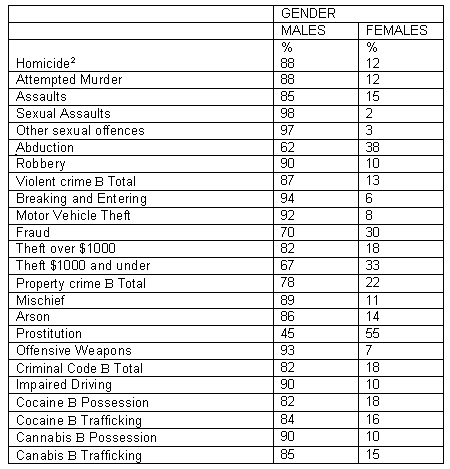 1Represents all persons
charged in Canada, Uniform Crime Reporting Survey, Canadian Centre for Justice
Statistics.
1Represents all persons
charged in Canada, Uniform Crime Reporting Survey, Canadian Centre for Justice
Statistics.
2Homicide Survey, Canadian Centre for Justice Statistics
Source:Statistics Canada. ``Canadian Crime Statistics, 1994." Juristat 15(2). Ottawa: Canadian Centre for Justice Statistics, 1995
TABLE 2
SENTENCE LENGTH OF INCARCERATED
FEDERALLY SENTENCED WOMEN
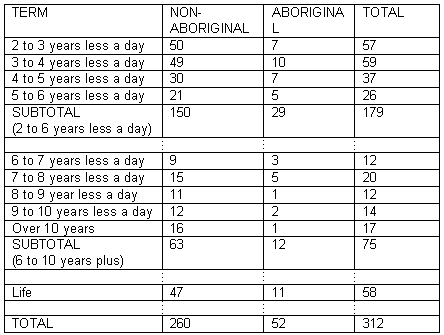
Source:Correctional Service of Canada. (1995) Profile of Federally Sentenced Women.
Ottawa:Correctional Service of Canada
TABLE 3
CURRENT REGION & INSTITUTION OF INCARCERATED
FEDERALLY SENTENCED WOMEN
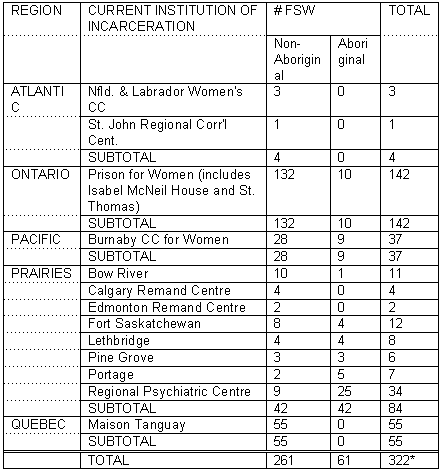 * Includes 28
foreign nationals
* Includes 28
foreign nationals
Source:Correctional Service of Canada. (1995) Profile of Federally Sentenced Women.
Ottawa:Correctional Service of Canada
TABLE 4
OFFENCES* OF FEDERALLY SENTENCED
WOMEN IN CUSTODY
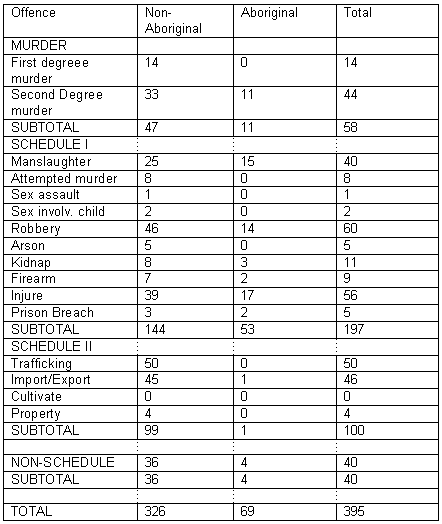
*The data reflects the number of all offences for which incarcerated federally sentenced women are convicted as of October, 1995, i.e. if a federally sentenced woman is serving a sentence for manslaughter as well as trafficking, she is counted in each of those offence categories.
Source:Correctional Service of Canada (1995) Profile of Federally Sentenced Women.
Ottawa:Correctional Service of Canada
Much of the published literature on cross-gender staffing is concerned with the role of female correctional officers in male prisons. This might reflect the fact that this is historically a more anomalous situation than the role of male guards in women's prisons. While women have been successfully employed as front-line workers in male prisons in Canada since the late 1970's, this practice was not without challenges. These included questions about whether women correctional officers were ``capable'', physically and emotionally, of working on the front-lines in men's prisons, and whether they were able to provide adequate back-up to their male colleagues in crises. Women correctional officers have performed well in all of these functions, and are even said to have a ``calming'' or ``normalizing'' effect on an often tense environment, but they continue to experience harassment and discrimination in the prison workplace.
The concerns of male inmates for privacy remain, particularly during frisk or strip searches, or during showers or the use of the toilet. The matter has been dealt with by the Supreme Court of Canada, which upheld the employment of women as front-line workers in correctional facilities for men (Conway v. Canada, [1993] 2 S.C.R 872).
There already exists a wide variety of arrangements for male staff working in women's prisons in Canada, particularly in management (as Wardens or Deputy Wardens), service providers (for example, as teachers or health professionals) and in positions of institutional maintenance. It is doubtful whether there are any women's prisons in Canada where men are not employed in some capacity. In many provincial correctional facilities for women, men are employed as front-line staff. McMahon reports that at the end of 1992, 34% of the correctional officers at Vanier Centre for Women in Brampton, Ontario, were male. In the United States, the proportions of male correctional officers in women's prisons is, at least in Colorado, as high as 81%.
At the Prison for Women, male staff had been restricted, until 1989, from the supervision of women inmates in the living units. As Unit Managers, they encountered inmates either in the Unit Manager's office or, less frequently, when doing their rounds. When entering the living units, male Unit Managers were always announced and accompanied by a female Correctional Officer. Correctional Supervisors, who reported to the Unit Managers, had responsibilities for supervising many of the activities in the living units including the patrolling of units and shower areas, and the frisking or strip searching of inmates. The job of Correctional Supervisor was restricted to women. Other male Correctional Officers at the Prison for Women were restricted to perimeter security and only brought into the living units in emergency situations.
In 1989 an appeal to the Public Service Commission ended the practice of restricting the position of Correctional Supervisor to women (Re Public Service Employment Act, s.21 (King v. Canada (Correctional Service)), unreported, July 5, 1989 (Public Service Commission Appeal Board)). The Public Service Commission held that the positions must be open to males since being female was not a bona fide requirement of fulfilling the responsibilities of the job, as the job did not require the employee to search women inmates or to be present when they were being searched. The Public Service Commission was of the view that the job required only that the Correctional Supervisor ensure that such activities were carried out by female Correctional Officers.
4.2.2Why should men work in women's prisons?
Two arguments are frequently asserted in support of the employment of men in women's institutions. They are similar to those which paved the way for women to work as line staff in male prisons: equality of opportunity, and the ``normalizing'' effect.
It is argued that cross-gender staffing provides a proper workplace environment of equal employment opportunities for women and men in the correctional system. Hiring decisions are then based on the candidates' qualifications, rather than on gender. Just as women have been shown to be competent to work in the front lines of men's prisons, men are seen as capable of working in the front lines of women's prisons.
Some studies identify the second ground for male employment: the ``normalizing'' effect that men can have in women's prisons. This is seen as particularly important as most women inmates, once released back into the community, have to interact with men in many capacities. Others have asserted that positive male role models could result in a beneficial, constructive, learning experience, particularly for women whose relationships with men have often been characterized by exploitation and abuse. In addition, it is frequently pointed out that cross-gender staffing occurs in prisons in many countries around the world.
4.2.3Views of the inmates on men guarding women in prison
The Commission, in its Phase II consultations, devoted an entire day to the issue of cross-gender staffing.
There was no unanimity on the issue of whether or not cross-gender staffing is beneficial and acceptable to inmates. This was consistent with one survey of federally sentenced women in Canada, conducted for the Task Force on Federally Sentenced Women, which reported a ``divergence'' of opinion among prisoners:
Only around a third of women at Prison for Women would want to see (more) male guards there, compared with almost two thirds of those in the provinces. For the most part women in the Prison for Women did not think it appropriate to have male guards either for reasons of privacy, or because many women had experienced abuse from men.
It would appear from that survey that although they also expressed privacy concerns, women in provincial prisons, where male front-line staff are often employed, were more receptive to their presence.
There have been a number of informal ``surveys'' of the views of federally sentenced women. None appear to me to be comprehensive, systematic or reported in a way which permits drawing clear conclusions about the views of women inmates.
In broader terms, gender inequality is seen by many as something which is inevitably imported into the prison environment and then exacerbated by prison conditions. As Harriet Sachs, representing Women's Legal Education and Action Fund (LEAF) stated during the policy consultations:
We have an imbalance of power that exists by virtue of the gender rules between men and women, and that imbalance of power gets exacerbated in a correctional environment... we have to keep that context in mind.
4.2.4The problem for women with histories of abuse by men
Both LEAF and CAEFS, in their written submissions, expressed the view that the apprehensions of women prisoners about male guards are amplified by personal histories of physical and sexual abuse. These issues transcend the anxieties of prisoners over privacy. They extend to the nature of the relationship between men and the women who have suffered abuse at the hands of men. A number of the inmates expressed concerns that having men as their primary workers in the regional facilities would interfere with their treatment and their efforts to cope with past histories of abuse by men. One said:
I do not want to sit down and discuss my personal issues, my intimate issues, my sexual abuse background, my rapes or anything face-to-face with men. I don't care if he's a male doctor, a male psychiatrist or a male psychologist, I do not want to speak to a man about what has happened to me by men in my background. And that goes to normalizing.
Indeed, The Task Force on Federally Sentenced Women recommended against hiring men as the primary workers in the regional facilities, largely as a result of women inmates' past:
Based on these realities, hiring male staff to be the primary support for women in their day-to-day living situation would be counterproductive to the encouragement of increased self-esteem and independence. In addition, the hiring of male staff for such positions could interfere with the healing process for those who have survived physical, sexual and/or psychological abuse.
The inherent conflict between the role of correctional officers as security guards and their roles as supporters and counsellors is sharpened when the gender relations of inmates has been one of abuse:
The CX staff, in particular, you hear that term: Well, he's a nice guy. Well, you've got the nice guy/bad guy syndrome because he's a nice guy when everything is going okay, but all of a sudden, if something happens in the institution, and there's a male that's needed, he becomes the bad guy, he becomes the aggressor, he becomes the intimidator, he becomes the force, he becomes the muscle.
LEAF also pointed to problems with the ``normalization'' hypothesis:
LEAF submits that >normalization' is a misleading term because it replicates and reinforces injury to women in our current sex-unequal society. Given the unique power imbalances in the guard-inmate relationship, as well as the preponderance of abuse histories among federally sentenced women, LEAF submits that the prison setting may require measures which do not replicate those in the outside, >normal' society.
While few parties in the Phase II consultations advocated the complete prohibition of men from employment in the regional facilities, for a small number, the problems with men filling even administrative and managerial roles were a concern.
4.2.5Accounting for the behaviour of male staff
A number of participants expressed additional concern over the need for safeguards to protect women from sexual abuse or harassment, and for viable mechanisms of redress for women inmates. Marie-AndrJe Cyrenne, Warden of Joliette, pointed to the internal and external mechanisms for dispute resolution and for monitoring the actions of correctional workers. On behalf of the Correctional Service of Canada, she expressed the view that the Correctional Investigator, CAEFS and the Citizens' Advisory Committee, along with the service providers such as nurses and psychologists, can serve as external checks on correctional workers. It is the view of the Service that when these are included with the internal mechanisms of the grievance procedures, action by Inmate Committees, and a zero tolerance policy with respect to sexual harassment, there are sufficient checks in place.
Despite the existence of formal mechanisms for behavioural accountability, the Phase II consultations showed that there are still concerns about the need for explicit and effective sexual harassment policies for correctional staff, to govern their interaction not only with other staff members but also with inmates. As Marie-AndrJe Bertrand pointed out, sexual harassment policies are very common in many institutions, since complaints of sexual harassment are recognized as having a very different dimension than most other types of grievances.
4.2.6The positions of the parties
In their written submission to the Commission, the Correctional Investigator and CAEFS outlined their support for the United Nations' Standard Minimum Rules for the Treatment of Prisoners on the issue of cross-gender staffing:
53(2) No male member of the staff shall enter the part of the institution set aside for women unless accompanied by a woman officer.
(3) Women prisoners shall be attended and supervised only by women officers. This does not, however, preclude male members of the staff, particularly doctors and teachers, from carrying out their professional duties in institutions or parts of institutions set aside for women.
The Correctional Service has recently lifted its restrictions on male employment in women's prisons B a move wholly supported by the Union of the Solicitor General Employees. Specifically, the Service has decided that men can fill the roles of Primary Workers in the regional facilities, including the supervision of women inmates in their living units. The Correctional Service arrived at this decision for a number of reasons.
First and foremost, the Correctional Service asserts that the Public Service Employment Act, R.S.C. 1985, c.P-33, requires it to open competition to men. Using the terms employed by the Union, the ``merit principle'' requires that, for all positions which become vacant, ``a competition is run, staff are allowed to apply for it and the person who is the most meritorious is offered the position''.
The Correctional Service also takes the position that women inmates are not necessarily opposed to male front-line workers, as long as their privacy is respected and that all staff act professionally.
The Service has also argued that many countries across the world have male front-line workers in women's prisons, and that men can serve to ``normalize'' the prison environment. This could be particularly true, according to Marie-AndrJe Cyrenne, when women have the opportunity to interact in a significant way with men who are not abusive, and who demonstrate respect for women:
I believe that federally sentenced women need male role models. I acknowledge, and the Correctional Service acknowledges, that they have indeed lived, and carried a heavy burden of abuse. I believe that we recognize this. They need men capable of serving as more positive role models. In any case, they will have to live in the outside world... To reflect society, it is necessary to have positive male role models at every level. (Translation)
More important than the gender of the front-line staff, according to the Correctional Service, is the type of person, and the qualities and experience brought to the job. In rejecting a gender-restricted selection process, the Service and others hold the view that abuse of power can occur by both males and females employed in women's prisons:
Men in positions of authority, men who may abuse that authority, are in the spotlight. However, one must admit that some women do so also... When one talks of selection, training and how to maintain a professional distance, one must establish this with the men as well as the women who will work in the new institutions. (Translation)
To address these concerns, the selection criteria for the hiring of staff at the new regional facilities are based on: a demonstrated sensitivity to and awareness of women's issues; professionalism; and, an ability to work in a woman-centred environment.
Similarly, training for male and female staff at the new facilities will be the same, and emphasize the philosophies outlined in Creating Choices.
4.2.7Equal opportunity in prison jobs
The employment opportunities of female correctional officers are also affected if men are barred from working on the front-lines in women's prisons. A restrictive policy of this nature reinforces the historical imbalance of gender relations. Men continue to dominate the supervisory and management positions. This is exemplified at the Prison for Women, where male correctional workers enter the front-line staff at a supervisory level (i.e. as Correctional Supervisor), but are excluded from lower front-line positions.
The unique woman-centred philosophy of the regional facilities, and the special selection and training processes for their staff, may limit the flexibility of correctional staff in looking for new jobs or promotions. Opportunities to transfer out of the regional facilities to male prisons may be more difficult. The job barriers for female correctional officers will affect them adversely if it is only they who are to work on the front-lines in the regional facilities. These barriers will be in addition to others women face in realizing a fully integrated role in the larger correctional workforce.
The protection of privacy of the men and women in prisons is central to the concerns prisoners may have about cross-gender staffing. While it may be reasonable to expect a considerable reduction in the personal privacy experienced by prisoners (Conway, supra), privacy is nevertheless part of a legal framework which requires protection of the dignity of individuals, even when they are incarcerated.
There are important ways in which prisons for men and women have accommodated the privacy concerns of inmates, regardless of the gender of the front-line staff. Living units can be designed with barriers or curtains, to create visual impediments to others when inmates are showering, using the toilet or dressing and undressing. Many new prisons include these in their designs, while older ones can be retrofitted to accommodate privacy considerations. In cases where inmates are supervised by officers of the opposite sex, modifications can be made to staffing protocols so that, for example, male front-line workers are always paired with female front-line workers when patrolling living units. Male staff can be restricted from patrolling living units at night, in which case management may have to maintain a reasonable ratio of male-to-female front-line staff, particularly in the very small institutions. Special requirements might be placed on male officers, such as the requirement to announce their presence on a living unit or at an individual cell. For inmates, the reciprocal requirement is that they be appropriately clothed when in common areas.
The issue of male employment in female prisons is a complex one and not amenable to a single, over-riding formula. While barring male correctional officers from the front-lines in women's prisons would help to preserve the privacy of women in prison, and protect them from sexual harassment by male correctional workers, it could have other, undesirable effects. Women inmates in this kind of environment are likely only to interact with men in positions of management, authority and expertise. If men are prohibited from working in the living units, the only way to avoid unbalanced contact of this kind is to prohibit men completely from working in women's prisons--a position few would support.
As for the normalization argument, it is also problematic. Our society does not tolerate the presence of non-intimate members of the opposite sex during the performance of private functions, except under very rare circumstances, such as during hospitalization. The abnormality of this situation is, in fact, heightened by the prison setting, where both female and male inmates are confined against their will in positions of relative powerlessness.
With respect to the privacy issue, much depends on the redesign of prison accommodations and on broadening the physical freedom of movement allowed inmates. When the new regional facilities for women prisoners are fully operational, the accommodations will be in cottage-like units, which allow privacy in the bathroom and bedroom areas. However, the success of this design will depend ultimately on the privacy protocols for staff and on the quality of the selection and training process.
I wish to stress the fact that the problems that may arise from men abusing their authority over women prisoners are real. They are serious problems and the consequences of such abuse can be disastrous. There have been examples of these problems for inmates, as well as for staff and management, in that respect. In particular, the Report of the British Columbia Royal Commission on the Incarcerated Female Offenders is instructive about the range of allegations of sexual abuse, and the difficulty in resolving them. The reluctance of women in reporting sexual abuse can only be exacerbated in a prison environment where a perceived lack of adequate recourse and fear of reprisal would discourage disclosure. The denial of the credibility of prisoners by prison staff, demonstrated throughout this inquiry, may also foster cynicism and despair among women with a history of tolerated abuse.
On balance, however, I am not persuaded that the Correctional Service staffing policy should be interfered with at this stage. In my view, the key to the success of gender integration in the living units of correctional facilities for women lies in staff selection and training, explicit working protocols and adequate monitoring. Based on the material presented to me, I am satisfied with the selection and training process for the new facilities. I am concerned, however, that the same process not be dismantled after the hiring of the first group of staff for the new facilities. Again, because the numbers are so small there is a risk that replacement staff in the years to come may not receive the intensive training that has characterized the start-up phase of the operations.
I would therefore regard it as essential that a plan be developed for the on-going training of new recruits brought into the institutions for women prisoners. There should also be refresher programs specially designed to keep alive the correctional philosophy which inspired Creating Choices.
I view it as equally essential that the sexual harassment policy of the Correctional Service be extended to apply to inmates and that a protocol for men's interaction with women prisoners in the living unit be promulgated, specific to each institution. In keeping with the recommendation made later in this report, this should be done under the supervision of the Deputy Commissioner for Women.
Finally, in light of the breakdown in the existing accountability mechanisms which were revealed during this inquiry, and in light of the innovative yet dangerous practice of integrating correctional officers at all levels of the staffing of the new institutions, I believe that an exceptional form of monitoring is called for, at least at the outset of this new regime, if not permanently.
I will therefore recommend that a woman be appointed to monitor and report annually, for the next three years, to the Deputy Commissioner for Women (a position I describe below) on the implementation of the cross-gender staffing policy in the living units of the new institutions, and on similar issues found in any institutions in which federally sentenced women may be housed during that time. The Monitor should be a person independent from the Correctional Service; she should have access to inmates and staff on a confidential basis as her mandate should be to assess the system, rather than the individuals, and to make recommendations accordingly.
Finally, and I see this recommendation as central to my support of the present Correctional Service initiative, there should be sufficient diversity in the system to allow some women to serve their sentences in institutions in which there are no men working as front-line correctional officers, and where access to women health care professionals is possible. This may be achieved within the federal structure or, if necessary, through exchange of service agreements with the provinces. I can see no imperative, legal or otherwise, that all facilities for women be uniform in every respect. I think that it is a simple point that some women offenders require shelter from fear, and they should be able to find it even while incarcerated. Despite their small numbers, women prisoners are entitled to be incarcerated in conditions that meet their basic human needs. Women should be detained in an environment not only safe from on-going abuse but perceived as such; this requires a variety of options. I recognize that this may imply geographic and other forms of compromise, and I do not want to suggest that the preference of every prisoner for a particular staffing model must always be accommodated. I simply conclude that there should necessarily be enough flexibility in the correctional structure for women to have all their fundamental needs addressed, including the need to be and to feel safe.
4.3 Aboriginal Women and The Healing Lodge
4.3.1How the Healing Lodge came into being
If the history of women's imprisonment is one of neglect and indifference, it will come as no surprise that the history of Aboriginal women's imprisonment is an exaggeration of the same.
The recently opened Healing Lodge for Aboriginal women, located on the Nekaneet Reserve outside Maple Creek, Saskatchewan is probably one of the most progressive steps ever taken by the Correctional Service. The fact that it was initiated to meet the needs of the most disadvantaged, and therefore the most deserving, group of prisoners in Canada, contains the promise that small numbers will no longer be an excuse for neglect.
Qualitative program reforms of this kind, if taken to their mature potential, could revolutionize correctional care for women prisoners and greatly assist their return to community life. Eventually, the success of progressive initiatives in women's corrections, where the needs are high and the risks and costs are low, may serve as a blueprint for initiatives adapted to male offenders.
The recommendation for a Healing Lodge for federally sentenced Aboriginal women arose from the deliberations of the Task Force on Federally Sentenced Women which proposed that the Healing Lodge replace the Prison for Women for federally sentenced Aboriginal women. The intention is that Aboriginal women inmates will be provided with meaningful opportunities in a culturally relevant environment inside and outside the correctional setting. The Healing Lodge will address many of the identified needs of the most disadvantaged and marginalized prison population in Canada. The acceptance of the recommendation and the construction of the Healing Lodge was a major breakthrough in the reform of women's prison conditions, and the Correctional Service of Canada is to be commended for implementing it.
4.3.2The needs that led to the creation of a Healing Lodge
The policy and program decisions which made possible the establishment of a special institution adapted to the needs of Aboriginal women prisoners are founded on the recognition of six problems and the need to resolve them:
!Aboriginal women are over-represented in the prison population of Canada.
!They are quite distinct culturally, linguistically and socially from the broader prison population of federally sentenced women.
!They have significantly different personal and social histories.
!They have significantly different offending histories.
!The dispersion of Aboriginal communities across the country is a special burden to them.
!The holistic approach to healing and reintegration into the community is at odds with the cultures and philosophies of conventional prison environments.
It was of particular interest to me that the distinctive features of a group of women prisoners could be used as a positive force for change. They provide valuable lessons in the design of programs for other groups of prisoners, both male and female.
4.3.3Over-representation in the prison population
The over-representation of Aboriginal women in Canada's prisons, and the way in which they experience incarceration has to be a matter of considerable concern for public policy. When compared to their proportion of the general population, Aboriginal people of both sexes in Canada are over-represented in prisons, at the federal, provincial and territorial levels. This fact has been well documented by earlier inquiries and task forces. While Aboriginal people comprise approximately 3% of the population in Canada, they represent roughly 10% of the federally sentenced prison population. As Michael Jackson has noted:
... native people come into contact with Canada's correctional system in numbers grossly disproportionate to their representation in the community. More than any other group in Canada they are subject to the damaging impacts of the criminal justice system's heaviest sanctions.
The problem is not evenly distributed: over-representation is generally higher in provincial institutions than in federal penitentiaries, in the west and among Aboriginal women and juvenile offenders.
As of September, 1995, Aboriginal women comprised just over 13% of federally sentenced women overall. However, they comprised 19% of the population of federally sentenced women in prison, and only 7% of federally sentenced women in the community. Seventy-three percent of federally sentenced Aboriginal women were in prison, while only 49% of the non-Aboriginal federally sentenced women were in prison. While there are no federally sentenced Aboriginal women in prison in Newfoundland or in Quebec, 50% of federally sentenced women in prison in the Prairies and 24% of federally sentenced women in prison in British Columbia were Aboriginal women.
4.3.4Cultural, linguistic and social distinctions from the broader prison population
Aboriginal women are, in many ways, quite distinct culturally, linguistically, socially, and in their personal histories from the broader population of federally sentenced women. While diversity also exists among Aboriginal women, those who are federally sentenced have much more in common by virtue of their background than other women prisoners. In their survey of federally sentenced Aboriginal women in the community, Sugar and Fox state:
The starting point for action lies not in abstract discussions but in the experiences of the women themselves. An essential recognition: prison and release from prison are not the starting point. As our stories show, Aboriginal women who end up in prison grow up in prison, though the prisons in which they grow up are not the ones to which they are sentenced under the law.
Federally sentenced Aboriginal women have significantly different personal and social histories in a number of ways. The social and economic marginalization of Aboriginal people, particularly status Indians living off-reserve, is acute among Aboriginal women. The relationship of this marginalization to the criminal justice system has been well documented. As a group, Aboriginal women come to prison at a younger age than non-Aboriginal women. They generally have lower levels of education and employment. Alcohol and drug abuse is a greater problem for them and is reported to have played a greater role in their offending. They also have a greater incidence of past physical and sexual abuse.
These problems have been embedded and hidden within a penal environment which is at odds with many Aboriginal cultures. Until the recent reforms, the Correctional Service was unable to respond to the needs of Aboriginal women which have their roots in a distinct social environment.
4.3.5Differences in offending histories
The criminal justice histories of Aboriginal women also stand out as different in significant ways from those of other women prisoners. They tend to have more previous admissions and incarcerations than non-Aboriginal women in prison. While Aboriginal women tend to be serving shorter sentences, both provincially and federally they tend to be in prison for more violent offences.
The greater incidence of previous incarcerations and violence in their offences creates the setting for a higher security classification and risk assessment for federally sentenced Aboriginal women. This is heightened by the tensions and misunderstandings between Aboriginal cultures and that of criminal justice and penal settings.
And personally, I have seen a lot of Native women ... pass away because of the lack of communication... that's a very big problem with our Native population as it stands. And I would like to see more ... understanding with our Aboriginal upbringing... It has a lot of impact in our adulthood.
4.3.6The dispersion of Aboriginal communities across Canada
A major theme of the history of women's imprisonment in Canada has been the enormous geographic dislocation to prisoners and their families as a result of federal sentences served in a centralized institution. The dispersion of Aboriginal communities across the country affects women from these communities to an even greater extent. Aboriginal women are more likely to be mothers of young children and, on average, have more children at the time of their offending. The dislocation and isolation of imprisonment is worsened by the difficulties encountered by relatives who have to travel from distant, often remote communities, to visit their mothers, daughters and sisters.
4.3.7The holistic approach is at odds with conventional reform practices
There has been a great deal of public discussion of the differences between conventional and Aboriginal approaches to social and psychological health. I think it is important that these differences be recognized and that the legitimacy of Aboriginal practices also be recognized and employed in correctional philosophies and programs.
The holistic, community-oriented approach to healing used by Aboriginal people does not fit easily into Western cultures and their penal environments. The reliance on elders, ceremonies (such as sweat lodges and sweetgrass ceremonies) and the use of traditional medicines for spiritual guidance has been historically excluded from correctional settings.
Cultural alienation in the correctional environment has a damaging impact on assessments for classification and risk, particularly in the context of the clinical assessment of risk.
For Aboriginal women, prison is an extension of life on the outside, and because of this it is impossible for us to heal there. In ways that are different from the world outside, but are nevertheless continuous with it, prisons offer more white authority that is sexist, racist and violent. Prisons are then one more focus for the pain and rage we carry. For us, prison rules have the same illegitimacy as the oppressive rules under which we grew up. Those few ``helping'' services in prison that are intended to heal are delivered in ways that are culturally inappropriate to us as women and as Aboriginal people. Physicians, psychiatrists, and psychologists are typically white and male. How can we be healed by those who symbolize the worst experiences of our past? We cannot trust these so-called care givers, and all too often in the views of those interviewed, we again experience direct hostility from the very people who are supposedly there to help. This is why Aboriginal women express anger at these care givers. This is why we refuse to become involved, and then are further punished because we fail to seek treatment.
The problems created by this fundamental tension between cultural experience and correctional programs is felt most on the release from prison. The chances of being able to plan for successful reintegration into the community are minimal in many cases. Many Aboriginal women cannot return immediately to their home communities, for a variety of reasons. Due to the nature of the offence, or the complex relationships among the victims and offenders in small, often isolated communities, the communities themselves are often unwilling to accept offenders back after their release from prison.
Aboriginal women live daily with the general factors encountered by Aboriginal people but also must deal with the sexism inherent in the large and their own communities. For federally sentenced women, there is the further stigma of being offenders. Aboriginal communities tend to experience difficulty in supporting women offenders and have rejected or ignored the women. The essential community services a women may require in adjusting to post-prison life may not be readily available.
In cases where the community may be more supportive, return is often unrealistic. It is often those very communities where Aboriginal women experienced extensive abuse and trauma, and where their former abusers continue to reside. In addition, however, Patricia Monture has pointed out that the communities themselves do not have the structural supports, in terms of jobs, housing or programs, to accommodate the high needs of Aboriginal women released from prison.
... not only do we have communities that are in bigger need than the rest of the Canadian communities because of the lack of employment and resources and social problems, but you're asking those very communities that are the most needy to have to provide the most creative responses for social problems.
Releasing authorities have enormous difficulty looking favourably on the applications of many Aboriginal women who plan to go home. Many prisoners therefore delay applying for early release while they plan for release in an alternative community. Many Aboriginal women leaving prison have no choice: they must return to an alternative community, usually an urban centre, where few, if any, supports exist for Aboriginal women leaving prison.
... plans have to be made so that when women come out of prison who have been in prison for a while, they have to have some place to go. You just can't take away a woman's family, a woman's life, and expect her to, after she's done X number of years, go out there and function as a normal human being.
Supports under such situations take much longer to build. And, as Carol LaPrairie noted, most resources for Aboriginal people go to reserve communities, even though the needs of Aboriginal people off-reserve, particularly in urban areas, is enormous. Heather Bergen, Warden of Saskatchewan Penitentiary echoed this concern:
... they're a lost population. They will return to either an alternative community, or to the urban setting where they haven't got the skills and we do not have the resources in the community for those people. That's where our money has to go.
With this background in mind, it becomes apparent that the Healing Lodge offers so much hope and promise.
4.3.8The Healing Lodge B a progressive reform
The Healing Lodge promises to address many of the cultural and correctional concerns just identified. It will accommodate a small number of women in a cottage-like atmosphere. It will be staffed largely by Aboriginal people, and will receive assistance and advice from the women prisoners, elders and the broader community in which it is located. Core programs will reflect the needs expressed by federally sentenced Aboriginal women. In particular, programs will address the loss of cultural and spiritual identity, substance abuse and family and social violence.
The location and design of the Healing Lodge are impressive, and so are the enthusiasm and commitment to its success expressed by those who are most closely involved with its operation. The partnerships built around the Healing Lodge, with the Aboriginal and local communities, elders, and federally sentenced Aboriginal women themselves, testify to the Correctional Service's capacity and willingness to innovate in the face of a serious social challenge.
While the Healing Lodge addresses the expressed needs of federally sentenced Aboriginal women in Canada, it will accommodate only approximately 30 women, fewer than half the number of Aboriginal women currently in prison under federal sentence. Most Aboriginal women in custody will serve the greater part of their sentences in the other regional facilities, or in provincial institutions. They will also have a significant need for culturally appropriate and spiritually meaningful programs, and access to the their communities.
If the Correctional Service is to live up to the promise of this initiative, it must provide the opportunity for access to a Healing Lodge to all federally sentenced Aboriginal women.
This is a critical matter for Aboriginal women who are classified as maximum security and who, in my view, may benefit the most from the philosophy, programs and overall environment at the Healing Lodge. They should not be excluded on the basis of their present security classification, and the decision should ultimately be left to the ``Kikawinaw'' or ``mother'' as to whom the Healing Lodge can safely accommodate.
4.3.9.1With respect to the Healing Lodge
In keeping with the spirit that animated its creation, I believe that access to the Healing Lodge should be available to all Aboriginal women, regardless of their present classification. If this could not be accomplished by simply reclassifying women under the current classification system, that system should be modified to better meet the needs of all women, using criteria that are relevant to their circumstances.
I also think that evaluation of the Healing Lodge should be undertaken and should include non-traditional criteria of success, developed in consultation with Aboriginal communities and Aboriginal prisoners. Personal, cultural and spiritual growth should be acknowledged as a valued component of the enterprise.
Finally, consideration should be given to the development in eastern Canada, of a facility modelled after the Healing Lodge. If there are insufficient numbers of federally sentenced women east of Manitoba to sustain such a facility, it should be made available, with federal financial assistance if necessary, to all Aboriginal women serving sentences in federal and provincial institutions.
4.3.9.2With respect to the other regional facilities
The existence of the Healing Lodge should not supersede the growing efforts to address the needs of Aboriginal people in all prisons. However, the Healing Lodge should serve as a centre from which ideas for programs, information, etc. could radiate to all other facilities. Links should be established and facilitated between the various Native Sisterhoods in the regional prisons and the Inmate Committee, or its equivalent, at the Healing Lodge.
In each regional facility:
!access to elders should be formalized and facilitated;
!Aboriginal staff and contract workers should be recruited;
!culturally sensitive training should be provided to all staff;
!culturally relevant programs should be made available to Aboriginal women, possibly under the guidance of the Healing Lodge; and
!access to Aboriginal forms of healing should be facilitated through elders, Aboriginal counsellors, social workers, psychologists, etc.
4.3.9.3With respect to alternatives
In light of the disproportionate number of incarcerated Aboriginal women, the Correctional Service should report publicly, through the Deputy Commissioner for Women, on its efforts to avail itself of the options provided to in s.81 of the CCRA, particularly in s.81(3) which provides for the transfer of an offender to the care and custody of an Aboriginal community.
The Correctional Service of Canada should take the initiative of identifying incarcerated Aboriginal women who would benefit from that placement and report within 6 months on its success at implementing the option. Priority should be given to women who have children in their Aboriginal community. The placement should be accompanied by financial assistance to the community.
4.4 The Future of Women's Corrections
4.4.1The need for a separate stream
It is beyond the scope of this inquiry to examine all viable alternatives to imprisonment for women offenders. The sparse literature on women in prisons is, however, eloquent about the failure of incarceration and the likely efficacy of alternative accommodations for women who presently are given a custodial sentence. I therefore think that the exploration of efficient alternatives should be pursued, particularly before endorsing too broadly the mother and child programs which bring children into prisons, rather than their mothers into the community.
Even within the traditional setting of imprisonment, much can be done to make the system of imprisonment of women in this country not only more just and humane, but also more efficient and cheaper. The momentum is well in place with the present implementation of Creating Choices and the opening of the new regional facilities. However, the model needs to be pursued one step further. The fragmentation which is inevitable with regionalization must be compensated for by an administrative regrouping of women's correctional concerns. Just as the Prison for Women was lost as one of many federal penitentiaries in the Ontario Region, because that regional structure was not designed to respond to its uniqueness, the regional facilities risk being even more marginalized if they remain individually buried in five separate regions.
In 1969, the Report of the Canadian Committee on Corrections (``Ouimet Report'') devoted a chapter to ``The Woman Offender'' in which four important recommendations were made. Two of those are pivotal to my understanding of the issues raised in this inquiry. The first one is the Ouimet Report's recommendation that led to the enactment of the Transfer of Services Agreements between the federal government and some of the provinces. I will return to it below.
The second one was directed at the role of women within the Correctional Service. The Ouimet Committee noted that women offenders ``form a comparatively small and readily identifiable group'' of offenders, and that this offered a unique opportunity for federal leadership in developing an effective system of corrections, responsive to the unique characteristics of the female prison population everywhere in the country. To that end, the Committee recommended the appointment of ``a suitably qualified woman to a position of senior responsibility and leadership in relation to correctional treatment of the woman offender in Canada''.
With respect to the appointment of ``a suitably qualified woman'' to a position of senior responsibility, the accession of several women to management positions at the Prison for Women over the years, as well as the appointment of five women as Wardens for the new regional facilities, went a considerable distance to meet this important recommendation contained in the Ouimet Report. This was also enhanced by the presence of women in research and policy positions within the Correctional Service, as well as the participation of a large number of women, representing a variety of points of view, in the conceptualization of Creating Choices.
However, in my view, this effort to meet the Ouimet Report recommendation has shown that the recommendation itself fell short of its intended purpose. The number of women offenders serving a prison sentence in 1969, even when computed nationwide to include both federally and provincially sentenced women, as well as women awaiting trial in custody, was probably perceived as too small for the Ouimet Committee to consider advocating a separate administrative structure to deal exclusively with women. I think that the time has come to do just that. The mere presence of women in managerial positions within CSC is insufficient to recognize and to give effect to the qualitatively different correctional challenge posed by women offenders as a group.
This issue was considered by the Task Force which produced Creating Choices. Various proposals were examined. One was the call for the appointment of a woman to a very high level management position within the Correctional Service, along the lines that had been proposed in the Ouimet Report. Another option, which had been advanced in 1981 by CAEFS, was the appointment of a Deputy Commissioner for Women, and the creation of a ``sixth region'' to regroup all federally sentenced women. Although the Task Force recognized the danger of isolation for the new decentralized facilities, it alluded to the difficulties of these proposals in light of the decentralized management style currently in place within the Correctional Service, and merely recommended future discussions on the issue.
In submissions before this Commission, CAEFS, the Correctional Investigator and LEAF advocated the regrouping of women's corrections under the authority of a Commissioner for Women, independent of the Correctional Service of Canada. CAEFS further recommended that the new Commissioner be appointed from outside the ranks of CSC, that it preferably be a woman with experience in social services, education and health services, as well as the criminal justice system.
Before considering these proposals in more detail, I wish to return to the broader concerns that animate them.
Like the Task Force, I read the basic recommendations of the Ouimet Committee as calling for an amalgamation of federally and provincially sentenced women; for the leadership of women in women's corrections; and for capitalizing on the small number of women offenders to pioneer imaginative correctional techniques. I think that now is the time to implement fully these correctional ideals developed 25 years ago in one of the most influential reports produced in Canada to deal with the criminal process and corrections.
Women offenders have some things in common with men offenders from their respective regions. But they have a lot more in common with each other as women than they do with their regional male counterparts. Their crimes are different, their criminogenic factors are different, and their correctional needs for programs and services are different. Most importantly, the risks that they pose to the public, as a group, is minimal, and at that, considerably different from the security risk posed by men.
The momentum generated by Creating Choices towards a new correctional philosophy for women should not come to a halt with the completion of the new buildings and the closure of the Prison for Women. Less so than in 1969, but, in proportion, women offenders are still too few in numbers to permit a rational expenditure of public funds capable of delivering services of the same variety as the services provided to men. This obvious way of stating the problem in a sense betrays my thinking. The goal is not to provide women offenders with the same services as those offered to men, or even comparable services. The whole idea is to provide women with different services and programs conceived just for them, not adapted to them from male models.
It has been remarked on many occasions in the course of this inquiry that the Prison for Women was different. Even when governed by a statutory, regulatory and administrative structure that is largely designed to ignore its differences, let alone address and promote them, the Prison for Women made itself different. Not all the differences were good or desirable. But they should not be corrected by the mere expectation that compliance with norms established essentially for male institutions is preferable. Women's institutions should be different if they are to serve a population that is so profoundly different, as a whole, from the mainstream of correctional institutions. The regional facilities have already been conceived to be responsive to a women-centred correctional model. The day-to-day running of the new facilities should be governed by an administrative structure in which there will be no expectations that they be made to be a ``real prison'', like all the other prisons.
I am not persuaded that it is desirable to remove the administration of federally sentenced women entirely from the Correctional Service and to create a new Commissioner for women's corrections. Indeed, I see considerable disadvantages in that model. It is difficult to make the case for the creation of a self-standing federal bureaucracy to address the needs of a few hundred persons across the country. Moreover, it is also difficult to imagine that such a bureaucracy would have much clout as a fifth agency of the Ministry of the Solicitor General, having to compete for attention with the Correctional Service of Canada, the National Parole Board, the Canadian Security Intelligence Service, and the Royal Canadian Mounted Police. Finally, I believe that progressive measures can be developed in women's corrections for the benefit of all incarcerated men and women, and that the best way to permit leadership to emerge from the women's sector is to keep it within the ambit of the Correctional Service.
The 1981 CAEFS proposal for the creation of a Deputy Commissioner for women's corrections is, in my view, the desirable approach. The Deputy Commissioner would provide whatever liaison with the regions is required. In addition to occupying functions similar to those exercised through the regional reporting structure, the women's corrections branch should also be given the specific mandate to develop and experiment on progressive correctional techniques that, if successful, could then be implemented, with whatever adaptation may be felt necessary, to the entire correctional system. The Healing Lodge is a perfect example of such progressive, imaginative correctional initiative, and one that there is every good reason to introduce to women prisoners first.
It makes sense to introduce such measures in the women's sector first for the many reasons that make women's correctional profile different from men's. The group is, overall, a low risk group; the cost of a small scale experiment will be modest and, more importantly, if a progressive measure fails in the men's population, it will likely never be made available to women, even if its chances of success were much greater in the women's population.
I would therefore propose that the federally sentenced women's facilities be regrouped under a reporting structure independent of the regions, with the Wardens reporting directly to a Deputy Commissioner for Women.
In addition to managing the federally sentenced women's facilities, the Deputy Commissioner for Women should be given the specific mandate to attempt the grouping of incarcerated women throughout the country, both at the provincial and federal level, so as to develop a critical mass from which to improve the plight of all imprisoned women, and the quality of corrections across Canada. I will develop this idea further in the next part.
4.4.2Federal/provincial cooperation
At the time of this inquiry, of the 300 or so women who were incarcerated in Canada to serve a federal sentence B i.e. a sentence of more than two years imprisonment B more than half were actually serving that sentence in a provincial facility. As of September of 1995, for example, 180 federally sentenced women were housed in provincial institutions. If the issue of women's imprisonment were taken in isolation, that is, if it were not linked to the male correctional system, these figures would raise unanswerable questions about the logic of the federal/provincial division of powers with respect to corrections. It would indeed be difficult to rationalize why the 300 women who serve a sentence in excess of two years must be put under federal administration, only to see more than half of them returned into the provincial system. The history of federalism and, once again, the negligible place that women's issues have played in the field of corrections, provide the answer, unsatisfactory as it is.
The Prison for Women in Kingston, and the new regional facilities that are being erected to replace it, are penitentiaries within the meaning of s.21(28) of the Constitution Act, 1867, which confers upon Parliament the legislative authority over ``The Establishment, Maintenance and Management of Penitentiaries''. While the federal government also has exclusive jurisdiction over ``Criminal Law and Procedure'' (s.91(27)), the provinces are competent to legislate with respect to ``The Administration of Justice in the Province'' (s.92(14)), and are empowered to impose ``punishment by fine, penalty, or imprisonment for enforcing any law of the province...'' (s.91(15)).
How and why the federal government acquired exclusive legislative authority over ``penitentiaries'' is somewhat obscure and speculative. In any event, there is nothing in the Constitution that requires that any particular offender be sent to a federal penitentiary. Penitentiaries are thus established and maintained by the federal government, and the determination of where sentences of incarceration will be served, is enacted by Parliament on the basis of its authority over criminal law and procedure. Shortly after Confederation, federal legislation provided that the dividing line between federal penitentiaries and provincial prisons was to be a two year period of incarceration. Nothing prevents Parliament from altering that dividing line or, for that matter, from abandoning it all together. Indeed, many formal suggestions have been made over the years for the alteration of that legislated dividing line, some in favour of a more centralized correctional system, which would be achieved by decreasing the ceiling of sentences to be served in provincial institutions and, more recently, in favour of an expanded provincial jurisdiction.
It would therefore appear that there is no constitutional impediment, at least in terms of federal/provincial division of powers, to a restructuring, whether legislative or simply administrative, of the management of women's corrections to re-group all incarcerated women in Canada under a single umbrella organization. I see no Charter impediment either, even if the initiative were taken only in the women's sector, in light of all the factors examined earlier.
If one ignores the large male correctional system, both provincial and federal, there is no doubt that the full amalgamation of all incarcerated women is the best solution for overcoming the problems posed by the fact that there are so few women imprisoned in the whole country. Inasmuch as one would hope to promote this ideal solution, it is unlikely that the fate of women convicted of crimes would be sufficient to move all federal and provincial bureaucracies into jointly taking any corrective action, let alone the best one.
The Ouimet Committee initiated action in that direction in 1969 in the following terms:
It is recommended that arrangements for purchase of prison services for women be made between the Government of Canada and the various provinces so that a unified service could be provided in each area and that the Government of Canada offer to purchase service from the larger provinces and to provide regional services that could be purchased by smaller provinces.
This recommendation was based, in part, on the problems of geographic and cultural dislocation that the sole federal Prison for Women, located in Kingston, created for women offenders from other parts of Canada, particularly for the Francophone women from Quebec. This, however, was not the sole basis for the recommendation. The Ouimet Committee was concerned about the fact that the Prison for Women was a multi-classification facility. Moreover, although the Committee was generally in favour of smaller institutions, it was quick to recognize that adequate correctional services could only be provided to groups of a reasonable size. In looking for an effective way to provide for the delivery of a variety of services, as well as an appropriate grouping of offenders by rational classification, the Committee proposed an amalgamation of sorts, in the form of purchase of service agreements between the federal government and the provinces, so as to form a group sufficiently large to permit meaningful correctional management. Meanwhile, the Ouimet Committee noted that women offenders ``form a comparatively small and readily identifiable group'' of offenders, and that this offers a unique opportunity for federal leadership in developing an effective system of corrections, responsive to the unique characteristics of the female prison population everywhere in the country.
In my opinion, the next step in meeting the need to rationalize women's imprisonment across the country consists of pursuing the ideal of a re-grouping of all women's facilities, both in the federal and provincial systems. We need to build that critical mass in order to meet efficiently and rationally the needs of the whole population of incarcerated women in Canada.
In 1973, as a result of the Ouimet Report and of the Report of the Royal Commission on the Status of Women, 1970, the Ministry of the Solicitor General of Canada initiated negotiations with provincial officials towards the completion of contractual agreements which would enable the transfer of both men and women prisoners. The first transfers were operated on a case by case basis, and few women were transferred at the early stages. Over the years, the practice of transfer became more prevalent, to the point where now B at least until the full operation of the new federal facilities B more than half of federally sentenced women serve their sentences in their home province, under these agreements. Although in the early years the Exchange of Service Agreements merely offered temporary relief to some women prisoners serving short sentences, it eventually expanded to women serving life sentences. One of the major successes of this program has been its ability to bring some women closer to their homes. In particular, these agreements allowed for the relocation of many French speaking prisoners from the Prison for Women to the Maison Tanguay in Montreal, thus providing them access to programs and services in French, in addition to bringing these women closer to their culturally significant community.
The history of federal/provincial Exchange of Service Agreements is well described in a document prepared by the Federal/Provincial Policy Review. By then, there was considerable transfer activity between the federal government and Quebec, Alberta, British Columbia and Manitoba. Save for a three month agreement in 1977, which permitted the transfer of women from the Prison for Women to the Vanier Centre, there was however, little transfer activity in Ontario. By 1988, the design of a long-term strategy for federal female offenders was in the hands of the Task Force on Federally Sentence Women. The fate of the Exchange of Service Agreements was very much dependent on that initiative.
The Task Force considered the possibility of continuing to use these agreements as an alternative mode of accommodation after the closure of the Prison for Women. In its report, it pointed to the following limitations to the enhanced use of exchange of service programs: antiquated provincial facilities, lack of common interest in the project amongst provinces, intergovernmental disparities in programs and services, and fiscal constraints. The Task Force ultimately rejected the expanded use of Exchange of Service Agreements because it maintained that the federal government has a responsibility for the management of women serving sentences greater than two years, and that the government ``must accept responsibility for present inequities and assume a leadership role in the construction of appropriate solutions''. However, it allowed for the possibility of an enhanced Exchange of Service Agreement with all provinces, if the federal government was willing to first implement a plan in a way that would break new ground in the correctional field.
As it is now well known, the preferred option of the Task Force was the development of small, regional, federally operated facilities which would bring women closer to home and place them near well resourced communities. Now that the regional facilities are virtually all operational, the future utility of Exchange of Service Agreements can be re-evaluated and reconsidered as a possible method of diversifying services and options, not only for federally sentenced women, but for all women imprisoned in Canada. A major step towards bringing federally sentenced women closer to home has already been achieved. This does not mean, however, that there is no need to draw on the provincial structure to advance that purpose further. There is still only one federal facility in each of Quebec and Ontario, and both are located in the south of each province. In British Columbia, the Burnaby Correctional Centre for Women, a recently built provincial institution, will be used as the facility for federally sentenced women. There could often be benefits in placing federally sentenced women in a provincial prison much closer to their home, if not for all, at least for part of their sentence.
Moreover, if better integrated administratively in the provincial prison structure, the new federal facilities could afford to specialize and complement programs available in nearby provincial prisons. The relative proximity of Maison Tanguay in Montreal, to the new federal facility in Joliette should permit them to complement each other, as far as possible, rather than duplicate, in a costly fashion, every program for which each may have a small ``client'' base. This is particularly evident in the case of Tanguay, since that institution has accommodated a large number of federally sentenced women since 1973. There is therefore no reason why it should not be available as an alternative to Joliette for all kinds of purposes, including specialization of programs and also transfers, voluntary or not. Even in provinces like Ontario, where there is no such historical experience, it is imminently sensible to pool resources in order to provide some specialized residential program, such as substance abuse, to the greater number of incarcerated women at the cheapest possible cost. The fact that sentences of over two years are served in a federal penitentiary should not become an impediment to the effective deployment of the scarce resources that are available in corrections. The history of federal/provincial cooperation, which was first to address the hardship of geographic dislocation, should therefore be built upon to further the ideals expressed in Creating Choices.
If there should be a concern that federally sentenced women might be placed in antiquated provincial jails at a time where they finally have access to ``state of the art'' modern federal facilities, it should be possible to provide that placements could only be made on consent, except in the case of emergency, involuntary transfers. As I have stated earlier, transfers may be a viable coping mechanism at a time of crisis, particularly in a small institution, and transfer to another women's prison is the preferable alternative.
Federal/provincial agreements may also offer the possibility to women who so wish to serve their sentence in an institution that is staffed entirely by women correctional officers in the living units.
Just as importantly, the federal initiative should not be limited to transfer of services. The ultimate objective should be to build a pool of expertise in women's correction, by linking the provincial prisons for women, many of which I suspect operate in the same isolation as the Prison for Women has nationally.
Even in the unlikely event that there were to be a wild increase in women's criminality, it would likely remain the case that, in proportion to men, women would continue to commit very few crimes, and even fewer that result in imprisonment. It is therefore probable that we will continue to be able to manage women's prisons as small scale institutions, along the lines of the models seen as desirable by the Ouimet Committee. At the same time, an administrative combination of women's institutions in Canada, federal as well as provincial, would allow for a variety of effective and efficient services and programs, as well as for appropriate groupings of offenders by security classification, that the federal model alone is too small to achieve.
Women serving a federal sentence should be allowed not only to serve their sentence as close to home as possible, but also to have access, in their region, to the specialized correctional model available in that region that best meets their needs. This may be a correctional facility better suited to their security classification, or an institution that contains a decent mental health unit, a residential substance abuse program, or an educational or vocational specialty. Women serving sentences in the provincial system would also benefit from an administrative expansion that would offer them access to the institutions for federally sentenced women, as well as the possibility of inter-provincial mobility.
Considerable savings could be achieved in the shared contracting for professional services and program delivery. But more importantly, and aside from all the practical advantages that integrated federal/provincial corrections could offer for both men and women offenders, an integrated correctional system for women would emphasize the uniqueness of the correctional experience for women all over Canada, and create the critical mass essential for an effective correctional management while, at the same time, reaping all the benefits offered by a regionally relevant correctional placement.
It is obviously unnecessary for me to make the case for the unification of correctional services for all offenders, male and female. The case for female offenders is based on the unique features of women's corrections, and stands regardless of whether a case could also be made for the unification of men's services.
I would therefore propose that the federally sentenced women's facilities be grouped under a reporting structure independent of the regions, with the Wardens reporting directly to a Deputy Commissioner for Women.
The Deputy Commissioner for women should explore with each province and territory the desirability of their cooperation in program delivery, transfers, joint staff training, etc., with the federal institutions for women in the province, territory or region. The ultimate goal should be to achieve an administrative, if not legislative, unification of all correctional services for women offenders across the country. Should that prove too illusive a goal, the mechanism of Exchange of Service Agreements should be used to pursue that integration to the fullest possible level with each province interested in the enterprise.
The first priority for the Deputy Commissioner for Women should be the release and re-integration of women in prison. To that end the Deputy Commissioner should immediately ensure that there be no delays in case management which result in paperwork not being ready at the earliest opportunity for review by the Parole Board; that generous access be provided to community programs and that initiatives be pursued for placements pursuant to s. 81 of the CCRA; and that other links to the community be cultivated so as to facilitate reintegration.
The Deputy Commissioner for Women should be specifically mandated to explore and implement progressive correctional techniques, even on an experimental basis, for the benefit of incarcerated women and, when properly adapted if need be, for the benefit of all prisoners. He or she should also ensure that progress made through the Healing Lodge be shared, inasmuch as feasible, with incarcerated Aboriginal men.
The Correctional Investigator should have an investigator specially assigned to issues related to women's corrections, and any complaint emerging from the new regional facilities should be directed to that person rather than being merely processed on a regional basis.
PART III
THE ROOTS OF CHANGE:
AN HISTORICAL
PERSPECTIVE
5 .HISTORY OF THE FEDERAL WOMEN'S PRISON
The history of Canada's treatment of women prisoners has been described as an amalgam of: stereotypical views of women; neglect; outright barbarism and well-meaning paternalism. Canadian women's imprisonment begins in the early part of the nineteenth century when changing public sensibilities determined that the use of corporal punishment be minimized in favour of incarceration. Once built, prisons became central to public notions of punishment, and the new focus of penal reform became the improvement of prison management. The Provincial Penitentiary (now Kingston Penitentiary) was one of the first Canadian institutions to house incarcerated women for long periods of time. From the beginning, the welfare of women prisoners was secondary to that of the larger male population. Initially, the treatment of children and women prisoners in penitentiaries was not remarkably different from that of their male counterparts. Women prisoners were, however, plagued by their small numbers and the inconvenience they presented for prison management. Given that these women were ``too few to count'' they were often housed in large male facilities in whatever manner was convenient for the male administrators. On occasion, matrons were employed at the discretion of prison wardens and charged with the responsibility of managing these small populations, usually with few resources or programs.
Shortly after the Provincial Penitentiary opened, the Brown Commission which arose out of public concerns about the reported flogging of women and children, and other inadequacies, criticised the prison for its mismanagement of prisoners, in particular women and children. The report of the Brown Commission confirmed severe abuses, the neglect of women prisoners, and a general lack of accountability on behalf of prison administrators. The report recommended a number of changes, including the construction of a separate living unit for women, who were forced to live in deplorable conditions. This report provided the rationale for the construction of a separate women's unit. However, the Commission's vision of separate accommodations for women was not realized until 1913, sixty-five years later, when a free-standing women's prison was built inside the walls of Kingston Penitentiary. In the meantime, women prisoners were confined in piecemeal accommodations and required to work in the kitchen and laundry.
At the time of Confederation, there were approximately sixty women in the Provincial Penitentiary, which became the responsibility of the federal government. Again, the Warden's report of 1867 strongly urged the construction of a female prison outside the walls of Kingston Penitentiary. Advocacy for a separate women's prison continued until 1925, when construction of the present day Prison for Women began.
Two reports were instrumental in the decision to build a separate prison. They both noted that the benefits of separate accommodations outweighed the resulting hardships to women in having one central federal penitentiary for women in Kingston. The first report, in 1921, was the Briggar, Nickle and Draper Commission appointed by the Minister of Justice to consider and advise in regard to a general revision of the penitentiary regulations. The second was the follow-up report on the state and management of the federal female offender B the Nickle Commission. These reports argued that women prisoners needed to be completely separated and isolated from male prisoners and male guards. The recommendation for a central women's facility was contrary to an earlier recommendation of the Macdonnell Commission, appointed to investigate and report on the conduct and administration of penitentiaries, and the conduct of officers at Kingston Penitentiary. Its report had suggested that women be moved closer to their homes and be governed under provincial authority.
The construction of a separate and somewhat independent prison in 1934 was believed to present a viable solution to the historic dilemma of what to do with federally sentenced women. Instead, the isolation of a small group of women in a separate facility led to further marginalization and discrimination.
Concerns about the inadequacy of this new facility and calls for its closure began only four years after it opened. They were raised by the Archambault Commission, and echoed many years later in the Task Force on Federally Sentenced Women. Over the past seventy years, there have been many inquiries into the activities of correctional institutions and the operations of the criminal justice system. While few of these reports focused exclusively on women, several addressed concerns relevant to federally sentenced women often, however, as a mere adjunct to problems relating to male offenders. Notwithstanding the limited commentary on women prisoners, fifteen government reports have identified serious limitations in the provision of adequate services for women prisoners:
1938Royal Commission to Investigate the Penal System of Canada (Archambault)
1947Report of General R.B. Gibson Regarding the Penitentiary System in Canada
1956Report of a Committee Appointed to Inquire into the Principles and Procedures Followed in the Remission Service of the Department of Justice (Fauteux)
1969Report of the Canadian Committee on Corrections (Ouimet)
1970Royal Commission on the Status of Women
1977National Advisory Committee on the Female Offender (Clarke)
1977Sub-Committee on the Penitentiary System in Canada (MacGuigan)
1978National Planning Committee on the Female Offender (Needham)
1978Joint Committee to Study the Alternatives for the Housing of the Federal Female
Offender (Chinnery)
1978Progress Report on the Federal Female Offender Program
1979Canadian Advisory Council on the Status of Women
1981Canadian Human Rights Commission
1988Canadian Bar Association
1988Standing Committee on Justice and Solicitor General on its Review of Sentencing, Conditional Release and Related Aspects of Corrections (Daubney)
1990Task Force Report on Federally Sentenced Women
In addition to these reports, there have been many briefs and submissions to government over the years by agencies such as CAEFS, Women for Justice, and the Legal Education and Action Fund (LEAF), each voicing similar concerns.
The fifteen reports confirmed, each in its own way, that women prisoners, by virtue of their offences, experiences and needs, present different security and classification concerns from male offenders. Each report concludes that these issues have not been adequately considered by past correctional administrations. There is therefore no lack of documentation that correctional programs and accommodations for women have been largely unsatisfactory and inferior in quantity, quality and variety to those for male offender; and, that women prisoners have been denied equal treatment. Historically, female offenders have also been largely neglected by criminological researchers, and by correctional planners, who have focused their research money and program initiatives on male offenders.
5.1.2Early criticisms of the Kingston Prison for Women
The most common concerns about the Prison for Women after its inception were the inappropriateness of one central facility and the lack of useful programs. These concerns were further complicated by the small number of federally sentenced women, which in turn provided a convenient justification for years of apathy and neglect. These issues were first highlighted by the Archambault Commission, which stated that women prisoners, for all intents and purposes, were ``not a custodial problem'', and stressed the limitations of one central facility for federally sentenced women, the absence of meaningful work, and the inadequacy of existing programs. The report concluded that the existing Prison for Women should be closed, and women moved closer to their families and communities.
This began a lengthy trail of similar studies and recommendations. Nine years later, the Gibson Report reinforced the recommendation made of the Archambault Report that women should not be incarcerated in one central prison, and, that ``their custodial care and reformative treatment should be undertaken in reformatories closer to their homes, their families and relatives''.
The Fauteux Commission appointed to inquire into the principles and procedures followed by the Remission Service of the Department of Justice of Canada, also examined the operations of the Prison for Women within the context of the treatment and classification of all prisoners. The emphasis of this report was the improvement of the medical, vocational, and educational training which, in the past, had not been provided to women prisoners because of their small numbers. Rather than seeing the smallness of this population as a disadvantage, the Fauteux Report noted that this institution, with a relatively small and comparatively static population, was precisely the kind of institution where various forms of treatment ``could most readily be carried on.'' Unlike the Archambault Report, the Fauteux Report favoured keeping a central facility, and proposed an intensified treatment regime.
5.1.3Failed attempts to close Prison for Women
Plans to build a new prison were made and abandoned in 1956, 1965 and 1968. A few years later, the Canadian Committee on Corrections (Ouimet Committee) was established to ``study the broad field of corrections...''.
The Ouimet Report also saw the small number of federally sentenced women as conducive to creative programming. It argued that a small population was an advantage, but recognized the practical limitations to the provision of services to a small population. The Committee proposed the decentralization of the federal population into provincial facilities, and the use of Exchange of Service Agreements between federal and provincial facilities in order to provide a unified service for all women prisoners. I will return below to the central recommendations made in the Ouimet Report which are still a useful blueprint for today's reforms.
5.2 Women Prisoners and Their Rights to Fair and Equitable Treatment
The Archambault Report was one of the earliest to acknowledge the rights of women prisoners to equal treatment. This right was implicitly and explicitly reinforced in several successive reports in which the state of corrections for women was criticised on several counts for not adhering to a policy of equality. These recommendations for the improvement of women's incarceration which accumulated over a long history of inquiries, led to few substantive reforms. Not until the early-to mid-1970's were the recommendations of such reports considered seriously by government. In the 1970's, there was a renewed interest in women's corrections to the extent that it reflected political and social interest in women's issues, in part inspired by a strengthening women's movement which emphasized women's right to equal treatment in several spheres.
Shortly after the release of the Ouimet Report, the Royal Commission on the Status of Women outlined several systemic barriers facing women and reinforced the importance of equal treatment. The report of the Commission emphasized the common status of women and men, rather than a separate status for each sex. The intention of its recommendations was to create a measure of equality where it was seen to be lacking in a variety of areas including: women's participation in public life, women's involvement in the Canadian economy, immigration and citizenship, law, family, taxation and child care allowances, and education. Given the breadth of this mandate, only a small section of the report was devoted to women's involvement in crime, and specifically federally sentenced women. Perhaps most importantly, the Commission recommended that ``the federal Prisons and Reformatories Act be revised to eliminate all provisions that discriminate on the basis of sex and religion''. The Commission, like its predecessors, explicitly called for the closure of the existing Prison for Women, and recommended the development of more flexible and imaginative programs and the establishment of provincially-based accommodations for federally sentenced women.
That report also included, for the first time, recommendations for the provision of appropriate and relevant services and programs for Aboriginal and Francophone women. Until the 1970s, concerns about the discrimination incurred by these two groups were largely disregarded, although the 1967 report Indians and the Law helped to raise the public's awareness of racism and unequal treatment of Aboriginal women in Canadian prisons and in the criminal justice system.
The Royal Commission on the Status of Women marked a fundamental shift in thinking about women and their right to equality. This acceptance of the need for equal treatment and opportunity had a slow, gradual but positive impact on women's corrections. Eventually, however, the focus on formal equality has shifted in recent times to the achievement of substantive equality.
The 1974 establishment of the National Advisory Committee on the Female Offender (NACFO-Clarke Report) by the Solicitor General of Canada was a recognition of the need for changes in the management of federally sentenced women. NACFO, the second major committee on the federal female offender, was established to consider the future of women prisoners; and to make recommendations for a comprehensive plan to provide adequate institutional and community services appropriate to the unique security and program needs of these offenders. After a statistical study and extensive consultation process, the Clarke Report confirmed once again the uniqueness of women's offending, and it documented some of the ``special needs'' of women prisoners: low self-image, weak family ties, and a tendency to self-mutilate.
5.2.1The deficiencies of a centralized Prison for Women
The Clarke Report also highlighted deficiencies in the methods of housing and managing federally-sentenced women. Its central concerns were, first, the geographic dislocation of prisoners living far from their homes, and second, the personal and legal problems resulting from these separations. The absence of appropriate programs, inadequate classification, the lack of Francophone and Aboriginal services, the alienation of staff, and finally, and an outdated architectural structure, were additional sources of concern. They led to the Committee's conclusion and recommendation, hardly a new one, that the Prison for Women should be closed.
The National Planning Committee on the Female Offender (Needham Report) and The Joint Committee to Study Alternatives for the Housing of Federal Female Offender (Chinnery Report) were established in response to the Clarke Report to investigate the available options. Struck by the enormity of the problems facing the management of federal female offenders, the Needham Report noted that there was no ``...ideal solution to the problem of the female offender...'', and that given the size of Canada, and the small number of women in prison, the only solution was compromise. The solution proposed was the use of federal/provincial Exchange of Service Agreements, the establishment of at least one community-based residential centre, and the closing of the Prison for Women, or, at least some improvements to the existing structure.
In 1973, an Exchange of Service Agreement allowed Francophone women to reside in Maison Tanguay, a provincial institution with programs in French. While this improved conditions for some women, there were, unfortunately, a large number of women who remained at the Prison for Women in which conditions changed very little. By 1988, the problems associated with centralised incarceration and the inability of the Correctional Service of Canada to find an alternative to this dilemma, were once again addressed by the Canadian Bar Association in Justice Behind The Walls and in the Daubney Report. According to the Canadian Bar Association the separation of an offender from her family and community not only made ``... the pains of imprisonment harder than is reasonable, but it also [undermined] women's prospects for successful integration...". This view was reinforced by the Daubney Report, and later in Creating Choices.
5.2.2A history of excessive security B the over-classification of women prisoners
The continued use of one central facility meant that a large portion of the women's prison population was over-classified because the Prison for Women in Kingston was constructed as a maximum security building supported by maximum security staffing and services. This issue was of particular concern to the Daubney Committee which reviewed sentencing, conditional release and related aspects of corrections. It was ``...concerned that large numbers of women across the country [were] being detained in facilities which provide much higher security than most of them require and than most of them would be subject to if they were men''. Again, it was noted that women still had not been afforded the treatment equal to that of men in corrections. Women prisoners, classified as medium security, and in particular those with a minimum security rating, were not afforded the same opportunities as male prisoners with the same classification.
The inability to transfer inmates to another facility meant that correctional managers and prisoners had fewer options. The practice of gradually lowering prisoners' security levels and transferring them to institutions with less security and different program options, is known as cascading. The inability to cascade women through the continuum of correctional supervision is another example of the disadvantages inherent in a centralized federal correction facility for women. The only attempt to rectify this problem was the establishment of an 11 bed minimum security house adjacent to the Prison for women in 1990 (Isabel McNeill House).
More recently, the Correctional Service of Canada has attempted to create security classifications more appropriate to women offenders, based on the specific risks and needs of the women themselves, not on the risks and needs of the male population.
5.2.3Using litigation to bring about change
Although the Prison for Women has been the subject of periodic scrutiny, deplorable and inequitable conditions remain. Advocates of reform have used several tactics to bring about change. The early 1980's were a period of intense litigation and recognition by the courts of prisoners' rights, including the specific rights of women in prison, which culminated in the adoption of the CCRA.
One group, Women for Justice, sought a remedy through litigation by filing a complaint of sexual discrimination against the federal government with the Canadian Human Rights Commission. In late 1981, the Canadian Human Rights Commission found that the complaint alleging ``discrimination in the provision of goods, services and facilities on the ground of sex was substantiated'' with respect to the following: programming, poor facilities, geographic dislocation, and the absence of psychiatric care, security classification, and effective mechanisms for the involvement of women in senior policy positions.
Pursuant to the Commission's recommendation, a conciliator was appointed for the purpose of attempting to bring about a settlement of the complaint. In June 1984, the Commission, while acknowledging that ``the conciliation process has failed to bring about a settlement proposal'' in respect of the complaint ``decided to consider the complaint partially redressed''.
At least one court commented on the living conditions at the Prison for Women. In R. v. Daniels, [1990] 4 C.N.L.R. 51 the court recognized the relationship between prison conditions within the Prison for Women and prisoner suicides. The judge concluded that Daniels' right to life and security protected by s.7 of the Charter would be violated if she were to be incarcerated at the Prison for Women because of ``the high risk of death by suicide in a far away >medieval, castle-like prison''', something which was ``unacceptable in a free and democratic society''.
The judge also noted that incarcerating the defendant in this facility would constitute cruel and unusual punishment because of its geographical distance from her home. The court ruled that Native women such as Daniels were being discriminated against in the federal correctional system on the basis of gender, contrary to ss.15 and 28 of the Canadian Charter of Rights and Freedoms, because federal penitentiaries for men had better and a wider variety of programs and because of the cultural and geographic dislocation resulting from the existence of only one federal penitentiary for women. On appeal, the judge's order directing that Daniel's sentence not be served in Kingston Prison for Women was set aside on procedural grounds (R. v. Daniels, [1991] 5 W.W.R. 340). To date no court has decided that the existence of only one federal prison for women violates the Charter rights of women prisoners. Although it might be expected that, but for initiatives taken as a result of Creating Choices, further Charter challenges would have emerged.
While litigation may have forced the government to improve some conditions in the Prison for Women, it did not bring about fundamental changes in the treatment of federally sentenced women, or the conditions of their accommodation. However, in response to mounting criticism, and in an effort to improve the conditions of women's incarceration, the government in 1982 established a Permanent National Advisory Committee on the Federal Female Offender. This committee was comprised of both government and private sector representatives, and its role was to advise the Commissioner on current programs and long-term policy planning related to federal female offenders. In 1985, the Correctional Service created the more specialised Division of Native and Female Offender Programs. Some conditions had improved after that, but there were several concerns which persisted, as noted in the Daubney Report and in Creating Choices.
In short, these two reports highlighted the persistence of problematic conditions faced by women in prison: the absence of relevant programs and services, limited access to the same types and variety of programs as incarcerated men, geographic dislocation, over-classification, and minimal community alternatives. They also stressed the absence of meaningful vocational, educational and treatment programs, in addition to limited pre-release and post-release options. As social roles changed, it was argued, prisons had not. Prison continued to typecast women by providing programs which emphasised traditional female roles and stereotypical expectations of women.
After some minor, mostly cosmetic improvements inside the prison, debates about programming and treatment in the late 1980's and early 1990's shifted focus. They began to centre on the unsuitability of applying correctional programs designed for a larger male population, to a small and somewhat unique group of women. Here, it was argued that women prisoners were equal to, but different from, male prisoners. Attention to these differences was seen as critical to effective and meaningful correctional planning for women.
5.2.5Cultural insensitivity and minority women
The report, Indians and the Law identified and documented the government's insensitivity to the particular circumstances and problems of Aboriginal women, and raised public awareness of racism in criminal justice institutions. Until recently, there have been few attempts by prison administrators to accommodate the growing diversity of women in the population. With the exception of the recent consideration of the needs of Aboriginal women, through the construction of the Healing Lodge, the integration of Aboriginal teachings into some facets of the correctional regime, and the hiring of Aboriginal employees, there were few efforts to address cultural diversity in the population of federally sentenced women. Provincial reports such as Blueprint for Change, Racism Behind Bars, and the final Report of the Commission on Systemic Racism in the Ontario Criminal Justice System have documented the difficulties experienced by non-Aboriginal minority women in certain Canadian prisons. There are few if any, programs designed to meet their specific needs. Current research in this area is sparse and unable to adequately provide an understanding of the problems faced by minority women, and the implications for programming. Given these concerns, Corrections Canada, under the auspices of the Federally Sentenced Women Program has begun to examine the needs of minority women, including foreign nationals.
5.2.6Substantive equality versus rights-based equality
The changes to the Prison for Women, unfortunately, did not occur in time to prevent several suicides, hunger strikes, self-slashings, and major incidents. By the late 1980's, it became evident to many observers that the problems created by accommodating the female offender in correctional systems governed by men and oriented towards the male offender were not producing desirable results. Thus, instead of striving for formal equality, reformers pushed for a dramatic shift in correctional philosophy: one which stressed the commonalities shared by women as an historically disempowered and marginalized group.
Creating Choices testifies to that important shift towards the substantive equality which had been alluded to several years earlier in the often quoted MacGuigan Report which condemned the Prison for Women stating that it was ``unfit for bears":
One area in which women have equality in Canada B without trying B is in the national system of punishment. The nominal equality translates itself into injustice. But, lest the injustice fail to be absolute, the equality ends and reverts to outright discrimination when it comes to providing constructive positives B recreation, programs, basic facilities and space B for women ... In light of today's advanced sociological knowledge, the institution is obsolete in every respect.
This history of opportunities which have been missed has touched upon virtually every issue which was directly or indirectly raised by the events under consideration by this Commission.
Section 3 of the CCRA asserts that the purpose of the federal correctional system is to contribute to the maintenance of a just, peaceful and safe society...
The society in which many woman offenders live is neither peaceful nor safe. By the time they go to prison, they should be entitled to expect that it will be just.
PART IV - SUMMARY OF RECOMMENDATIONS
SUMMARY OF RECOMMENDATIONS
This part contains the recommendations that emerge, explicitly or implicitly, from my review of the facts and my consideration of the broad policy issues that the facts gave rise to. There is no commentary on the recommendations in this part, as most were discussed earlier in the report. Others are self evident as to their intent and purpose and require no further elaboration.
1. I recommend that this report be made public.
2.I recommend that the videotape of the IERT intervention at the Prison for Women on April 26/27, 1994, which has been attached as an exhibit to the original of this report, be made available by the Secretariat of the Ministry of the Solicitor General, on request, free of charge.
3.I recommend that a copy of that videotape be attached to any copy of this report which will be preserved in Archives.
4.With respect to issues specific to women's corrections, I recommend:
(a)that the position of Deputy Commissioner for Women be created within the Correctional Service of Canada, at a rank equivalent to that of Regional Deputy Commissioner;
(b)that the Deputy Commissioner for Women be a person sensitized to women's issues and, preferably, with experience in other branches of the criminal justice system;
(c)that the federally sentenced women's facilities be grouped under a reporting structure independent of the Region, with the Wardens reporting directly to the Deputy Commissioner for Women;
(d)that the Deputy Commissioner for Women take over the responsibility for the remaining phase of the implementation of the Federally Sentenced Women initiative with respect to the new facilities;
(e)that research and development on issues related to women's corrections be placed under the jurisdiction of the Deputy Commissioner for Women, with appropriate budgetary allocations;
(f)that the Deputy Commissioner for Women initiate a revision of the law and policies applicable to the women's institutions with a view to simplifying the rules and ensuring that administrative directives comply with the law. More specifically, the Deputy Commissioner should consider by-passing the level of ``Regional Instructions'' and operating exclusively through Commissioner's Directives and Standing Orders pertinent to the local conditions of a given institution;
(g)that the Deputy Commissioner for Women explore with each province and territory the desirability of cooperation in program delivery, transfers, joint staff training, and the like, with a view to achieving an administrative, if not legislative, unification of all correctional services for women offenders across the country. Failing that, Exchange of Service Agreements should be used to pursue that integration to the fullest possible level with each province interested in the enterprise;
(h)that the Deputy Commissioner for Women consult with women's groups, in particular those that have participated in these proceedings, with a view to developing appropriate programs for women offenders, pursuant to s.77 of the CCRA;
(i)that in programming, priority be given to the development of work programs that
(i)have a vocational training component;
(ii)provide a pay incentive; or
(iii)constitute a meaningful occupation;
(j) that the first priority for the Deputy Commissioner for Women be the release and reintegration of women in custody. The Deputy Commissioner should immediately ensure the elimination of delays in case management which result in paperwork not being ready at the earliest opportunity for review by the Parole Board; that generous access be provided to community programs and that initiatives be pursued for placements pursuant to s.81 of the CCRA; and that other links to the community be cultivated so as to facilitate reintegration;
(k)that the Deputy Commissioner for Women be specifically mandated to explore and implement progressive correctional techniques, even on an experimental basis, for the benefit of incarcerated women and, when properly adapted if need be, for the benefit of all prisoners;
(l)that the Deputy Commissioner for Women be given the discretion to implement family contact programs, including financially assisted telephone calls or family visits, even if the same are not available to incarcerated men, to recognize the different circumstances and needs of women, particularly, but not restricted to, their child care responsibilities;
(m)that complaints and grievances procedures be amended to provide that all second level grievances arising from an institution for women be directed to the Deputy Commissioner for Women, rather than to the Regional level;
(n)that the Deputy Commissioner for Women answer personally all complaints or grievances addressed to him or her;
(o)that the Deputy Commissioner for Women ensure that progress made through the Healing Lodge be shared, inasmuch as feasible, with incarcerated Aboriginal men;
(p)that the Correctional Investigator assign an investigator to deal specifically with issues related to women's corrections, and that any complaint emerging from the new regional facilities be directed to that person.
5. With respect to cross-gender staffing, I recommend:
(a)that at least one federal institution be staffed with no men working in the living units, or that agreements be made with one or more provincial facilities where the living units are staffed exclusively by female Correctional Officers, for the placement of federally sentenced women. Inmates' desire to be housed in such facilities should be taken into account in their placement;
(b)that explicit protocols be drafted in each institution in which male staff will have access to the living units, to ensure that
(i)male front line workers are always paired with female front line workers when patrolling living units;
(ii)that male staff be restricted from patrolling living units at night; and
(iii)that male staff be required to announce their presence on a living unit or at an individual's cell or bedroom;
(c) that all federal institutions be designed in such a way as to ensure privacy for inmates while using washrooms, dressing and undressing;
(d)that the design of the existing or proposed enhanced unit in each of the new facilities be such as to provide modesty barriers for inmates kept under close monitoring;
(e)that the sexual harassment policy of the Correctional Service be extended to apply to inmates;
(f)that a woman be appointed to monitor and report annually, for the next three years following the opening of each new regional facility, to the Deputy Commissioner for Women, on the implementation of the cross-gender staffing policy in the living units of the new institutions, and on any related issues, including the effectiveness of the extension of the sexual harassment policy to the protection of inmates;
(g)that the Monitor be a person independent from the Correctional Service;
(h)that the Monitor have access to inmates and staff on a confidential basis, and that her mandate be to assess the system, rather than the individuals, and to make recommendations accordingly;
(i)that the annual report of the Monitor be made public, along with a description of any corrective measure taken by the Correctional Service to redress problems that she might have identified;
(j)that the Deputy Commissioner for Women be required, after three years, to provide recommendations to the Commissioner as to the desirability of continuing the cross-gender staffing policy of the Correctional Service in light of the reports of the Monitor, and to put forward alternative options, if need be.
6. With respect to use of force and use of IERT's, I recommend:
(a)that male IERT's not be deployed again in an institution for women;
(b)that the Correctional Service proposed policy with respect to crisis intervention, which includes non-violent crisis intervention techniques, be implemented in all the new facilities;
(c)that should there be any IERT's in the regional facilities, whether developed and trained along the Burnaby Correctional Centre model or otherwise, they be composed exclusively of female staff;
(d)that, to the extent that local police forces, the RCMP, or any other security organization may be expected to play a role in maintaining security or restoring order in a women's correctional facility, protocols or memoranda of understanding be entered into with such organizations to ensure that the persons required to apply force to women, particularly to search them, be apprised specifically of the limit of their authority;
(e)that the Correctional Service of Canada acknowledge that the following is a correct interpretation of the existing law, or that it seek modification of the existing law to accord with the following:
(i)men may not strip search women. The only exception is where the delay in locating women to conduct the search would be dangerous to human life or safety, or might result in the loss of evidence. No man may witness the strip search of a woman, except as above.
(f) that inmates be given the right to counsel before expressing their consent to a body cavity search, and that inmates be advised of that right at the time their consent is sought;
(g)that body cavity searches only be performed in surroundings that are appropriate for consensual, non-emergency medical examination or intervention;
(h)that a body cavity search be performed only by a female physician, if the inmate so requests, and that the physician ensure, to her satisfaction, that the consent was not obtained as a result of inducement or coercion;
(i)that body cavity searches and strip searches performed in contravention of these recommendations be treated as having rendered the conditions of imprisonment harsher than that contemplated by the sentence, for the purposes of the remedies contemplated in the recommendation dealing with sanctions. (see recommendation 8(b) and (c))
7. With respect to Aboriginal women and the Healing Lodge, I recommend:
(a)with respect to the Healing Lodge itself:
(i)that access to the Healing Lodge be available to all Aboriginal federally sentenced women, regardless of their present classification;
(ii)that evaluation of the Healing Lodge be undertaken, and include non-traditional criteria of success, to be developed under the authority of the Deputy Commissioner for Women, in consultation with Aboriginal communities, Aboriginal prisoners, and women's groups if necessary. Personal, cultural and spiritual growth should be acknowledged as a valued component of the evaluation;
(iii)that consideration be given to the development of a facility modelled after the Healing Lodge, to serve the needs of all incarcerated women in eastern Canada;
(b) with respect to the regional facilities other than the Healing Lodge:
(i)that under the supervision of the Deputy Commissioner for Women, all regional facilities draw on the resources of the Healing Lodge for the development of programs and correctional approaches relevant to the particular needs and circumstances of Aboriginal women;
(ii)that links be established and facilitated between the various Native sisterhoods in regional prisons and the committee of inmates in place, if any, at the Healing Lodge;
(iii)that in each regional facility:
.!access to Elders be formalized and facilitated;
.!Aboriginal staff and contract workers be recruited;
.!culturally sensitive training be provided to all staff;
.!culturally relevant programs be made available to Aboriginal women; and
.!access to Aboriginal forms of healing be facilitated through Elders, Aboriginal counsellors, social workers, psychologists, etc.
(iv) that the Deputy Commissioner for Women take the initiative of identifying incarcerated Aboriginal women who would benefit from a placement into the care and custody of an Aboriginal community, as contemplated by s.81(3) of the CCRA, and report within six months on his or her efforts at implementing that option; that priority be given to women who have children in their Aboriginal community; and that community placement be accompanied by appropriate financial assistance to the community.
8. With respect to correctional issues more generally, I recommend:
(a)that the Department of Justice, at the initiative of the Solicitor General, examine legislative mechanisms by which to create sanctions for correctional interference with the integrity of a sentence;
(b)that such sanctions provide, in substance, that if illegalities, gross mismanagement or unfairness in the administration of a sentence renders the sentence harsher than that imposed by the court:
(i)in the case of a non-mandatory sentence, a reduction of the period of imprisonment be granted, to reflect the fact that the punishment administered was more punitive than the one intended, should a court so find; and
(ii)in the case of a mandatory sentence, the same factors be considered as militating towards earlier release;
(c) that the Correctional Service properly educate its employees with respect to the rights of incarcerated offenders and inform them of the Service's commitment to seeing that these rights are respected and enforced.
9. With respect to segregation, I recommend:
(a)that when administrative segregation is used, it be administered in compliance with the law and appropriately monitored;
(b)that daily visits to segregation units by senior prison managers be required, and that the discharge of that duty be specifically made part of any performance evaluation of these managers;
(c)that the obligation to conduct daily visits to segregation not be delegated below the level of Unit Manager, or its equivalent, except in very small institutions where, on weekends, this function could be performed by the officer in charge of the institution;
(d)that the practice of long-term confinement in administrative segregation be brought to an end;
(e)that, in order to so achieve, a time limit be imposed along the following lines:
(i)if the existing statutory pre-conditions for administrative segregation are met, an inmate be segregated for a maximum of three days, as directed by the institutional head, in response to an immediate incident;
(ii)after three days, a documented review take place, if further detention in segregation is contemplated;
(iii)the administrative review specify what further period of segregation, if any, is authorized, up to a maximum of 30 days, no more than twice in a calendar year, with the effect that an inmate not be made to spend more than 60 non-consecutive days in segregation in a year;
(iv)after 30 days, or if the total days served in segregation during that year already approaches 60, the institution be made to consider and apply other options, such as transfer, placement in a mental health unit, or other forms of intensive supervision, but involving interaction with the general population;
(v)if these options proved unavailable, or if the Correctional Service is of the view that a longer period segregation was required, the Service be required to apply to a court for a determination of the necessity of further segregation;
(vi)that upon being seized of such application, the court be required to consider all the components of the sentence, including its duration, so as to make an order consistent with the original intent of the sentence, and the present circumstances of the offender;
(f) failing a willingness to put segregation under judicial supervision, I would recommend:
(i)that segregation decisions be made at an institutional level subject to confirmation within five days by an independent adjudicator;
(ii)that the independent adjudicator be a lawyer, and that he or she be required to give reasons for a decision to maintain segregation;
(iii)that segregation reviews be conducted every 30 days, before a different adjudicator each time, who should also be a lawyer, and who should also be required to give reasons for his or her decision to maintain segregation;
(g) that failure to comply with any of the above provisions be treated as having rendered the conditions of imprisonment harsher than that contemplated by the sentence, for the purposes of the remedy contemplated in recommendation 8(b) and (c).
10. With respect to accountability in operations, I recommend:
(a)that all National Boards of Investigation include a member from outside the Correctional Service;
(b)that the outside member be drawn from a list of agreeable candidates compiled from suggestions generated within the Correctional Service, and also from organizations such as the John Howard Society, the Canadian Association of Elizabeth Fry Societies, the Canadian Bar Association, the Canadian Association of Chiefs of Police, and any other group with similar interests or expertise;
(c)that a core of specialized investigators be trained to sit on National Boards of Investigation and, if need be, on some Regional Boards; that training be developed in consultation with techniques and expertise of various police oversight bodies;
(d)that mandates given to Boards of Investigation standardly require them to monitor the Correctional Service's compliance with the law, particularly the law dealing with prisoners' rights;
(e)that mandates given to Boards of Investigation be expressed in clear and specific terms and contain a realistic reporting date;
(f)that adequate resources be made available to Boards of Investigation, including secretarial resources,
(g)that there be no input from persons other than the Boards of Investigation members into the production of the final report;
(h)that Boards of Investigation consider their obligation to give notice to persons, including inmates, pursuant to s.13 of the Inquiries Act.
11. With respect to complaints and grievances, I recommend:
(a)that a system be put in place to assign a priority to all complaints and grievances received, and that the prioritization be effected on the day on which the complaint or grievance is received at that level; priority should obviously be given to complaints that relate to an ongoing matter of a serious nature;
(b)that where a complaint or grievance was well founded when it was made, but requires no direct action at the time of the response, in light of a change in the circumstances which gave rise to the complaint, the Service be required to recognize that the complaint was valid and indicate to the inmate what measures, if any, have been or will be taken to avoid the recurrence of the problem;
(c)that all persons in the Correctional Service empowered or required to dispose of complaints and grievances be given the specific authority to admit error on the part of, and on behalf of the Correctional Service;
(d)that all members of the Correctional Service empowered or required to respond to complaints or grievances be advised of the means by which to obtain legal assistance, if such appears to be required for the proper disposition of a matter which could realistically engage the civil or criminal liability of the Correctional Service, or some of its members;
(e)that, if a grievance requires legal input prior to its disposition, the inmate be informed of the expected delay and the reasons thereof;
(f)that the Deputy Commissioner for Women be mandated to explore and experiment, in the new regional facilities, with alternative dispute resolution techniques;
(g)that dispute resolution at the institutional level be focused on the rapid resolution of irritants, and, most importantly, be directed at the reconciliation of people;
(h)that the Commissioner personally review some, if not all, grievances brought to him, as third level grievances, as the most effective, if not the only method for him to keep abreast of the conditions of life in institutions under his care and supervision;
(i)that, should the Commissioner be unwilling or unable to participate significantly in the disposition of third level grievances, such grievances be channelled to a source outside the Correctional Service for disposition, and that the disposition be binding on the Correctional Service.
12. With respect to outside agencies, I recommend:
(a)that Citizens' Advisory Committees continue to play the important role assigned to them by the CCRA, and that the Correctional Service refrain from taking or permitting to be taken any action to chastise CAC members if they take a bona fide position in the course of their functions.
13. With respect to the interaction of the Correctional Service with other participants in the administration of criminal justice, I recommend:
(a)that in recruitment and staffing throughout the Correctional Service, including at the highest managerial levels, there be input from people experienced in the other branches of the criminal justice system, such as lawyers and police officers;
(b)that the legal profession increase the awareness of its members to correctional issues, through Bar Associations, defence lawyers' organizations, and others involved in continuing legal education, offering training to their members in correctional law;
(c)that the judiciary be further sensitized to correctional issues through programs developed by the National Judicial Institute, which could include a reminder to all judges of their right to visit any part of any penitentiary in Canada, pursuant to the provisions of s.72 of the Corrections and Conditional Release Act;
(d)that judges be sensitized to the specifics of women's correctional issues, particularly in light of the concerns expressed to this Commission that the opening of the new regional facilities could lead to an inflation in the length of sentences imposed on women as the new federal institutions will be perceived as better suited to meet their needs;
(e)that Bar Associations and the judiciary draw on the expertise of corrections personnel to increase their awareness of correctional issues;
(f)that the intensive training of Correctional Officers developed and applied for the opening of the new regional facilities be continued as a permanent form of training for officers expected to work in women's facilities;
(g)that this model of training be evaluated and expanded, if appropriate, through the Correctional Service;
(h)that in continuing education and training, the Correctional Service draw from the expertise of the judiciary, the Bar, and the police, in an effort to expose the Service to a culture committed to the values expressed in the Canadian Charter of Rights of Freedoms, throughout the administration of criminal justice.
14. With respect to miscellaneous issues arising from the facts of this case, I recommend:
(a)that the Correctional Service improve accessibility to basic legal and policy requirements by:
(i)undertaking a review of its administrative directives in order to ensure compliance with the law and avoid errors and duplications between existing Commissioner's Directives, Regional Instructions, Standing Orders and Post Orders; and
(ii)reducing the multiplicity of sources, possibly by the elimination of Regional Instructions;
(b) that all IERT interventions continue to be videotaped in the future, and that similar types of interventions in the women's facilities also be recorded on videotape;
(c)that the videotapes be understood to constitute a record of the events; the videotape should, if possible, capture the scene as it existed prior to the team's intervention, and should contain an indication of the reasons why certain events may not be recorded;
(d)that all IERT videotapes be immediately reviewed for clarity and accuracy, and be supplemented by written Use of Force or Occurrence Reports when they prove inadequate as a recording device;
(e)that all IERT intervention videotapes be immediately forwarded to the Correctional Investigator, along with any supplementary Use of Force or Occurrence Report;
(f)that the present policies with respect to the use of mace and other spray irritants be strictly enforced; and that over-use be discouraged by the following requirements:
(i)that medically adequate decontamination procedures be put in effect after its use;
(ii)that, in the absence of medical direction, the persons affected be allowed to shower, be provided with a change of clothing, and moved from the immediate area;
(iii)that mace continue to be used only by specially trained staff,
(iv)that the exact amount of mace used on every occasion be properly recorded, by the mace can being weighed after each use, and the weight recorded;
(v)that mace be issued to an institution only in small quantities, and that re-issuance only be done after a review of the appropriateness of prior usage;
(g) that electronic cell monitoring never be used solely as a matter of convenience, and that it be used only when required by imminent security concerns, such as indications of possible suicide; even in that case, camera surveillance should not be used as a substitute for frequent rounds which permit human contact and ensure effective monitoring of the condition of the inmate;
(h)that appropriate measures be put in place to ensure that men do not observe on camera the private activities that women may be engaged in in their cells, and that inmates are aware of the procedures by which their privacy is protected, such as a by light signal indicating whether the camera is on or off;
(i)that the women who were the subject of the cell extractions conducted by the male IERT on April 26/27, 1994 and who were kept in prolonged segregation afterwards, be properly compensated by the Correctional Service of Canada for the infringement of all their legal rights as found in this report, commencing on April 22, 1994.
APPENDIX A
Acart Graphic Services Inc.
Bert's Catering
Canada Communication Group
Computer Hardware & Information Protection Services (CHIPS) Inc.
Centre of Criminology Library, University of Toronto
Delta Media Inc.
ExecuTrans
Farr & Associates Reporting Inc.
First Canadian Cleaners Inc.
Folio Publications Management
Foxfire (Consulting) Inc.
Government Conference Centre
Keeley Reporting Services Inc.
Kingston City Police
Kingston Holiday Inn Waterfront
Kingston Ramada Inn
Libraxus Inc.
Ontario Provincial Police
Public Works and Government Services Canada, Translation Bureau
Spetch Associates Inc.
The King Edward Hotel
Toronto Legal Copies Inc.
Tory, Tory, DesLauriers & Binnington
Trottier Communication Marketing Inc.
APPENDIX B
In order of appearance
Kulik, Irving, Deputy Commissioner, Ontario Region, Correctional Service of Canada
LeBlanc, Thérèse Warden, Prison for Women
Twins, Joey Inmate
Vance, Cathy Correctional Officer, Prison for Women
Morrison, Brenda, Inmate
Boston, Linda Correctional Officer, Prison for Women
Gillis, Gerry Correctional Supervisor, Prison for Women
Dafoe, Tom Correctional Supervisor, Coordinator, IERT, Kingston Penitentiary
Doe, John #1 Team Leader, IERT
Power, Anne Correctional Officer, Prison for Women
Waller, Rick Institutional Preventative Security Officer, Prison for Women
Bater, Robert Chair, Citizens' Advisory Committee
Bertrim, Tracy Correctional Officer, Prison for Women
Warnell, Donald Correctional Supervisor, Prison for Women
Hilder, Barbara Unit Manager, Prison for Women
Pearson, Mary Institutional Physician
Morrin, Donna Deputy Warden, Prison for Women
Cassidy, Mary Warden, Prison for Women
Grant, Janis Regional Administrator, Correctional Operations, Correctional Service of Canada
Pate, Kim Executive Director, Canadian Association of Elizabeth Fry Societies
Graham, Andrew Senior Deputy Commissioner, Correctional Service of Canada
Edwards, John Commissioner, Correctional Service of Canada
APPENDIX C
PHASE II
C. PARTICIPANTS IN THE ROUNDTABLES
NOVEMBER 14, 1995
PROGRAMME AND TREATMENT NEEDS OF FEDERALLY
SENTENCED WOMEN
Shelley Gavigan Moderator
Hon. Louise Arbour Commissioner
Patricia Jackson Commission Counsel
Guy Cournoyer Commission Associate Counsel
Tammy Landau Commission Senior Research and Policy Advisor
Kelly Hannah-Moffat Commission Research and Policy Advisor
Jill Atkinson Resource Person
Marie-Andrée Bertrand Resource Person
Louise Biron Resource Person
Bonnie Diamond Resource Person
Heather McLean Resource Person
Marie-Andrée Cyrenne Correctional Service of Canada
Hilda Vanneste
Lynn Ray Union of Solicitor General Employees
Linda McLaughlin
Gail Stoddart Inmate Committee
Harriet Lynch
Tracy Armstrong Native Sisterhood
Joey Twins
Nathalie Spicer Correctional Investigator of Canada
Ed McIsaac
Kim Pate Canadian Association of Elizabeth Fry
Pam Anderson Societies (CAEFS)
Joycelyn Pollock Women's Legal Education and Action Fund
Harriet Sachs (LEAF)
NOVEMBER 15, 1995
LONG-TERM INMATES
Marie-Andrée Bertrand Moderator
Hon. Louise Arbour Commissioner
Patricia Jackson Commission Counsel
Guy Cournoyer Commission Associate Counsel
Tammy Landau Commission Senior Research and Policy Advisor
Kelly Hannah-Moffat Commission Research and Policy Advisor
Louise Biron Resource Person
Bonnie Diamond Resource Person
Shelley Gavigan Resource Person
Ted Bannon Correctional Service of Canada
Jim Vantour
Lynn Ray Union of Solicitor General Employees
Linda McLaughlin
Connie Turner Inmate Committee
Harriet Lynch
Tracy Armstrong Native Sisterhood
Joey Twins
Nathalie Spicer Correctional Investigator of Canada
Ed McIsaac
Kim Pate Canadian Association of Elizabeth Fry
Pam Anderson Societies (CAEFS)
Harriet Sachs Women's Legal Education and Action Fund (LEAF)
NOVEMBER 15, 1995
HEALTH ISSUES FOR FEDERALLY SENTENCED WOMEN
Shelley Gavigan Moderator
Hon. Louise Arbour Commissioner
Patricia Jackson Commission Counsel
Guy Cournoyer Commission Associate Counsel
Tammy Landau Commission Senior Research and Policy Advisor
Kelly Hannah-Moffat Commission Research and Policy Advisor
Louise Biron Resource Person
Bonnie Diamond Resource Person
Lucie Poliquin Correctional Service of Canada
Ted Bannon
Lynn Ray Union of Solicitor General Employees
Linda McLaughlin
Gail Stoddart Inmate Committee
Harriet Lynch
Georgia Davis Native Sisterhood
Joey Twins
Nathalie Spicer Correctional Investigator of Canada
Ed McIsaac
Kim Pate Canadian Association of Elizabeth Fry
Pam Anderson Societies (CAEFS)
Harriet Sachs Women's Legal Education and Action Fund (LEAF)
NOVEMBER 16, 1995
WORKPLACE ISSUES
John D. McCamus Moderator
Hon. Louise Arbour Commissioner
Patricia Jackson Commission Counsel
Guy Cournoyer Commission Associate Counsel
Tammy Landau Commission Senior Research and Policy Advisor
Kelly Hannah-Moffat Commission Research and Policy Advisor
Katherine Swinton Resource Person
Glenn Thompson Resource Person
Ted Bannon Correctional Service of Canada
Marie-Andrée Cyrenne
Lynn Ray Union of Solicitor General Employees
Linda McLaughlin
Harriet Lynch Inmate Committee
Tracy Armstrong
Brenda Morrison Native Sisterhood
Wendy Fontaine
Nathalie Spicer Correctional Investigator of Canada
Ed McIsaac
Kim Pate Canadian Association of Elizabeth Fry
Elaine Ash Societies (CAEFS)
NOVEMBER 21, 1995
MANAGING VIOLENCE AND MINIMIZING RISK
Anthony Doob Moderator
Hon. Louise Arbour Commissioner
Patricia Jackson Commission Counsel
Guy Cournoyer Commission Associate Counsel
Tammy Landau Commission Senior Research and Policy Advisor
Kelly Hannah-Moffat Commission Research and Policy Advisor
Hélène Brochu Resource Person
Grant Coulson Resource Person
Karlene Faith Resource Person
Joan Lavallee Resource Person
Elaine Lord Resource Person
Margaret Shaw Resource Person
Larry Motiuk Correctional Service of Canada
Marie-Andrée Cyrenne
Lynn Ray Union of Solicitor General Employees
Linda McLaughlin
Harriet Lynch Inmate Committee
Tracey Thornbury-Cook
Joey Twins Native Sisterhood
Brenda Morrison
Nathalie Spicer Correctional Investigator of Canada
Jim Hayes
Kim Pate Canadian Association of Elizabeth Fry
Maureen Gabriel Societies (CAEFS)
Harriet Sachs Women's Legal Education and Action Fund
(LEAF)
NOVEMBER 22, 1995
CRISIS MANAGEMENT IN WOMEN'S PRISONS
Rosemary Gartner Moderator
Hon. Louise Arbour Commissioner
Patricia Jackson Commission Counsel
Guy Cournoyer Commission Associate Counsel
Tammy Landau Commission Senior Research and Policy Advisor
Kelly Hannah-Moffat Commission Research and Policy Advisor
Hélène Brochu Resource Person
Karlene Faith Resource Person
Michael Jackson Resource Person
Joan Lavallee Resource Person
Elaine Lord Resource Person
Patricia Monture Resource Person
Marnie Rice Resource Person
Margaret Shaw Resource Person
Jan Fox Correctional Service of Canada
Ted Bannon
Lynn Ray Union of Solicitor General Employees
Linda McLaughlin
Veronica Brown Inmate Committee
Harriet Lynch
Gail Stoddart
Joey Twins Native Sisterhood
Brenda Morrison
Nathalie Spicer Correctional Investigator of Canada
Ed McIsaac
Kim Pate Canadian Association of Elizabeth Fry
Maureen Gabriel Societies (CAEFS)
Carissima Mathen Women's Legal Education and Action Fund
Heather McLean (LEAF)
NOVEMBER 23, 1995
FEDERALLY SENTENCED ABORIGINAL WOMEN IN PRISON/
THE HEALING LODGE
Scott Clark Moderator
Hon. Louise Arbour Commissioner
Guy Cournoyer Commission Associate Counsel
Tammy Landau Commission Senior Research and Policy Advisor
Kelly Hannah-Moffat Commission Research and Policy Advisor
Michael Jackson Resource Person
Sophia Kleywegt Resource Person
Carol LaPrairie Resource Person
Joan Lavallee Resource Person
Patricia Monture Resource Person
Brenda Restoule Resource Person
Heather Bergen Correctional Service of Canada
Norma Green
Sonia Collins Union of Solicitor General Employees
Linda McLaughlin
Tracy Armstrong Inmate Committee
Harriet Lynch
Wendy Fontaine Native Sisterhood
Brenda Morrison
Nathalie Spicer Correctional Investigator of Canada
Ed McIsaac
Kim Pate Canadian Association of Elizabeth Fry
Sue Hendricks Societies (CAEFS)
Wendy Whitecloud Women's Legal Education and Action Fund
(LEAF)
NOVEMBER 28, 1995
CROSS-GENDER STAFFING IN WOMEN'S PRISONS
Carolyn Strange Moderator
Hon. Louise Arbour Commissioner
Guy Cournoyer Commission Associate Counsel
Tammy Landau Commission Senior Research and Policy Advisor
Kelly Hannah-Moffat Commission Research and Policy Advisor
Marie-Andrée Bertrand Resource Person
Maeve McMahon Resource Person
Bob Boucher Resource Person
Marie-Andrée Cyrenne Correctional Service of Canada
Wayne Crawford Union of Solicitor General Employees
Linda McLaughlin
Kas Fehr Inmate Committee
Harriet Lynch
Veronica Brown Native Sisterhood
Georgia Davis
Nathalie Spicer Office of the Correctional Investigator
Ed McIsaac
Kim Pate Canadian Association of Elizabeth Fry
Leslie Kelman Societies (CAEFS)
Harriet Sachs Women's Legal Education and Action Fund
(LEAF)
NOVEMBER 29, 1995
REGIONAL FACILITIES
Anthony Doob Moderator
Hon. Louise Arbour Commissioner
Tammy Landau Commission Senior Research and Policy Advisor
Kelly Hannah-Moffat Commission Research and Policy Advisor
Marie-Andrée Bertrand Resource Person
Hélène Brochu Resource Person
Bonnie Diamond Resource Person
Jacqueline Fleming Resource Person
Gayle Horii Resource Person
Marie-Andrée Cyrenne Correctional Service of Canada
Ted Bannon
Wayne Crawford Union of Solicitor General Employees
Linda McLaughlin
Jennifer Manuel Inmate Committee
Harriet Lynch
Veronica Brown Native Sisterhood
Gail Stoddart
Nathalie Spicer Correctional Investigator of Canada
Ed McIsaac
Kim Pate Canadian Association of Elizabeth Fry
Anne Derrick Societies (CAEFS)
NOVEMBER 30, 1995
WOMEN'S IMPRISONMENT IN CANADA + OVERVIEW
Allan Manson Moderator
Hon. Louise Arbour Commissioner
Patricia Jackson Commission Counsel
Guy Cournoyer Commission Associate Counsel
Tammy Landau Commission Senior Research and Policy Advisor
Kelly Hannah-Moffat Commission Research and Policy Advisor
Jean-Paul Brodeur Resource Person
Donald G. Evans Resource Person
Jacqueline Fleming Resource Person
Hon. Inger Hansen Resource Person
Gayle Horii Resource Person
Marie-Andrée Cyrenne Correctional Service of Canada
Larry Motiuk
Wayne Crawford Union of Solicitor General Employees
Linda McLaughlin
Kas Fehr Inmate Committee
Harriet Lynch
Wendy Fontaine Native Sisterhood
Tracy Armstrong
Nathalie Spicer Correctional Investigator of Canada
Ed McIsaac
Kim Pate Canadian Association of Elizabeth Fry
Anne Derrick Societies (CAEFS)
Wendy Whitecloud Women's Legal Education and Action Fund (LEAF)
APPENDIX D
D. CONSULTATIONS BY THE COMMISSIONER AND STAFF
1. Vanier Centre for Women, Brampton, Ontario, 29/06/95
2. Maison Tanguay, Montreal, Quebec, 6/07/95
3. Prof. Margaret Shaw, Concordia University, Montreal, Quebec, 4/07/95
4. Prof. Louise Biron, University of Montreal, Montreal, Quebec, 5/07/95
5. Prof. Marie-Andrée Bertrand, University of Montreal, Montreal, Quebec, 5/07/95
6. Prof. Margaret Jackson, Simon Fraser University, Burnaby, British Columbia, 18/07/95
7. Prof Karlene Faith, Simon Fraser University, Burnaby, British Columbia, 18/07/95
8. Prof. Michael Jackson, University of British Columbia, Vancouver, British Columbia, 19/07/95
9. Burnaby Correctional Centre for Women, Burnaby, British Columbia, 20/07/95
10. Nekaneet Healing Lodge, Maple Creek, Saskatchewan, 27/07/95
CONSULTATIONS BY COMMISSION STAFF
1. Bob Cormier, Director and James Bonta, Chief, Corrections Research, Ministry of the Solicitor General Secretariat, 21/06/95
2. Hilda Vanneste, Manager, Federally Sentenced Women's Program, Correctional Service of Canada, 21/06/95
3. Richard Zubrecki, Director General, Mary Campbell, Director, and Ian Blackie, Policy Analyst, Ministry of the Solicitor General Secretariat, 22/06/95
4. Tina Hattem, Independent Researcher on women in corrections, 23/06/95
5. Carol LaPrairie, Chief of Research, Aboriginal Justice Directorate, Department of Justice, 23/06/95
6. Gayle Horii, Strength in Sisterhood, Vancouver, British Columbia, 20/07/95
7. Larry Motiuk, Director, Corrections Research, Correctional Service of Canada, 30/08/95
8. Jamie Scott and Lorraine Berzins, Church Council on Justice and Corrections, 30/08/95
APPENDIX E
E. RULING ON APPLICATIONS FOR STANDING
Commission of Inquiry into Certain Events at the
Prison for Women in Kingston/Commission d'enquête sur certains événements
survenus à la Prison des femmes de Kingston
IN THE MATTER OF an inquiry to investigate and report on the state and management of that part of the business of the Correctional Service of Canada that pertains to the incidents that occurred at the Prison for Women in Kingston, Ontario, beginning on April 22, 1994 and on the responses of the Correctional Service of Canada thereto.
EN VERTU d'une commission revêtue du grand sceau, chargée de faire enquête et rapport sur l'état et l'administration des affaires du Service correctionnel du Canada en ce qui a trait aux incidents survenus à partir du 22 avril 1994 à Kingston (Ontario), et sur les interventions du Service correctionnel du Canada à cet égard.
APPEARANCES
A.S. Derrick Canadian Association of Elizabeth Fry Societies (CAEFS)
P.K. Doody
J.B. Edmond Commissioner of Corrections
C. Millett and Correctional Service of Canada
A.J. MacLeod
H.G. Black Institutional Emergency Response Team (IERT)
A.J. Raven Public Service Alliance of Canada (PSAC)
F.J. O'Connor Joey Twins, Sandra Paquachon, Inmate Committee, Native Sisterhood
D. Scully
J. Zambrowsky
On behalf of Florence Desjarlais, Diane Shea, Ellen Young and Paula Bettencourt
D. Bailey On behalf of Brenda Morrison
C. Mathen Women's Legal Education and Action Fund (LEAF)
M. Beare Citizens' Advisory Committee (CAC)
P.D.S. Jackson
G. Cournoyer Commission Counsel
E. RULING ON APPLICATION FOR STANDING
Introduction
The principle upon which the Commission intends to proceed with respect to standing is stated in Rule 15 of the Proposed rules of Practice which provides as follows:
15. Persons or groups may apply to the Commission for standing if they consider that their interests are put directly in issue by the Commission's terms of reference, or that they have special experience or expertise with respect to the Commission's mandate.
The Commission will conduct its proceedings in two distinct phases. Phase I will be concerned with the determination of the factual events that took place in the Prison for Women in April of 1994 and in the months that followed. This may require examining the conditions as they existed at the prison prior to these events.
Phase II will examine the policies and practices of the Correctional Service of Canada in relation to these incidents, their suitability and the need for reform.
Persons or groups who wish to participate in the work of the Commission do not require formal standing to make written submissions to the Commission, to contact Commission CounselI with information or suggestions, to have the assistance of counsel if and when they are interviewed by the Commission, or when they testify.
Standing will permit parties to appear either personally or by counsel at the hearings, and to cross-examine witnesses. Parties with standing will not be allowed to call evidence, except with permission. All proposed evidence will have to be disclosed to Commission Counsel who will determine whether to call it.
There is therefore considerable opportunity for persons or groups interested in the Commission's proceedings to come forward and communicate their information or point of view to the Commission. The Commission will examine publicly all such information and opinion, in one of the phases of its work, unless it considers it irrelevant or more prejudicial to a person than probative of a fact or issue.
Entitlement to standing must also be assessed in light of the function of Commission Counsel. Their mandate is to bring to the hearings all relevant information that they believe will assist in the discharge of the Commission's mandate, without the evidentiary constraints that would apply in a trial. They do not represent a particular interest or point of view. Their role is not adversarial or partisan. The need for separate standing arises when it cannot be expected that Commission Counsel will be able to press a point of view as forcefully as it deserves to be pressed, without jeopardizing their neutrality and independence. It is only then that the public interest requires that persons or groups with that point of view be separately represented at the hearings to insure that their interest is not lost or ignored.
It may also, in some cases, be appropriate to give standing to persons whose conduct is directly at issue in the proceedings, so as to permit a liberal and generous compliance with both the letter and the spirit of s.13 of the Inquiries Act which states that:
13. No report shall be made against any person until reasonable notice has been given to the person of the charge of misconduct alleged against him and the person has been allowed full opportunity to be heard in person or by counsel. R.S., c. I-13, s.13
I now turn to the specific applications for standing that were argued at the hearing on June 28.
Canadian Association of Elizabeth Fry Societies
CAEFS presented an extensive written brief in support of its application, which is for both standing and funding. I will return to the funding issue below. CAEFS's application received support from many other organizations, some of which, like the Canadian Bar Association, the National Council of Women of Canada and the Canadian Union of Public Employees, Ontario Division, are not themselves attempting to participate in the Commission's proceedings, others, like LEAF and the Strength in Sisterhood, who anticipate some participation, which may not require standing, in the Commission's proceedings.
CAEFS is a nationally incorporated non-profit federation of 21 autonomous member societies across Canada. These societies are community-based organizations working with women involved in the justice system, particularly women in conflict with the law. Elizabeth Fry societies have a long history of involvement in prisons for women and represent one of the few structural links between the prison population and the community at large. Moreover, their interest and expertise is not limited to the prison environment, but reaches the pre and post imprisonment context of the lives of inmates. I have no doubt that the involvement of CAEFS will be invaluable to Phase II of the Commission's proceedings.
As for Phase I, I am also persuaded that the breadth of their involvement and expertise will assist me in understanding not only what happened but why it happened. I think that CAEFS will contribute to a fuller understanding of the events and of the systemic issues that will need to be addressed.
CAEFS should therefore be granted standing for both phases of the Inquiry.
The Correctional Investigator
In light of the statutory mandate of the Correctional Investigator, and in light of his particular involvement in the events which led to this inquiry, I have no doubt that the Correctional Investigator should be granted standing to participate in both phases of the Inquiry.
The Correctional Service of Canada and the Commissioner of Corrections
This inquiry is directed to investigate the state and management of certain aspects of the Correctional Service of Canada. This applicant should therefore be granted standing to participate in all aspects of the Commission's mandate. I note also that Mr. Edmond will represent the employees of CSC, except those who will have notified the Commission that they wish to be represented by other counsel.
Certain members of the Institutional Emergency Response Team
Certain members of the IERT at Kingston Penitentiary, who are employees of the Correctional Service of Canada and members of the Public Service Alliance of Canada and its component the Union of Solicitor-General Employees (the Union), have applied for standing to participate in both phases of this inquiry. They propose to be represented by two different counsel. At the hearing of their application, Mr. MacLeod, on behalf of his clients, and as agent for Mr. Harry Black, who has been retained by the remaining members of the IERT, abandoned his application for standing in Phase II of the inquiry, while reserving his right to re-apply at a later stage. It is highly speculative whether the individual members of the IERT who were involved in the April 1994 events at the prison for Women will be personally affected by any policy recommendation made by this Commission of Inquiry. Even if they were to be somewhat affected, I cannot see, at this point, how they can have a personal interest, different from that of their employer and their union, that could not adequately be put before the Commission by Commission Counsel so as to deserve independent representation. They may re-apply at the outset of Phase II, if they wish.
As for their participation in Phase I, I do not believe that they have any interest or expertise within the meaning of Rule 15, in anything but the events in which they were directly personally involved. To the extent that allegations may be made about the manner in which they performed their duties, I think that they should be granted standing for the portions of Phase I which will deal with these events. I will return below to their request for funding.
PSAC and the Union of Solicitor-General Employees
The Union seeks standing for both phases of the inquiry and offers to represent any of its members who may need legal representation and choose not to be represented by counsel for the Correctional Service of Canada. I have no difficulty with the Union's request for standing in Phase II. Not only will its members be directly affected by any recommendations made by the Commission, but the interest, concerns and expertise of front-line employees cannot be ignored in the formulation of fair and manageable operational procedures.
As for Phase I, on many issues, the Union may find itself in the same interest as the Correctional Service, in which case I would expect that only one cross-examination would be conducted. However, there are also many factual matters on which the Union and the Correctional Service may differ, particularly with regard to the institutional environment at the Prison for Women in the time period leading to the events in question, and immediately thereafter. I am therefore prepared to grant standing to the Union for both phases of the Inquiry, subject to the restrictions on the right to cross-examine that will be imposed on all the parties having a similar interest on any given issue.
The Inmate Committee
There is at the Prison for Women an inmate committee which serves as a liaison between the administration and the inmates. The members of that committee are elected by the inmates and represent the general interest of the prison population. The incidents under investigation did not directly involve the entire body of inmates, although the measures taken in response may well have had an impact on everyone at the prison. Mr. O'Connor, who appeared on behalf of the Inmate Committee, indicated that the Committee wishes to participate in both phases of the Commission's mandate, and is also seeking funding. As in the previous cases, I will defer any consideration of funding for the time being. Mr. O'Connor indicated that the Committee considered it imperative that the individual inmates involved in the April 1994 incidents be represented before the Commission, and that their representation had to be given priority.
I think that the Inmate Committee should be involved in both phases of the proceedings. I believe that the inmates must have an input in the examination of the policies and procedures that govern the types of situation under investigation. As for Phase I, it is likely that the Committee and its wide membership have information and a perspective that will be relevant to a proper understanding of what took place at the prison in April of 1994. Although the Inmates Committee's interests may overlap with that of others on some issues, the Committee has chosen to be represented by counsel who will also represent one or more of the individual inmates, and therefore the standing of the Committee is unlikely to add undue delay or expense, while permitting the wide participation of all those who were affected by the events of the spring of 1994.
The Native Sisterhood
Mr. O'Connor also appeared at the standing hearing on behalf of the Native Sisterhood. At that time he emphasised the need for the Sisterhood to participate in the policy phase of the inquiry. I agree with that submission. There is every reason to believe that native inmates have a unique perspective and a unique contribution to make to that portion of the proceedings.
Subsequent to the hearing, Mr. O'Connor wrote to Commission Counsel to expand upon his oral submission. More specifically, Mr. O'Connor indicated that, contrary to his assumption at the time he made his oral submissions, there are allegations that racially discriminatory remarks may have been involved in the incidents under consideration by the commission. Mr. O'Connor therefore urges the commission to grant standing to the Native Sisterhood in both phases of the Inquiry.
The additional information communicated to the Commission by Mr. O'Connor is insufficient, in my view, to require the formal participation of the Native Sisterhood in the fact-finding portion of the inquiry. Discrimination, particularly systemic discrimination, will be better suited for examination in Phase II. In Phase I, all relevant information will have to be presented through Commission Counsel. I note the fact that the Sisterhood is represented by Mr. O'Connor, who will be representing other parties with standing, including, as I understand it, at least one native inmate. Should the need arise for the Native Sisterhood to be permitted to cross-examine, Mr. O'Connor may renew this standing application in light of the facts as they will then emerge.
The Native Women's Association of Canada
For the same reasons as in the previous case, NWAC will have standing to participate in Phase II of the Commission's work, but not in Phase I, although the Commission welcomes any input from that organization into the fact-finding process, through co-operation with Commission Counsel.
Individual inmates
Eight individual inmates, all directly involved in the incidents under investigation, have requested standing to participate in both phases of the inquiry, and have also requested funding. I will return to their funding request below. As for standing, there is little basis upon which to distinguish their respective applications.
Joey Twins and Patricia Emsley are represented by Mr. O'Connor. Sandra Paquachon is also represented by Mr. O'Connor, who is acting as agent for Mr. Donald Worme, from Saskatoon.
Florence Desjarlais, Diane Shea, Ellen Young and Paula Bettencourt are represented by Mr. Scully and Mr. Zambrowsky. They have advised that only one counsel would be in attendance on behalf of these four inmates, on any given day, thereby minimizing the cost of legal representation while maintaining for the inmates the principle of representation by counsel of their choice.
Brenda Morrison is represented by Mr. Bailey.
These eight inmates have, in my view, a sufficient interest to be granted standing in Phase I of the inquiry. Moreover, I cannot discern at the outset whether and to what extent their respective individual interests may diverge. Some are still incarcerated and will be for a long time. Others have since been released. Their involvement in the incidents under investigation varies, and the treatment that they received as a result of their involvement was a personal, not a collective treatment. I think that they are entitled to individual standing. They will obviously often find themselves in a community of interest as far as their right to cross-examine is concerned, and I will expect and enforce a single cross-examination on all issues where this appears to be the case. I am greatly encouraged by the co-operative attitude demonstrated so far by counsel retained by the inmates and I suspect that the attendance of all three lawyers on any given day will not usually be necessary. Technically, the inmates' personal standing should be limited to the events in which each one was personally implicated. Since many are represented by the same counsel, I think it would serve no useful purpose at this stage to attempt further to restrict their participation in either phase. I am confident that counsel's cooperation will achieve the desired result.
Two types of submissions were made in support of the individual inmates' request for standing in Phase II, the policy phase of the inquiry. On the one hand it was argued on behalf of Ms Twins that any policy recommendation will affect her for a very long time as she is serving a life sentence. Others will be in custody long enough that they are also likely to be affected by the implementation of any recommendation made by this Commission.
Several of the inmates involved in the April 1994 incidents have since been released. However, they submit that their participation in Phase II will permit them to be forceful advocates for change, since they have no fear of retaliation from the prison authorities for the stance that they will take.
I am not persuaded that the individual inmates who will participate in Phase I have such a personal interest, distinct from the interest and point of view of the groups of inmates who have been granted standing in Phase II, that they must be personally separately represented in that phase of the Commission's work. The Commission's recommendations will have the potential of affecting the living conditions of many federally sentenced women serving long sentences. The participation of those and indeed of all inmates in Phase II is highly desirable. I think that such participation will be more effective if it is done on a collective basis. Should it prove impossible to represent adequately the many points of view within the Prison for Women through the Inmates Committee and The Native Sisterhood, I would hope that other groups, even if they were informally structured, such as representatives of "B" or "A" range, could come forward. As was the case with the standing request of the individual IERT members to participate in Phase II, this request by individual inmates for standing in Phase II may be renewed after Phase I if it then appears necessary.
Women's Legal Education and Action Fund
LEAF's proposed participation in the inquiry does not require standing as defined in Rule 15. LEAF's intended participation is limited to Phase II, and I welcome their contribution to the commission's proceedings at that stage. LEAF will be permitted to make written and oral submissions and arrangements may be made with Commission Counsel to ensure that other written submissions received by the Commission are forwarded to LEAF for consideration and comments.
Citizens' Advisory Committee
Although Ms Beare made some submissions in support of a request for standing and funding for both phases of the inquiry, further submissions were to be made in writing since the Committee had insufficient time to prepare for the standing hearing. I have now received and considered these additional submissions. Margaret Beare and Bob Bater, the two CAC members who were involved in the incidents under investigation, wish to be granted standing and funding for both phases of the inquiry. It is likely that Ms. Beare or Mr. Bater or both of them will be important witnesses and that they have a unique perspective into the events under investigation. Their standing in Phase I, however, should be confined to the events in which they were directly involved. I will address their request for funding below. As for Phase II, I am less certain whether it is Ms. Beare and Mr. Bater who should be granted standing in that phase, or whether the CAC presently in place at the Prison for Women, or representatives of CAC's at some of the new regional facilities, if they are in place, would be more appropriate. I therefore deny them standing in Phase II. However, CAC's application for standing in Phase II may be renewed in light of the concerns that I have expressed.
Funding
I have recommended to the Solicitor General that funding be extended to some persons or groups who have been granted standing and who have requested financial assistance namely the individual inmates, the Inmate Committee, the CAEFS and the Native Sisterhood. As for the CAC members, I think that their interest will be most fairly and efficiently represented if they are provided with funding to obtain the services of counsel for the preparation of their testimony, and the giving of their evidence. In my view, their interest is not sufficiently distinct from that of some of the other groups to justify the funding of counsel throughout Phase I. In the case of the individual IERT members who have been granted limited standing to participate in parts of Phase I, I am not persuaded that they have a personal interest that could not adequately be represented through counsel for their employer or their union, both of whom have offered to represent them. In these circumstances I would not recommend that their choice to be represented by a different counsel be financially supported.
In the case of the Inmates, the Inmates' Committee and the Native Sisterhood, I believe that their participation in the hearings will assist in a just disposition of the issues and that they will be deprived of an opportunity to participate unless public funds are made available to them. They have been unsuccessful in their attempt to be assisted through the Ontario Legal Aid Plan. Needless to say, in the case of many of the individual inmates, personal attendance, without counsel, is not an option.
As for CAEFS, it is a voluntary non-profit organization which could not sustain an effective legal representation in these proceedings solely out of its operational budget.
As soon as a decision is made with respect to funding, that decision, and the applicable guidelines, will be communicated to all concerned parties.
I have made these decisions on standing expecting that those who would be unable to participate without funding would receive some financial assistance. Should that not be the case, I may have to reconsider all the standing issues in order to avoid having to proceed with an inappropriate distribution of interests and perspectives.
Released: July 10, 1995
APPENDIX F
F. RULES OF PROCEDURE AND PRACTICE
I. HEARINGS
1. Insofar as it needs to gather evidence, the Commission is committed to a process of public hearings. However, applications may be made to proceed in camera or otherwise to preserve the privacy of an individual or the confidentiality of information where it is necessary in the public interest. Such applications should be made in writing at the earliest possible opportunity.
2. The Commission's proceedings will be divided into two phases. Phase I will focus on the incidents and the appropriateness of the response. Phase II will be concerned with the policy issues which emerge from the Commission's terms of reference.
3. In Phase II of the proceedings, the Commission may convene public meetings at which briefs may be presented, experts may be heard or discussions may be conducted on pre-selected topics.
4. Everyone may address the Commission in either official language. Simultaneous translation is available.
5. All parties and their counsel shall be deemed to undertake to adhere to these Rules, which may be amended or dispensed with by the Commission as it sees fit. Any party may raise any issue of non-compliance with the Commissioner.
II. STANDING
6. Commission Counsel, who will assist the Commission throughout the Inquiry and ensure the orderly conduct of the Inquiry, have standing throughout the Inquiry.
7. Persons or groups may apply to the Commission for standing if they consider that their interests are put directly in issue by the Commission's terms of reference, or that they have special experience or expertise with respect to the Commission's mandate.
8. The Commissioner will determine who has standing to participate in Commission proceedings and the extent of such participation.
9. A party who is granted standing is entitled to cross-examine witnesses and make written or oral submissions. Parties may be granted standing to participate in the two phases, or in only one, or in only parts of each phase.
10. The term ``party'' is used to convey the grant of standing and is not intended to convey notions of an adversarial proceeding.
11. Counsel representing witnesses called to testify before the Commission may participate during the hearing of such evidence, as provided in these rules.
III. EVIDENCE
(A) General
12. Except with the permission of the Commissioner, all evidence will be presented by Commission Counsel.
13. The Commission is entitled to receive any relevant evidence which might otherwise be inadmissible in a court of law. The strict rules of evidence will not apply to determine the admissibility of evidence. The Commissioner will determine whether to admit the evidence on the basis of its relevance, and upon balancing its probative value against its prejudicial effect.
14. Parties shall provide to Commission Counsel the names and addresses of all witnesses they consider may have information relevant to the Inquiry and copies of all relevant documentation, at the earliest opportunity. In addition, parties shall provide Commission Counsel with any documents that they intend to file as exhibits or otherwise refer to during the hearings at the earliest opportunity, and in any event, no later than 24 hours prior to the day the document will be referred to or filed.
15. Documents or information received by Commission Counsel from any source shall be treated as confidential by the Commission unless and until it is made part of the public record. This rule does not preclude the Commission from disclosing documents or information to any person where it considers it necessary to its investigation.
16. Commission Counsel will make reasonable efforts to provide in advance to both parties and witnesses to the extent of their interest, the documentary evidence that will be referred to during the course of the hearing.
17. Counsel to parties and witnesses will be provided with copies of documents and disclosure of other documents or information only upon giving an undertaking that all such documents or information will be used solely for the purposes of the Inquiry and, where the Commission considers it appropriate, that its disclosure will be further restricted. Counsel are entitled to disclose such documents or information to their respective clients only on terms consistent with the undertakings given, and upon the clients entering into written undertakings to the same effect. These undertakings will be of no force regarding any document or information once it has become part of the record of the public hearing. The Commission may, upon application, release any party in whole or in part form the provisions of the undertaking in respect of any particular document or other information.
18. Commission Counsel have a discretion to refuse to call or present evidence.
19. At the end of a phase of the proceedings, a party may apply to the Commissioner for leave to call a witness whom the party believes has relevant evidence. If the Commissioner is satisfied that the evidence of the witness is needed, the witness shall be examined in accordance with the normal rules governing the examination of one's own witness.
(B) Witnesses
20. Anyone interviewed by or on behalf of Commission Counsel is entitled, but not required, to have one counsel present for the interview.
21. Witnesses may swear or affirm.
22. Witnesses may request that the Commission hear evidence pursuant to a subpoena in which event a subpoena shall be issued.
23. Witnesses are entitled to have their counsel present while they testify.
24. Any witness unable to speak either of the official languages will be given the assistance of an interpreter.
25. Witnesses may be called more than once.
(C) Order of Examination
26. The order of examination will be as follows:
(a) Commission Counsel will adduce the evidence from the witness. Except as otherwise directed by the Commissioner, Commission Counsel are entitled to adduce evidence by way of both leading and non-leading questions;
(b) parties granted standing to do so will then have an opportunity to cross-examine the witness. The order of cross-examination will be determined by the parties having standing and, if they are unable to reach agreement, by the Commissioner;
(c) counsel for a witness, regardless of whether or not counsel is also representing a party, will cross-examine last, unless he or she has adduced the evidence of that witness in chief, in which case there will a right to re-examine the witness; and
(d) Commission Counsel will have the right to re-examine.
27. Except with the permission of the Commissioner, no counsel other than Commission Counsel may speak to a witness while the witness is giving any part of his or her evidence. Commission Counsel may not speak to any witness while the witness is being cross-examined by other counsel.
(D) Access to Evidence
28. All evidence shall be classified and marked P for public sittings and, if necessary, C for sittings in camera.
29. One copy of the P transcript of evidence and a list of P exhibits of the public hearings will be available to be shared by counsel for the parties. The transcript will be kept in an office outside the hearing room. A disk version of the transcript or an additional copy may be ordered by anyone prepared to pay its cost.
30. Another copy of the P transcript of the public hearings and a list of P exhibits will be available to be shared by the media.
31. Only those persons authorized by the Commission, in writing, shall have access to C transcripts and exhibits.
(E) Documentary Evidence
32. The Commission may require that originals of relevant documents be provided.
33. Documents will be filed in the language in which they are drawn.
IV. Media Coverage
34. The Commission will permit a single video taping and sound recording of the hearing by fixed camera(s), using only the available room light.
35. The video and sound recording shall be made available through a pooling arrangement to any other interested media organization.
36. One copy of the video and sound recording shall be made available to the Commission and shall become part of the record of the proceedings.
37. No other videotaping or photography will be permitted when the hearing is in progress.
APPENDIX G
G. INTERVENOR FUNDING: ORDER IN COUNCIL AND SCHEDULE ``A'' GUIDELINES

HIS EXCELLENCY THE GOVERNOR GENERAL IN COUNCIL, on the recommendation of the Solicitor General of Canada, is pleased hereby to authorize the Solicitor General of Canada to make ex gratia payments, in accordance with the criteria and principles set out in Schedule "A" hereto, to assist in the payment of the costs incurred by intervenors to the Commission of Inquiry into Certain Events at the Prison for Women in Kingston, established under Part II of the Inquiries Act by Order in Council P.C. 1995-608 of April 10, 1995, upon consideration of the advice and recommendations for such payments by the Honourable Madam Justice Louise Arbour.
COMMISSION OF INQUIRY INTO CERTAIN EVENTS
AT THE PRISON FOR WOMEN IN KINGSTON
INTERVENOR FUNDING
Within the context of fiscal restraint, the Government has agreed to provide assistance with regard to the costs of certain intervenors appearing before the Commission in accordance with the following principles and criteria:
Principles:
! Commission Counsel has the primary responsibility for representing the public interest at the Inquiry including the responsibility to ensure that all interests that bear on the public interest are brought to the Commissioner's attention.
! Intervenor participation is for the purpose of ensuring that particular interests and perspectives, that are considered by the Commissioner to be essential to her mandate will be presented to her; these include interests and perspectives that could not be put forward by Commission Counsel without harming the appearance of objectivity that will be maintained by Commission Counsel and which the Commissioner believes are essential to the successful conduct of the Inquiry.
! The aim of the funding is to assist intervenors in presenting such interests and perspectives but is not for the purpose of indemnifying intervenors from all costs incurred.
Criteria:
1. The Commissioner of the Inquiry will certify that:
a) the fees and disbursements incurred by funded intervenors' Counsel are necessary to the presentation of interests and perspectives essential to the successful conduct of the Inquiry and that they are consistent with the principles and criteria established for funding of intervenor participation in the Commission;
b) those seeking funds have an established record of concern for and have demonstrated their own commitment to the interest they seek to represent. In the alternative, those seeking funds have special experience or expertise with respect to the Commission's mandate;
c) those seeking funds do not appear to have sufficient financial resources to enable them adequately to represent that interest and will require funds to do so; and
d) those seeking funds have a clear proposal as to the use they intend to make of the funds, and appear to be sufficiently well organized to account for the funds.
2. Regarding fees:
a) Counsel will only receive funding for attendance at hearings for which such attendance has been approved for funding purposes by the Commissioner;
b) For those intervenors for whom the Commissioner has recommended Counsel to share time (these intervenors being an amalgamation of previously separate groups of individuals) no more than one Counsel will receive funding for any one hearing except in the unusual circumstances that the amalgamated groups within the intervenor have disparate interests that cannot be represented by one Counsel; for all other intervenors, no more than one Counsel will receive funding for any one hearing. Whether more than one Counsel should be funded for any particular day of hearing will be in the discretion of the Commissioner;
c) The following are the maximum hours set for preparation, client consultation, research and hearing time to be billed: (i) 50 hours of preliminary preparation per Counsel prior to August 9, 1995 except with special approval of the Commissioner; (ii) thereafter 10 hours of preparation and hearing time for each day Counsel attends the Inquiry;
d) Counsel fees will be eligible for funding in accordance with Federal Department of Justice guidelines approved for participant Counsel at Commissions of Inquiry; and
e) Counsel fees for intercity travel time will be eligible for funding at one-half the normal hourly rate.
3. Counsel will only receive funding for disbursements that would be reasonable to incur for a client of modest means.
4. When intercity travel is necessary, Counsel will receive funding for travel const (including transportation, accommodation and meals) at Treasury Board rates.
APPENDIX H
UNDERTAKING OF COUNSEL
TO THE COMMISSION OF INQUIRY
INTO CERTAIN EVENTS AT THE PRISON FOR WOMEN IN KINGSTON
I undertake to the Commission of Inquiry into Certain Events at the Prison for Women in Kingston that any and all documents or information which are disclosed to me in connection with the Commission's proceedings will not be used by me for any purpose other than those proceedings and for no other purpose. I further undertake that I will not disclose any such information or documents to anyone for whom I do not act, and to anyone for whom I act only upon the individual in question giving the written undertaking annexed hereto.
I understand that this undertaking has no force or effect one any such document or information has become part of the public proceedings of the Commission, or to the extent that the Commissioner may release me from the undertaking with respect to any document or information.
Signature Witness
Date Date

UNDERTAKING OF PARTIES
TO THE COMMISSION OF INQUIRY
INTO CERTAIN EVENTS AT THE PRISON FOR WOMEN IN KINGSTON
I undertake to the Commission of Inquiry into Certain Events at the Prison for Women in Kingston that any document or information which is disclosed to me in connection with the Commission's proceedings will not be used by me for any purpose other than those proceedings and for no other purpose. I further undertake that I will not disclose any such documentation or information to anyone.
I understand that this undertaking will have no force or effect with respect to any document or information which becomes part of the public proceedings of the Commission, or to the extent that the Commissioner may release me from the undertaking with respect to any document or information.
Signature Date
Signature Date
APPENDIX I
January 5, 1996
You have not bee called to testify and there will be no explicit unfavourable report or other findings of misconduct naming you in the report of this Commission. However, pursuant to s.13 of the Inquiries Act you are notified that allegations may be made which, if accepted, may result in an unfavourable report concerning matters in which you were involved, which report may therefore be seen to reflect upon you.
Specifically, the Commission may be asked to find that:
From: Patricia D.S. Jackson
Commission Counsel
Guy Cournoyer
Associate Counsel
January 5, 1996
Pursuant to s. 13 of the Inquiries Act, you are notified that allegations may be made which, if accepted, may result in an unfavourable report or a finding of misconduct which relates to you.
Specifically the Commission may be asked to make the following findings for which you may be found to bear responsibility, because of your having directly authorized, having failed to supervise and monitor adequately the operations of the Correctional Service, or having failed to take appropriate corrective action:
To: From: Patricia D.S. Jackson
Commission Counsel
Guy Cournoyer
Associate Counsel
January 5, 1996
Pursuant to s. 13 of the Inquiries Act, you are notified that allegations may be made, which, if accepted, may result in an unfavourable report or a finding of misconduct which relates to you. Specifically, the Commission may be asked to accept:
To: From: Patricia D.S. Jackson
Commission Counsel
Guy Cournoyer
Associate Counsel